Interesting facts about Lake Natron Tanzania : Lake Natron is a unique and fascinating place, located in northern Tanzania near the border with Kenya. This alkaline lake is known for its striking red and orange hues, which come from the microorganisms and salt-loving algae that thrive in its highly salty waters. Lake Natron was also designated as a Ramsar Site, Wetland of International Importance in 2001. It also lies low in the Great Rift Valley surrounded by a landscape blotched with thorn trees and bush, nearby is the Africa’s highest active volcano- Oldonyo Lengai known to the Maasai as “The Mountain of God”. This stunning lake is principally fed by the southern Ewaso Ng’iro River which arises in central Kenya, Engaresero river in the southwest, passing near Engaresero village, Pinyinyi river which drains the north-west area in Loliondo district in Tanzania and by mineral-rich hot and cold springs. More so, Lake Natron is the most important breeding site for lesser flamingos in the world. Eastern Africa has between 1.5-2.5 million of lesser flamingos-representing 75 per cent of the global population and most of them are hatched at Lake Natron. Here, we’ll explore some interesting facts about this extraordinary lake.
Extreme Conditions
Lake Natron is one of the most extreme environments on Earth. Its waters can reach temperatures as high as 60 degrees Celsius (140 degrees Fahrenheit), and the lake is incredibly alkaline, with a pH level that can soar above 12. This high alkalinity comes from the soda and salt that flow into the lake from the surrounding volcanic mountains.
Home to millions of flamingos
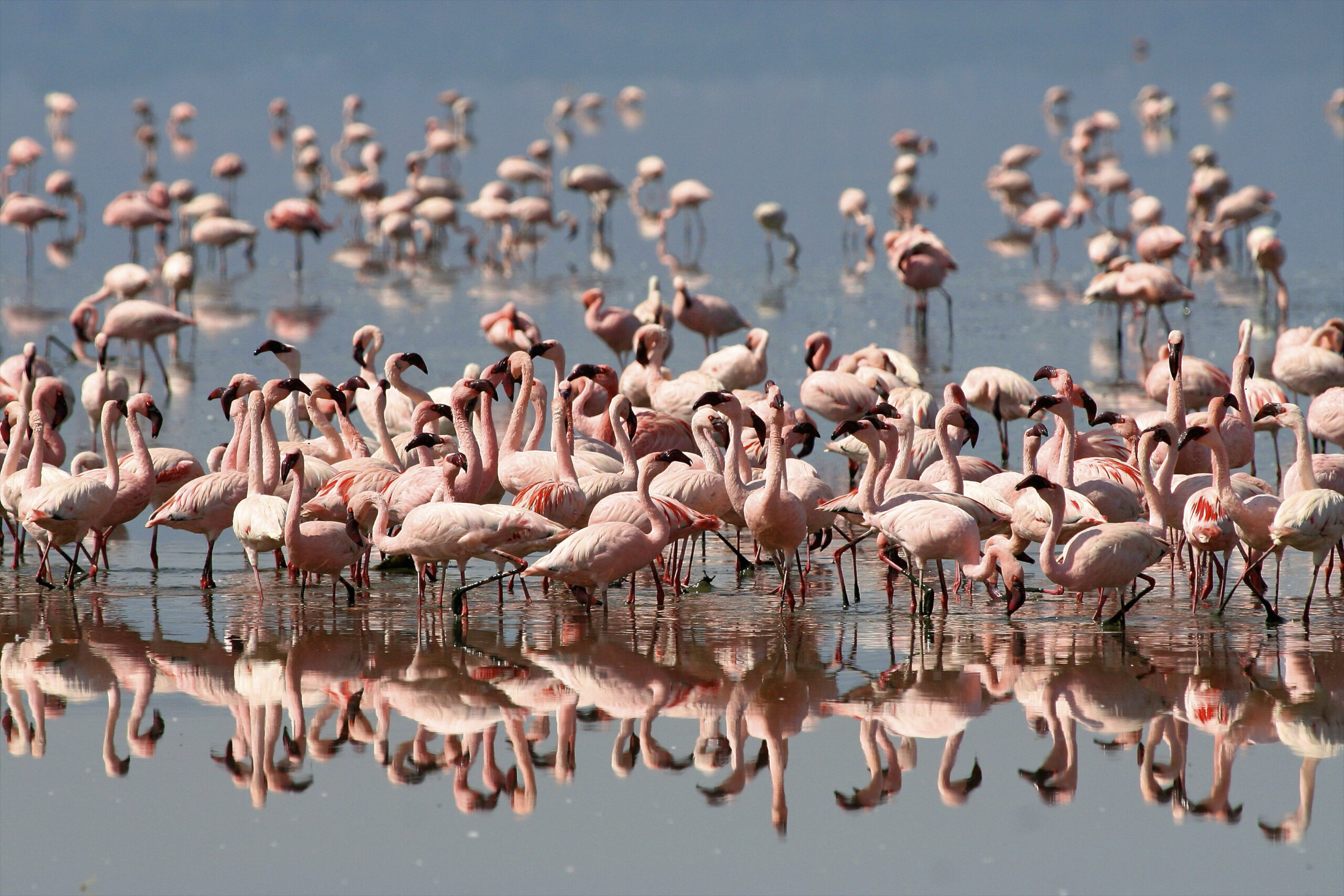
Lake Natron is situated in the northern Tanzania is the most important breeding site for lesser flamingos to breed, making it the most significant breeding site for these birds in the world. in Eastern Africa has between 1.5-2.5 million of lesser flamingos-representing 75 per cent of the global population and most of them are hatched at Lake Natron. While the best time to embark on a Tanzania safari to spot these colorful flamingos depends on the timing of seasonal rains, but most breeding in January and October in Tanzania however, breeding occur all year round in Lake Natron, if conditions are available.
Vibrant Colors
The lake is famous for its stunning colors, which change throughout the year depending on the level of water and the presence of certain algae. One of the most striking features of Lake Natron is its striking red coloration. More so, the presence of large quantities of haloarchaea, known for its red pigmentation, gives the lake its characteristic deep red and pink color. During the dry season, the lake can appear bright red or orange due to the high concentration of salt-loving organisms called halophiles. These tiny life forms produce pigments that give the water its vivid appearance.
Evaporation and Salt Crust
The hot temperatures and high evaporation rates lead to the formation of a crust of salt along the shore of the lake. When the water evaporates, it leaves behind a thick layer of sodium carbonate and other minerals, creating an otherworldly landscape that looks almost like a frozen, white desert.
Wildlife Adaptations
Despite the harsh conditions, some life manages to flourish in Lake Natron. The lake is home to beautiful and interesting bird species with Lesser Flamingos having a dominating population of about 1.5-2.5 million forming 75% of its population worldwide. Other birds found in the lake Natron Pelicans, Geese, Ostriches, Secretary birds, Kori bustards, Egrets, Stocks and Hamerkop. These birds are specially adapted to feed on the algae and small crustaceans that flourish in the lake. They can tolerate the lake’s high salinity, unlike most other birds. a visit to lake Natron also offers you with a chance to spot a variety of animals including Buffalo, Wildebeest, Zebra, Giraffe, Gazelles (Grant, Thomson, Robert), Waterbuck, Eland, Oryx, Impala, Hyena, Lion, Leopard, Jackal, Hare, Greater and Lesser Kudus, Monkeys and Baboons.
A Volcanic Origin
Lake Natron’s creation is linked to volcanic activity in the region. The lake is fed by the Southern Ewaso Ng’iro River and by mineral-rich hot springs. It sits near the Ol Doinyo Lengai volcano, which is the only active carbonatite volcano in the world. Eruptions from this volcano release carbon dioxide and other gases, contributing to the unusual chemistry of the lake. This volcanic activity also plays a role in the mineral deposits found in and around the lake.
Cultural Significance
The lake holds cultural significance for the local Maasai people. the Maasai are known for their unique dressing style, Boma (hut) making, traditional dances, Local foods and drinks, handcrafting and traditional medicines make this area more attractive. They view the lake and its surroundings as sacred, and they often perform rituals that honor the landscape. The Maasai’s deep connection to the land emphasizes the importance of local knowledge and traditions in understanding such unique ecosystems
A Living Laboratory
Scientists study Lake Natron to understand extremophiles, the organisms that thrive in such challenging conditions. Research on these species may provide insights into the limits of life on Earth and have potential applications in biotechnology, including understanding how life might exist on other planets with extreme environments.
The Saltiest Lake
While there are several salty lakes around the world, Lake Natron is one of the saltiest. The high evaporation rate contributes to the concentration of salts, making it a challenging environment for most life forms. The lake acts as a natural laboratory for studying salinity tolerance and the adaptations necessary for survival in such conditions.
A Unique Ecosystem
Lake Natron is part of a larger ecosystem that includes wetlands and grasslands. The nearby areas provide critical habitats for various species of plants and animals, making it an essential ecological zone. the dominant halophytes surrounding the lake are Cyperus laevigatus, Dactyloctenium spp, Juncus maritimus, Salvadora persica, Sporobolus spicatus, Sporobolus robustus, Suaeda monoica and Triplocephalum holstii. The slightly less alkaline plains surrounding the lake are dominated by grasses and by Sesbania sesban with scattered Acacia trees. The diverse habitats support a wide range of biodiversity, emphasizing the importance of conservation efforts in the region.
Adventure Tourism
Adventurers seeking unique experiences often include Lake Natron in their itineraries. Tourist while on a Tanzania adventure safari at lake Natron have a variety of tourism activities to embark on such as Sport or Tourist hunting and Photographic/ Eco-Tourism such as walking safaris, game viewing, swimming, filming, Birds (Lesser flamingos) watching at the Lake shore, Mountain climbing to experience sunrise and volcanic activity.