Kibale Forest National Park welcomes you to Uganda for primate excursions and can help you organise your Uganda Chimp Safaris. This article will explain how to get there, what to do, tourist attractions, where to stay, and Uganda safari tour operators that can transport you to this primate park.
Kibale Forest National Park is one of the most appealing safari places in Africa for chimp trekking in Uganda. The park features a moist evergreen rain forest across 780 square kilometres of land with elevations ranging from 1,100 to 1,600 meters, and it is home to a broad range of landscapes. Perhaps it is one of the rare remaining areas with both lowland and tropical montane forests. Kibale National Park was designated in late 1932 and formally established in 1993 to protect a significant amount of woodland that is administered as a logged forest reserve. However, Kibale National Park is home to a variety of forest creatures, most notably 13 species of primates and one-of-a-kind chimps. The forest cover dominates the middle and northern sides of the park, rising to Fort Portal Plantae. Kibale, located in the northern region of the park, is the highest point at approximately 1590 meters above sea level.
The park is one of Africa’s greatest monkey safari destinations for chimp tracking trips, with around 1500 individuals. However, participating in chimpanzee tracking will bring you closer to your linked cousins, who are thought to share 98% of the DNA of human genes. See guidance on how to obtain chimp tracking licenses and other information about Uganda excursions.
Travellers may believe that it is only a home for primates, but it is also rich in other wildlife species, with over 70 mammals such as buffalos, warthogs, bushbucks, leopard, sitatunga, bush pigs, giant forest hogs, servals, African golden cats, other primates like Uganda mongoose, red colobus monkeys, L’hoest’s monkeys, and over 380 bird species such as Blue-breasted ground thrush, Black-capped apalis, African pitta, Black bee-eater, Black-eared, Blue-breasted Kingfisher, Crow
Activities at Kibale National Park
Kibale National Park offers a variety of stunning activities and attractions that are best enjoyed during the dry seasons, which run from mid-November to February and June to September. These activities include forest hiking, birding, cultural trails, chimpanzee tracking, visits to crater lakes, cultural encounters, and many others.
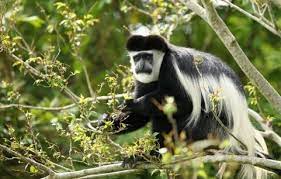
Forest hikes: Forest hiking in this park reveals the park’s hidden beauties, including river line forest, grassland, wetland and tropical rainforest. The hike is 12 kilometres long and is led by trained guides who will take you to various forest trails where you can see famous wildlife species such as chimps, red colobus monkeys, black and white colobus, red tailed monkeys, bush-bush and mongoose. You will also visit Bigodi wetland, a popular birding spot where you can see beautiful bird species.
Cultural Trails
This is one of the most popular activities, beginning at Kanyanchu and lasting around 2 to 6 days to finish all of the magnificent trails while enjoying a nature stroll. The path will let you to explore the forest and stay at community-run campsites near the villages of Keikogi, Nyaibanda, and Nyakalongo.Furthermore, it is the wettest place in the park’s northern region, with an average annual rainfall of 1700mm, falling primarily between March and May and September and November.
The park’s climate is typically associated with an average yearly temperature range of 14 to 12 degrees Celsius. Furthermore, the temperature is highest and rainfall is lowest in the south, where the landscape lowers to searing rift valley floors and the forest gives way to open grassland.
The southern half of Kibale National Park borders Queen Elizabeth National Park, one of Uganda’s most popular and second-largest national parks. The bordering section of Queen Elizabeth National Park is maintained places to sustain approximately 180 km long migration corridor for animal species that adjoins from the distant southern sector of Queen Elizabeth National Park in ”Ishasha” up to north of Kibale in ”Sebitoli.Furthermore, Kibale Forest National Park in northern Uganda’s Fort Portal district is one of Uganda’s most popular places to visit, whether with family, friends, or on one’s own. Take note that this is the greatest site for chimp tracking safaris. The park is located near the breathtaking Ndali Kasenda Crater and is a half-day journey from Queen Elizabeth, the snow-capped Rwenzori Mountain, and Semuliki National Park.
Birdwatching in Kibale.
The park is a birder’s paradise, with over 380 bird species to see on a birding tour in Kibale National Park, including six Albertine Rift natives such as blue-headed sunbird, collared apalis, red-faced woodland warblers, crimson wing, black-capped apalis, and purple breasted sunbird. Other common bird species include the yellow-rumpled tinker bird, tiny greenbul, African pitta, Abyssinian ground thrush, yellow-spotted nectar, little greenbul, black-eared ground thrush, blue-breasted kingfisher, crowned eagle, and many others.
Cultural Experience Around Kibale
Kibale National Park is surrounded by locals, most of whom are Batoro and Bakiga, and you can learn about their culture with the help of a guide. The Batoro people are native to the region, whereas the Bakiga are recent immigrants from the densely populated south-west part of the country. Visiting these locals allows you to express yourself through their traditional dances, songs, folklore, and languages.
Where to stay in Kibale?
Travellers should not be concerned about where to sleep on their primate safari in Kibale Forest National Park Uganda, because the park boasts beautiful accommodation facilities with rewarding sightseeing of primates on your veranda and are located in the middle of the forest where your chimp tracking begins. The lodges have a charming restaurant, bar and fire place where you can spend your evening from, and such comfortable lodges range between mid-range to
Montana Luxury Tented Camp is located in the middle of the forest and features nice mattresses.
Ndali Lodge is a 5-star hotel with thatched cabins and spectacular views of the crater lakes.
The Rwenzori View Guesthouse is located near Fort Portal, some 30 kilometres from the forest, and offers decent beds and middle-class rooms but no private toilets.
However, the park provides extremely reasonable chimpanzee tracking permits at a cost of USD 150 each person, but starting July 1, 2020, there will be a significant demand for permits to track chimpanzees in Kibale forest, with an increase of USD 50 apiece. And all potential travellers will have to pay USD 200 starting July 1, 2020. Kibale Forest National Park is a primate metropolis and the first site for chimpanzee tracking in Uganda. We recommend that you book your chimpanzee tracking permits at least 6 months in advance of your visit to the park, through a tour operator or a reputable tour company. We, at Visit Tanzania Tours, can assist you in a variety of ways, including reserving your permit, finding lodging, transportation, and much more.
Rules for tracking chimpanzees in Kibale National Park
Carry your packed lunch on the track.
Travellers should avoid looking directly into the eyes of chimps.
Carry plenty mineral water.
You should use hiking boots to make it easier to walk about on woodland routes.
Keep about 7 meters away from chimps.
There is a limit of six people to participate in chimpanzee tracking.
Do not litter in the forest.
The course begins at 8 a.m., following a briefing and accompanied by a certified ranger.
Children under the age of 16 are not permitted to track chimpanzees for safety concerns.
You should stay with the group and follow your guide’s instructions.
If you need to urinate, please do so away from the trail system; if you need to defecate, speak with the guide or dig a hole and bury your waste.
Accessibility
Kibale National Park is easily accessible by automobile or air. By driving, it takes roughly 5 hours by road when utilising a safari vehicle or your personal car. Alternatively, a traveler can fly to and from Entebbe International Airport using a charter flight that lasts 1:15 hours to Kasese Airstrips, a nearby airstrip to Kibale, and then a tour guide will pick the traveller up from the airstrip and drive him or her to the park, which takes 35 minutes to reach the main destination.