History Of Zanzibar
Zanzibar has been inhabited for over 20,000 years. The islands’ true history begins when they became a trading post for traders traveling between the African Great Lakes, Somalia, the Arabian Peninsula, Iran, and the Indian subcontinent. Although the archipelago had few valuable items, Omanis and Yemenis established what became Zanzibar City (Stone Town) as a handy point from which to trade with settlements on the Swahili Coast because Unguja offered a safe and defensible harbor. They erected the first mosques in the African Great Lakes Region and created garrisons on the islands.
The prevailing winds of the region placed Zanzibar immediately on the Indian Ocean trade routes, making it accessible to both traders and colonists from Arabia, South Asia, and the African mainland. Zanzibar’s history was profoundly affected by its topography. The first immigrants were Africans, followed by Persians, who arrived in Zanzibar in the 10th century and were quickly assimilated into the indigenous population before disappearing as a distinct community.
Their mark was left in the progressive unification of different communities and rural populations into what became known as the Hadimu and Tumbatu peoples. This population of African-Persians converted to Islam and adopted many Persian customs. (Today, the majority of Zanzibar’s African population refers to themselves as “Shiraz,” a reference to the ancient Persian principality of Shiraz, from which the first Persians descended.)
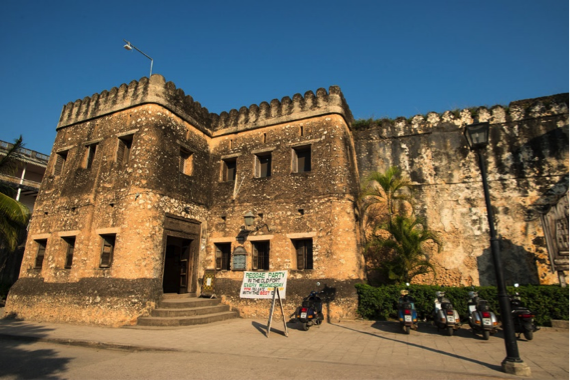
Arabs had the most influence on Zanzibar because of its strategic location, which allowed Arabs to mount slave expeditions into Africa and conduct oceangoing trade. Omani Arabs became particularly prominent because they established commercial and landowner colonies in Zanzibar. They eventually rose to the top of the island’s nobility. The Portuguese Empire was the first European nation to seize control of Zanzibar during the Age of Exploration, and they held it for about 200 years.
A HUB OF TRADE
Traders from Arabia, Persia, and India are supposed to have arrived in Zanzibar by sailing across the ocean on the monsoon winds in the first century AD. Along the coast, wealthy port communities sprang up, and a vast, sheltered harbor was built at what is now Zanzibar City. Despite the fact that the islands themselves did not provide much in the way of resources for traders during this time, Zanzibar was in a good position from which to trade and explore East Africa’s coast. It was also an ideal rest station for traders en route to Asia, the Middle East, and Africa’s interior.
Some Persian traders eventually made Stone Town their permanent home, and their effect on Zanzibar’s architecture, food, and culture can still be observed today. It’s considered that traders from Yemen erected the first mosque in the southern hemisphere in the settlement of Kizimkazi on Zanzibar’s southern shore, after an inscription with the year 1107 was discovered on one of the mosque’s walls.
THE ARRIVAL OF VASCO DA GAMA IN ZANZIBAR
In 1499, Vasco da Gama, a Portuguese explorer who had recently become the first European to reach India by water, arrived in Zanzibar. European civilization was introduced to the islands with his arrival, and Zanzibar became a part of the Portuguese Empire a few years later. The Portuguese controlled from afar for the most part, and the Zanzibar leaders’ relationship with the Portuguese was mostly based on mutual assistance.
The people of Zanzibar aided the Portuguese on several occasions in their attacks on Kenya’s coastal city of Mombasa, and in 1571, the King of Zanzibar declared his intention to donate the islands to his Portuguese allies as a thank you for their assistance in repelling numerous invaders from the mainland (although the donation was never made). On the site of modern-day Zanzibar City, the Portuguese built a trading factory and a Christian mission, and some Portuguese farmers settled on the islands.
THE RULE OF THE SULTANS IN ZANZIBAR
Oman’s Arab rulers seized Mombasa from the Portuguese in 1698, bringing Omani rule to Zanzibar as well. Zanzibar’s riches grew dramatically as a result of the ivory and slave trades, as well as clove exports, and Stone Town became one of East Africa’s wealthiest and greatest cities. On the monsoon winds, traders from Arabia, Persia, and India would arrive in Zanzibar to sell iron, cloth, sugar, and dates. They would return home when the winds changed, carrying tortoiseshell, cloves, coconuts, rice, ivory, and slaves in their boats.
The Sultan of Oman transferred his capital from Muscat to Stone Town in 1840, where he built a ruling Omani elite, expanded the clove plantations (which were labored on by slaves imported from East Africa), and encouraged Indian traders to settle on the islands. Slavery was thriving during this time, with an estimated 50,000 slaves moving through the islands each year. The Sultan and the British signed the first in a series of treaties in 1822, attempting to put an end to the terrible practice. The slave trade in Zanzibar was officially stopped in 1876 as a result of intense British pressure (although it continued in practice for some years afterwards).
BRITISH CONTROL IN ZANZIBAR
The remnants of the Sultanate of Zanzibar were declared a British protectorate in 1890. However, after the ruling Sultan died in 1896, Khalid ibn Barghash seized the royal palace and declared himself Sultan. The British stormed the palace after he refused to step down, resulting in the Anglo-Zanzibar War, sometimes known as the shortest war in history, lasting less than an hour.
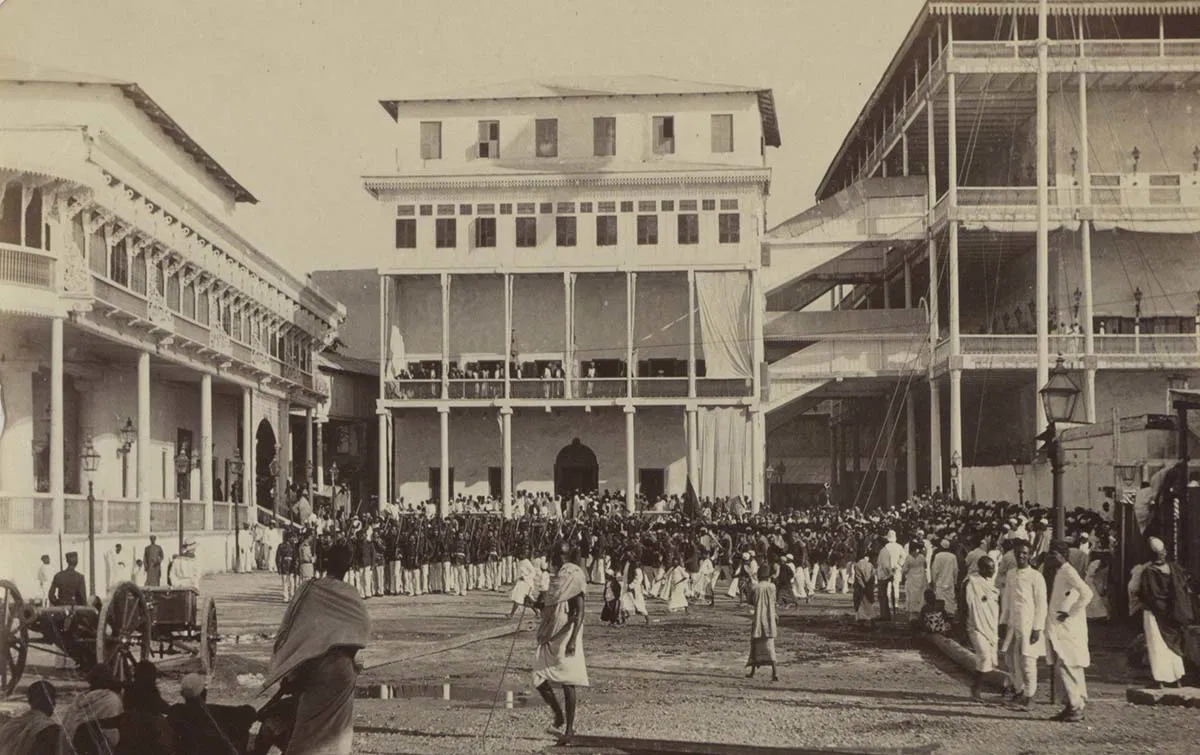
The British installed a Sultan of their choice after Khalid ibn Barghash’s defeat, and British authority through a Sultan became the standard. By abolishing slavery and releasing all slaves on the islands in 1897, the new Sultan put an end to Zanzibar’s reputation as a slave trading center. The British nominated their own governors in 1913 and began implementing major public health initiatives such as the installation of a sewer system and proper waste disposal.
ZANZIBAR, A SEMI-AUTONOMOUS REGION
Zanzibar gained independence as a Commonwealth member in 1963, with a Sultan as its ruler. The islands declared constitutional monarchy independence from the United Kingdom. The People’s Republic of Zanzibar was formed a month later after the brutal Zanzibar Revolution, which saw thousands of Arabs and Indians slain and thousands more banished and expropriated.
In April of that year, the presidents of Zanzibar and Tanganyika signed an act of union, becoming what would later be known as Tanzania. The republic amalgamated with mainland Tanganyika, or, to be more precise, was assimilated into Tanzania, with Zanzibar remaining a semi-autonomous territory of Tanzania. Today Zanzibar is known as a tourism destination well known and famous all over the world for its beaches attractions and unique history that together attract a larger number of visitors each year.
HISTORY OF ZANZIBAR IN SHORT/IN SUMMARY
Zanzibar has a remarkable history that dates back to the first millennium, when Bantu-speaking Africans crossed the Indian Ocean from the mainland. The Zanzibar archipelago had come into its own during the twelfth and fifteenth centuries, with Arabian and Persian trade relations bringing major money into the area. Zanzibar has grown into a significant trading center, exporting gold, ivory, slaves, and wood as far as India while importing spices, textiles, and glassware.
The Portuguese arrived in the early sixteenth century, interrupting the golden age by seizing control of both Zanzibar and Pemba. However, their reign was short-lived, and by the early nineteenth century, the territory had been taken over by Omani Arabs. Cloves, enslaved people, and ivory were the principal goods, and trade flourished once more. It’s telling that by 1840, trade was booming to the point where the Sultan of Oman decided to move his court from the Persian Gulf to Zanzibar.
The notorious slave trade was outlawed in 1873, and Omani sultans ruled under a British protectorate by 1890. This lasted until Zanzibar regained its independence in December 1963. Only a month later, the Arab governing elite was deposed by an African majority in a bloody revolution that resulted in thousands of fatalities. In April 1964, the presidents of Zanzibar and Tanganyika formed a republic, or more precisely, Tanganyika was incorporated into Tanzania, with Zanzibar remaining a semi-autonomous entity.