Safety Measures And Health Aspects For Climbers On Mount Kilimanjaro : Kilimanjaro climbing is safe as long as you prepare properly! Approximately one thousand people Die and other rescued from the mountain each year. Sickness from altitude is the main cause. Its symptoms should not be disregarded, and those who ascend Mount Kilimanjaro should not undervalue their effects. According to official statistics, over 50% of climbers fail to reach the summit of Kilimanjaro. Visit Tanzania Tours offers unambiguous safety guidelines designed to reduce any potential health dangers. Below is our Safety precaution for climbers to Mount Kilimanjaro:
VISIT TANZANIA TOUR’S MOUNT KILIMANJARO SAFETY PRECAUTIONS:
- Our guides have extensive experience in preventing, identifying, and treating acute mountain sickness (AMS), having worked with over 100 customers a year.
- developed procedures for managing crises on the mountain, such as evacuation and rescue.
- Twice a day, health checks are performed to measure blood pressure, temperature, pulse, and oxygen saturation.
- Every climb is equipped with a first-aid and medical kit.
- Provide sick or injured climbers with Kilimanjaro Search and Rescue (SAR) helicopter evacuation.
- Our guides are certified Wilderness First Responders (WFR).
To ensure your safety and the safety of every climber on the mountain and throughout the safari, all of our porters and mountain guides are always upgrading and revitalizing their safety protocols. To guarantee your safety, our Company holds frequent team meetings where we exchange insights regarding safety protocols, which are then disseminated to all team members.
Your main guide will explain our safety procedures to you prior to each hike so that you are ready for any unexpected circumstances that may arise during your safari and while climbing Mount Kilimanjaro.
ACUTE MOUNTAIN SICKNESS (AMS) WHEN CLIMBING KILIMANJARO
At sea level, the atmosphere contains roughly 21% oxygen. The percentage doesn’t change as altitude rises, but the amount of oxygen molecules in each breath does. The body must adapt to having less oxygen because there are about 40% fewer oxygen molecules per breath at 3.600 meters. The inability of the body to adjust swiftly enough to the decreased oxygen at higher altitudes results in altitude sickness, or AMS. Some people may have altitude sickness as low as 2.500 meters; however, significant symptoms typically don’t show up until more than 4.500 meters.
ACCLIMATIZATION GUIDELINES
- Try to hike at a high altitude before your trip to help with pre-acclimatization.
- Pole, pole! Throughout your ascent, our guides will urge you to go slowly because it takes some time for your body to adjust to the higher altitude.
- Breathe deeply, slowly, and deliberately.
- Rise high, rest low. Aim higher throughout the day and descend to a lesser altitude for sleep at night. This approach applies to most routes, and you can include extra acclimatization treks in your plan.
- As you climb, make sure you eat and drink plenty. You should aim to consume four to five liters of fluid per day. In addition, even if you don’t feel hungry while at altitude, consume a high-calorie diet.
- To avoid AMS, you can take altitude medications like Diamox.
- Steer clear of alcohol, tobacco, and other depressants such as opiates, barbiturates, and tranquilizers. These exacerbate altitude sickness by further reducing the respiratory drive as you sleep.
- Don’t ascend higher until your altitude sickness symptoms subside if you start to exhibit mild symptoms. If symptoms worsen, go lower.
HOW TO AVOID MOUNTAIN SICKNESS WHEN CLIMBING KILIMANJARO? HERE IS THE LIST
Daily health checks
All of our guides have extensive experience diagnosing and treating altitude sickness in climbers. Our guides are trained Wilderness First Responders (WFR), and they will keep a close eye on you and communicate with you during the climb to ensure your safety. During the morning and evening hours on two days a week, our guides will perform health checks. Please do not hesitate to contact your mountain guides if you have any mild signs of altitude sickness or discomfort in order to avoid developing more issues.
Pulse Oximeter
The oxygen saturation, or blood oxygen level, and pulse rate are measured with a pulse oximeter. A climber places the oximeter on their fingertip. It uses two light beams that enter your finger’s capillaries and tiny blood vessels. The blood’s oxygen content is reflected by the sensor. The amount of oxygen your blood is carrying as a proportion of its maximum capacity is called oxygen saturation. At sea level, normal blood oxygen levels range from 95% to 100%.
Reduced oxygen saturation occurs with increasing altitude. When oxygen saturations are measured after an overnight period of rest, these values usually increase since proper acclimatization raises oxygen saturations generally. Oxygen saturation percentages on Kilimanjaro are consistently in the 80s. There are no hard-and-fast saturation points at which a client can be deemed completely safe or vulnerable. But when the climber’s oxygen saturation falls below 80%, we keep a careful eye on them.
Blood pressure (bpm)
It is crucial to check your blood pressure since a higher blood pressure puts additional strain on your heart and arteries. Extremely high blood pressure has been linked to heart attacks and strokes. Normal blood pressure is measured in the range of 120 to 80 mm Hg. Only when high blood pressure between 140 and 80 is seen for extended periods of time and during rest is it dangerous. When blood pressure increases above 180- and 120-mm Hg, there is a very high danger of a hypertensive crisis. Your oxygen and blood pressure will always be monitored by our guides.
Altitude Medication
The F.D.A. has approved the medication Diamox (generic name: acetazolamide) for the prevention of AMS. The drug causes the blood to become more acidic, which speeds up adaptation by increasing breathing.
Diamox can prevent altitude sickness symptoms, but it does not mask them. According to studies, taking 250 mg of Diamox every 12 hours before and during a quick ascent to altitude reduces or eliminates the symptoms of acute mountain sickness (AMS).
Continue taking the medication until you are below the altitude at which your symptoms start to affect you. Acetazolamide side effects include taste changes, increased urination, tingling or numbness in the fingers, toes, and face, and, in rare cases, blurred eyesight. When the medication is withdrawn, these disappear. Climbers are free to decide whether or not to take Diamox as a prophylactic against acute mountain sickness.
Please speak with your physician before taking any drug! Neither Visit Tanzania Tours promotes nor opposes the use of Diamox! Altitude-induced headaches can be relieved with Ibuprofen or IbuTad.
Emergency Oxygen and Mountain Rescue
For serious emergencies, bottled oxygen is available at every camp. As an extra safety precaution, we can carry bottled oxygen on demand for all of our climbs. It is not recommended to use the oxygen bottle to help clients ascend higher if they have not sufficiently acclimated on their own. A quick descent is the best course of action for treating mild-to-severe altitude sickness. The routes on Kilimanjaro always provide for a swift descent. As a result, oxygen is only utilized in emergencies to keep climbers from experiencing serious health problems. Kindly reach out to us for additional details!
Kilimanjaro Helicopter Search and Rescue (SAR)
We collaborate with Kilimanjaro Search and Rescue (SAR), a contemporary, effective helicopter rescue outfit that carries out rescue operations on Kilimanjaro. Helicopters operating an Airbus AS 350 B3 are stationed at Moshi Airport. Within five minutes of receiving a distress call, rescue operations begin. Skilled aviators, extensively educated emergency flight technicians, and rescue physicians are extraordinarily competent and equipped to handle any emergency on the mountain.
Kilimanjaro Search and Rescue (SAR) oversees a medical center that treats trauma, ailments associated with high altitude, and mountain medicine. The greatest care is provided by doctors, nurses, and assistants who are on duty around the clock.
Cleanliness and sanitation
In order to prevent Mountain disease, it is especially crucial to maintain proper sanitation and hygiene in the Highlands. Use hand sanitizer as often as you can, and keep a supply on hand. Use appropriate waste management techniques by disposing of trash and rubbish in a responsible manner and keeping no sign of your actions. To ensure safe drinking water, utilize filtration systems or pills for water purification. Steer clear of untreated water. Maintaining good hygiene can shield you from Kilimanjaro’s delicate ecology.
Appropriate equipment and tools
For a hike to be both safe and pleasurable, the proper tools and equipment are required. Purchase a strong backpack, a breathable liner, a warm sleeping bag, and high-quality waterproof hiking boots. Pack necessities like a hat, sunglasses, sunscreen, a first-aid kit, and tablets for purifying water. Trekking poles are also advised to enhance stability and balance. Before you go hiking, familiarize yourself with the equipment and make sure everything is installed and operating as it should.
Physical training and training
Determine your level of fitness and get the necessary training before starting your Kilimanjaro adventure. It takes strength, endurance, and determination to climb a mountain. Walking, jogging, and cycling are examples of regular aerobic activity that can help you get more cardiovascular fitness. Furthermore, strength training that targets the strength of your legs, upper body, and core gets your muscles ready for strenuous climbs. Getting advice from a fitness expert and sticking to a personalized training regimen will make a big difference in your results.
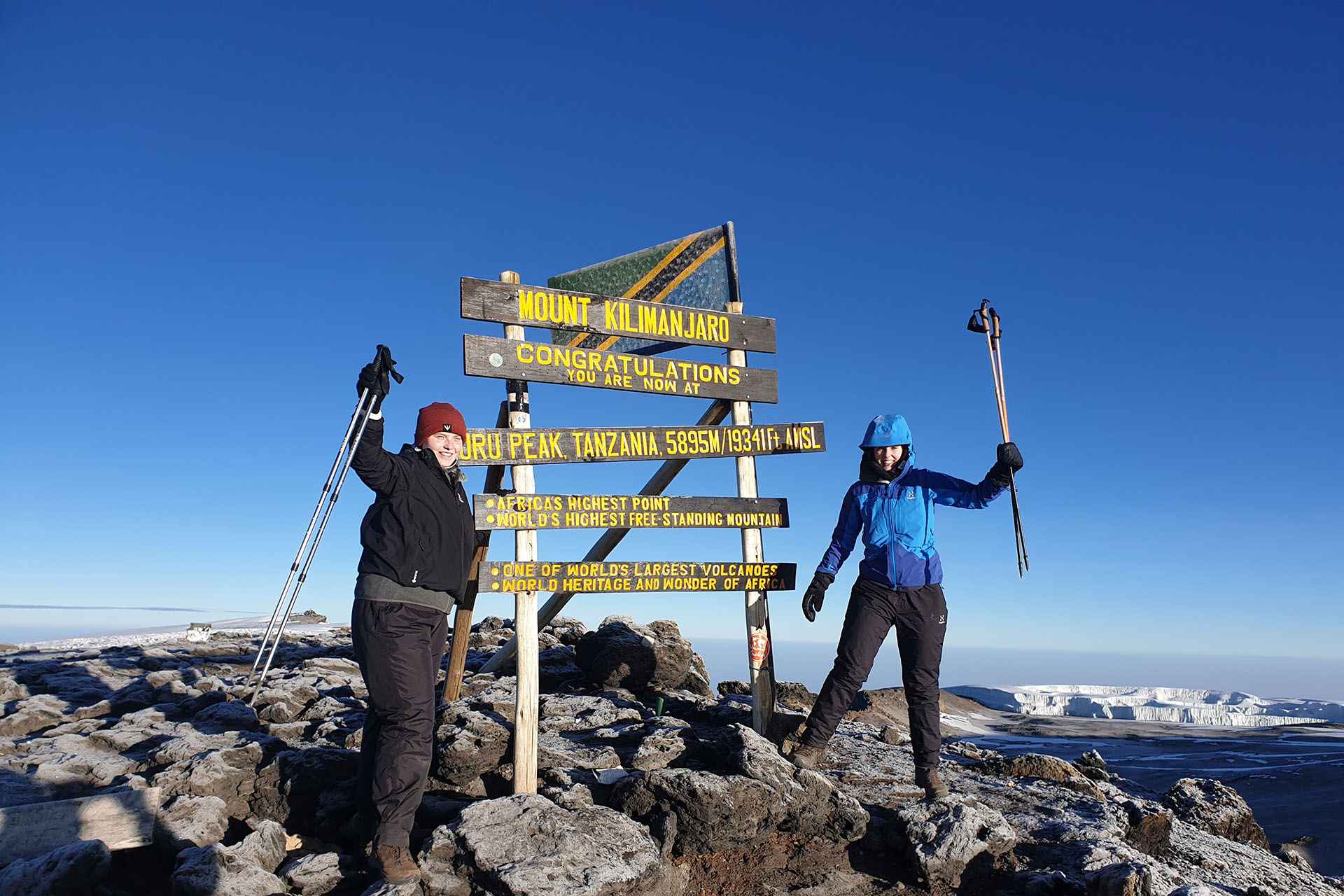
CONCLUSION: EXPLORE KILIMANJARO WITH SAFETY AND CONFIDENCE
With Visit Tanzania Tours, set off on an incredible adventure to the highest peaks in Africa! On our meticulously planned climbing excursions of Mount Kilimanjaro, your safety and well-being are our first priorities. You will receive excellent direction from knowledgeable guides at Visit Tanzania Tours, guaranteeing a hassle-free and secure hike. In order to minimize any health risks and give yourself enough time to acclimate to changes in altitude, we strongly recommend appropriate acclimatization.
You may be confident that our staff will provide you with the best tools and instruct you on fundamental safety procedures, such as proper hygiene and sanitation. Your dream of scaling Mount Kilimanjaro is drawing nearer with Visit Tanzania Tours at your side. Enroll right away to enjoy Mount Kilimanjaro’s spectacular splendor while remaining safe and sound throughout your journey!