Mount Kenya National Park is located in Kenya and is Africa’s second-highest mountain after Mount Kilimanjaro. It is known as “Come Touch the Sky” because of its 5,199-meter peak, which was designated a protected area in 1949. The protected area measures 715 square meters and includes Kenya’s mountains and wildlife, as well as a forest reserve. The various vegetation zones provide excellent habitats for species, particularly mammals and birds.
The mountain serves as the park’s water catchment source, drawing from melting glaciers and mineral springs. The park is home to biodiversity, including rare and endangered species. The plain game and alpine vegetation thrive at high altitudes. During their Kenya Wildlife trips, the tourists enjoy trekking the mountain, camping, and caving near the harsh glacier.
The park was once a forest reserve before being designated a national park, which included Mt. Kenya and the forest reserve. Only a year after being proclaimed a UNESCO World Heritage Site in 1977, the entire area was classified as a UNESCO Biosphere Reserve in 1978. The Kenyan government gazetted the park primarily to maintain the area’s natural picturesque views, preserve the park’s biodiversity, and, most importantly, safeguard the water source, which was extremely valuable to the surrounding inhabitants.
Accessing Mount Kenya National Park.
Mount Kenya National Park is easily accessible by car, as it is only 175 kilometres from Nairobi. There are numerous public taxis and shuttles that travel daily to the Mt. Kenya area via Nanyuki-Isiolo Road. One can take Sirimon Track or the Nyeri-Nanyuki road, which runs through Naro Moru.
The park can also be reached via Chogoria on Embu-Meru, 150 kilometres north of Nairobi. You can arrange for a private tour operator driver-guide to pick you up at your Nairobi hotel. If it is arranged by local operators, it will be easier for you; though it will be more expensive, it will provide many more benefits to the guest in terms of safety and timely arrival. It is important to remember that there are generally three roads that should be used if one wants to successfully reach the park or be dropped off close to the park gates if travelling by public transportation.
If you use public transport, it costs between 500 and 800 Kenya shillings and drops you off on the main road. One must hire a special driver to take you to the park gates for a fee ranging from 2000 to 8000 Kenya shillings, depending on the distance travelled by the first taxi. Mount Kenya National Park has four gates, including Kamweti, Marania, Burguret, and Themwe gates.
Domestic flights can also be used to reach the park’s nearest airfield, Nanyuki. Your driver-guide will wait for you at the airport and transfer you to the park gate for clearance before beginning the day’s climb. It is recommended that you walk for three to four days, depending on your physical fitness.
Vegetation in Mount Kenya National Park
Mount Kenya National Park’s vegetation is different due to altitude differences that affect vegetation zoning. The park’s flora is separated into several vegetation zones that fluctuate with height. Each zone is dominated by different plants based on their ability to adapt to the altitude. The mountain is remarkable in that the majority of the plant species have both indigenous Kikuyu and Embu names as well as English names.
The weather in the park is moist, coming from the Indian Ocean from the east to the southeast. Thick bamboo vegetation covers the slopes that receive the most rainfall, while the park’s surroundings are relatively level and covered in open savannahs that receive little rainfall. The indigenous Kikuyu have since converted the open savannah terrain into agricultural land. The vegetation zoning ranges from open savannah grassland to montane forest, bamboo, and Afro-alpine zone.
Arrangement of vegetation zones on Mt Kenya
Cultivated Zone
The Kikuyu have converted this open savannah grassland into agricultural land.
Montane Forest
As one ascends to 2000 meters, the grassland gives way to montane woodland dominated by Ocotea usambarensis.
Bamboo Zone
This is located in the heart of a mountain covered in bamboo forests, is a restricted region, and receives heavy rains.
Timberline Forest
African rosewood dominates the landscape at elevations ranging from 3,000 to 3,500 meters above sea level.
Heathland and Chaparral
This is located between 3,200 and 3,800 meters above sea level. It is mostly found in the wettest parts of the mountain, whereas Chaparral can be found in the drier portions. Erica is the dominant plant in heathland, while African sage is found in chaparral.
Afro-Alpine Zone
This is the mountain’s second final vegetation zone, extending from 3500 meters above to 4500 meters. It is dominated by two enormous species: Dendrosenecio Keniensis and Dendrosenecio Keniodendron.
Nival zone: This is the last zone with a glacier and is over 4500 meters.
Attractions at Mount Kenya National Park
Wildlife
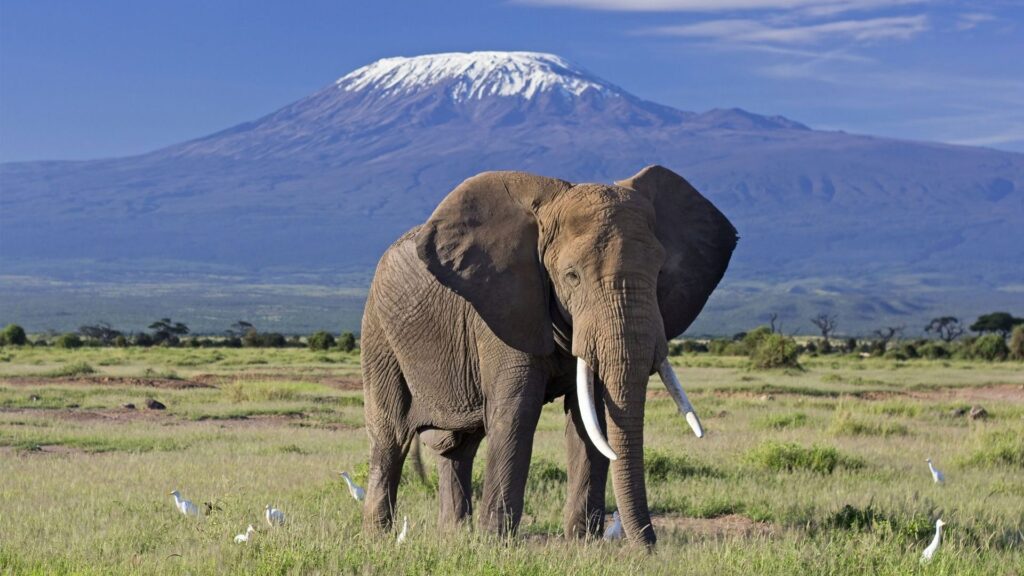
Mount Kenya National Park is home to a variety of animals, including large African Forest Elephants, Cape Buffalo, monkeys, leopards, Dik-dik, forest hogs, and many more. The park is home to around 130 different bird species, the majority of which are forest birds.
Mount Kenya
The park’s main attraction is Africa’s second-highest peak. The mountain takes up nearly half of the park’s area. The mountain can be climbed in 3 to 5 days, but only technical climbers make it to the summit.
Activities at Mount Kenya National Park
The park is home to a variety of exciting activities that make guests’ trips to Africa more memorable. A safari to Mount Kenya National Park provides an opportunity to explore Africa’s pure wilderness.
The park’s name misleads many people into believing that it exclusively offers hiking opportunities, which is incorrect. As I mentioned in this essay, the park offers a variety of activities.
Hiking
This is the main activity in Mount Kenya National Park; the mountain has seven different routes. Naro Moru is the most popular and easiest of the seven paths. Other routes include Sirimon, Chogoria, Batian, Nelion, the Timau Route, and the Burguret Route.
Game viewing
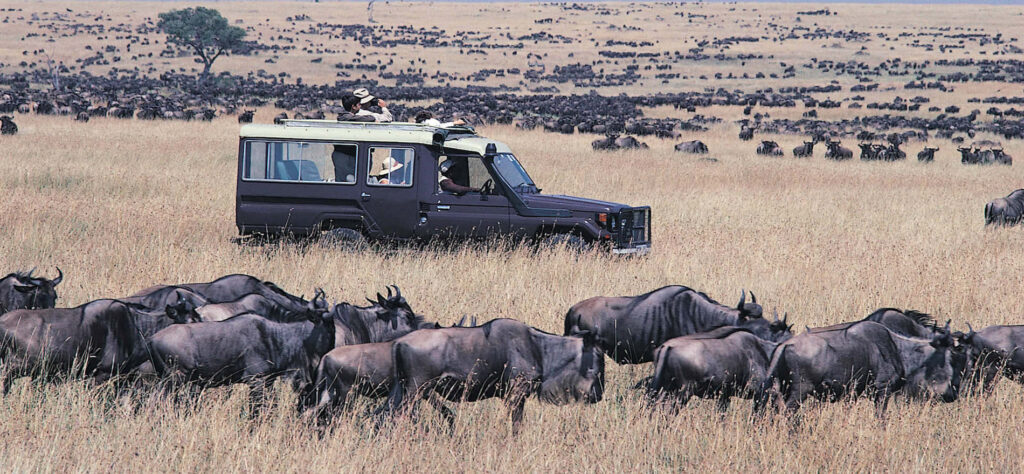
The park is well-known for its mountains, but it also provides habitat for animals, particularly forest elephants, buffalo, and other mammals. The guests enjoy game watching from the Keny safari vans. On a lucky day, they can spot leopards and forest hogs.
Birding
The park is home to around 130 bird species, the majority of which are woodland birds and a few open savannah birds. You can do birding safaris at any time of year, but they are most effective during the rainy season, when the birds nest and reproduce.
Scenic views
Enjoy the sightseeing and magnificent views of the mountain, particularly for trekkers rather than walkers who cannot reach the summit. The Kenya Safari Tour also includes a visit to the park’s caverns, a memorable experience.
Mount Kenya National Park, dominated by Africa’s second-highest mountain, offers breathtaking views just a few meters from the Equator. Visiting Ngai, the old Kikuyu god. To this day, villagers keep their doors open and face the mountain, believing that they will receive a blessing. The Kikuyu pray and perform other cultural ceremonies on the mountain’s slopes.