Kilimanjaro National Park is located in Tanzania’s Kilimanjaro Region, which is 300 kilometers south of the equator. The park shares a border with Kenya and is near the town of Moshi. Situated in Kilimanjaro National Park, Mount Kilimanjaro spans 1,688 square kilometres and is latituded between 2°50′ and 3°10’S and longituded between 37°10′ and 37°40’E. The Tanzania National Parks Authority (TANAPA), which oversees the park, has as its principal objective the preservation and protection of Mount Kilimanjaro, Africa’s highest mountain, along with its ecosystem, animals, and biodiversity.
At 5,895 meters, Kilimanjaro is the highest peak in Africa and the tallest free-standing mountain in the world. Kilimanjaro National Park Authority, or KINAPA, is responsible for its protection and conservation. This volcanic peak rises majestically out of the surrounding plains, its snowy top towering over the savannah. Numerous endangered kinds of mammals can be found in the park.
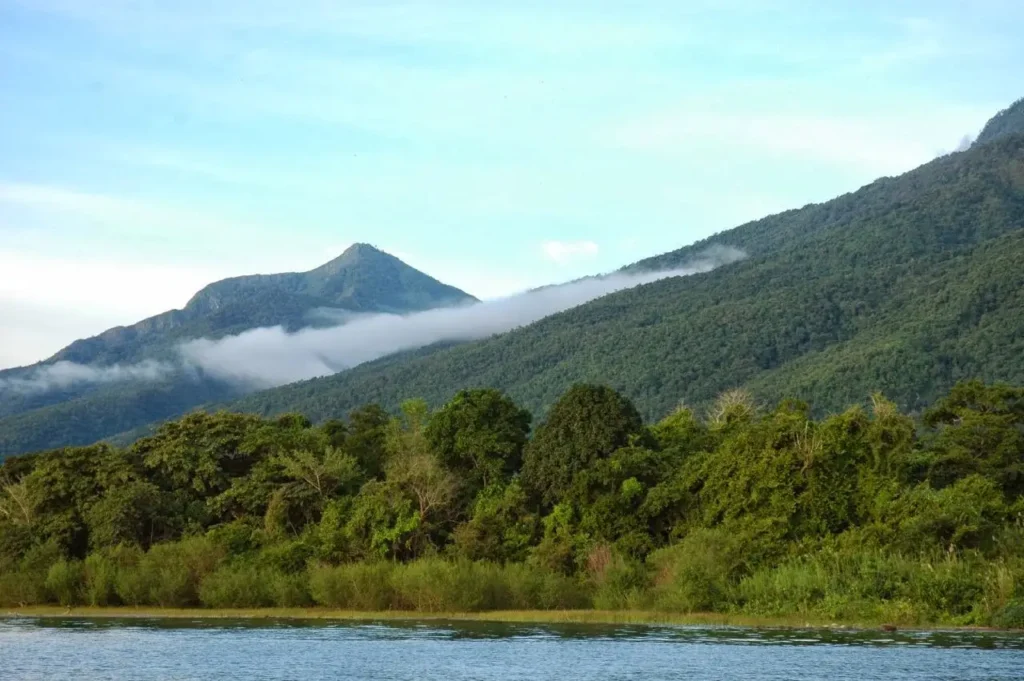
Mount Kilimanjaro’s three main volcanic summits are Kibo, Mawenzi, and Shira. Standing at the highest point in Africa, it features glaciers and a snow-capped summit. There are five main vegetation zones on the mountain, ranging from the lowest to the highest point: lower slopes, montane forest, heath and moorland, alpine desert, and summit. A remarkable example of a superlative natural phenomenon, Mount Kilimanjaro stands apart from the surrounding plains due to its distinct combination of features, including its height, shape, and snow crown.
History and Formation of Kilimanjaro National Park.
Three volcanic cones that comprise Mount Kilimanjaro were formed as a result of significant continental rifting. It is thought that the beginning of volcanic activity occurred about one million years ago, when molten lava erupted through lithosphere fractures caused by crustal weakening. Initially having little viscosity, this lava spread outward to create a base that sloped gently. The Shira volcanic cone was finally formed by the heavier, more viscous lava discharged by ongoing eruptions. Volcanic activity stopped, forming the Shira Ridge, and the Shira cone sank into a massive caldera, a cauldron-like basin much bigger than the original volcano. Mawenzi and Kibo, Kilimanjaro’s other two primary volcanic cones, formed during eruptions, along with lesser parasitic cones. Kibo is currently dormant.
Kilimanjaro dates back to Tanzanian colonisation and was included in the German Protectorate in 1885. Hans Meyer reached the peak of Kibo in October 1889, making history as the first European to scale Mount Kilimanjaro. In fact, the name “Germany’s highest peak” was used at the time. The German colonial government had designated Mount Kilimanjaro and the surrounding forests as a game reserve. Later, the British had taken over as a protectorate under the League of Nations, and Tanzania gained its independence in 1961. Kilimanjaro National Park was created in 1973 and includes a forest reserve above the foothills and 1668 square kilometres of the mountain above 800 meters. It was named a World Heritage Site by the UN in 1987, and in 2005 it was extended to include the entire tropical forest, home to several species that can only be discovered there during a field trip to climb Mount Kilimanjaro. The lower slopes of the mountain are still farmed by the native Chagga people.
When is the best time to visit Kilimanjaro National Park?
The attractions and tourist activities you choose to engage in will determine when is the best time to visit Kilimanjaro National Park. Seasons differ slightly in temperature, but there are some that are better than others for climbing Mount Kilimanjaro. January and February are the hottest months, which makes the walk more comfortable as you get closer to the summit. Any time of year can bring extremely low temperatures, windchill, and temperatures close to or below freezing.
August and September are the driest months, which also happens to be a good time to climb Mount Kilimanjaro. June and July are the coolest months; thus, the top may be noticeably colder. Climbing is still a great idea right now. The wettest months are April and May during the rainy season. Consequently, steer clear of climbing Kilimanjaro in those months. While climbing in the rain is doable during these months, it is more risky, challenging, and uncomfortable.
Kilimanjaro National Park Entrance Fees
The cost and taxes to enter Kilimanjaro National Park vary based on a number of factors, such as your country or geographic area, age group, activities, length of stay in the park, and kind of accommodations. Additionally, the cost of trekking in Kilimanjaro National Park includes various expenses such as conservation fees, hut/camping costs, rescue fees, and porter/guide/park ranger fees.
The entrance fee to Kilimanjaro National Park is USD 70 for non-east African people over the age of 16, and USD 20 for non-east African citizens between the ages of 5 and 15. The fee is paid per person every day spent in the park. You have to include in rescue fees, camping fees, ranger fees, and the 18% government VAT in addition to the entrance fee.
Animals and Birds at Kilimanjaro National Park
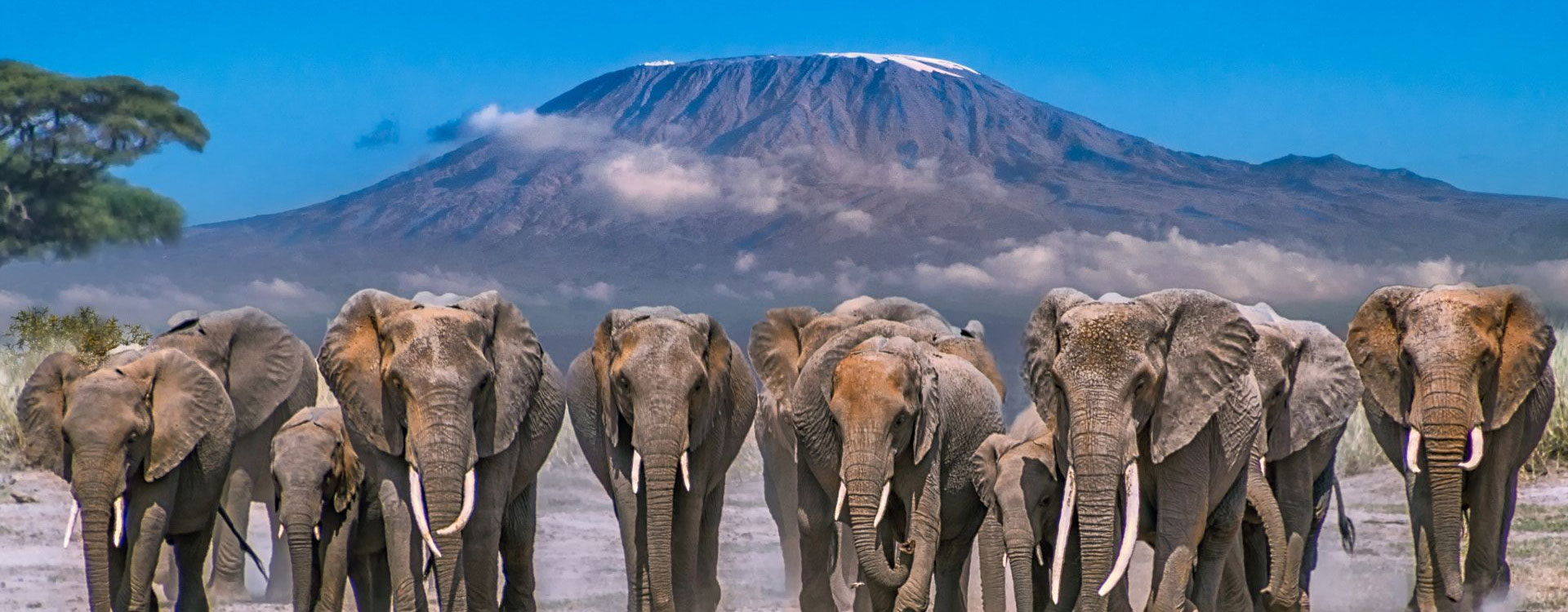
More animals live in the lush tropical rainforests near Kilimanjaro’s foot than in the highlands due to the amount of food and water. This implies that the higher you climb the mountain, the fewer wild animals you will see. The wildlife in Kilimanjaro National Park includes, but is not limited to, elephants, Cape buffaloes, black rhinos, giraffes, leopards, servals, hyenas, baboons, monkeys, antelopes, aardvarks, mongooses, porcupines, honey badgers, ree hyraxes, and bush babies.
Things to Do in Kilimanjaro National Park/Tourist Activities
Hiking to Uhuru Peak
One of Kilimanjaro National Park’s three highest peaks is this one (also known as Uhuru Peak or Kibo). Depending on the path you pick for ascent, hiking to Uhuru Peak takes anything from five to eight days. Remember that there are easy and difficult ways; that some roots require a long time to trek, while others can be completed in a few days; that some roots are costly, while others are not; and that most roots offer rewarding views of Mount Kilimanjaro and the surrounding wildlife. Therefore, if you’re thinking about climbing Uhuru Peak, make sure you choose a reasonable and appropriate path depending on how interested you are in the sights you want to see and how energetic you are.
Bird watching
More than 150 bird species may be found at Mount Kilimanjaro National Park, some of which are migratory and others of which are native to the region. As you ascend the mountain through various flora types, you can also spot mountain and forest birds. Kilimanjaro National Park is home to a variety of species, including the long-tailed kite, resident black-shouldered kite, and white-necked raven. When migratory birds from Europe and Asia arrive during the rainy season, which runs from November to April, it’s the ideal time to go birding.
Wildlife viewing
The higher you hike or climb Kilimanjaro, the fewer animals you will observe because more of these creatures reside in the lush tropical rainforests at the mountain’s base than in the highlands. Vervet monkeys, genet cats, honey badgers, aardvarks, baboons, Columbus monkeys, bush babies, elands, elephants, and other exotic creatures can be found in the Kilimanjaro National Park.
Cycling
Riding a bicycle to Africa’s highest peak via the Kilema path is another well-liked adventure activity in the Kilimanjaro National Park; this activity may incur an extra cost. There are three main stations available. You can cycle through the agricultural areas of the Chagga people. But only seasoned mountain bikers under the guidance of an informed tour leader should attempt this practice.
Nature guides walks.
Experience a closer encounter with the natural world of Africa, especially at Kilimanjaro National Park, where you may witness and engage with a wide range of wildlife, insects, and plant species. Along with a variety of plant species and panoramic views of the Chagga farmlands and nearby towns, tourists can enjoy guided nature walks through the Mount Kilimanjaro forest canopy, where they can see a variety of primates, including the white and black Columbus monkeys, olive baboons, and red-tailed monkeys. A park ranger will be beside you during this amazing tourist experience in Kilimanjaro National Park, making sure you stay safe from any potentially harmful animals.
Additional visitor activities in Kilimanjaro National Park include picnics, filming and taking pictures, camping in different parts of the park, and cultural trips that involve meeting the Chagga people who reside nearby.
Where to stay in Kilimanjaro National Park/accommodations
Kilimanjaro National Park offers a variety of accommodation options to cater to the needs of diverse visitors, such as affordable and luxurious lodges, camping areas for overnight stays, and huts situated along the road as you approach the mountain. Nevertheless, after watching and finishing your trip inside the park, you have the option to drive a short distance to the nearby cities of Moshi and Arusha, where you can discover a range of housing options. When staying overnight in Kilimanjaro National Park, the following options for accommodation are highly suggested.
Kaliwa lodge
Mai Kilimanjaro home stay
Teule guest house
Pink flamingo
Babylon lodge
Mount Kilimanjaro view lodge.
Kilemakyalo Mt. Lodge
Elerai camp
Aishi Machame hotel.
Kilimanjaro White House Hotel