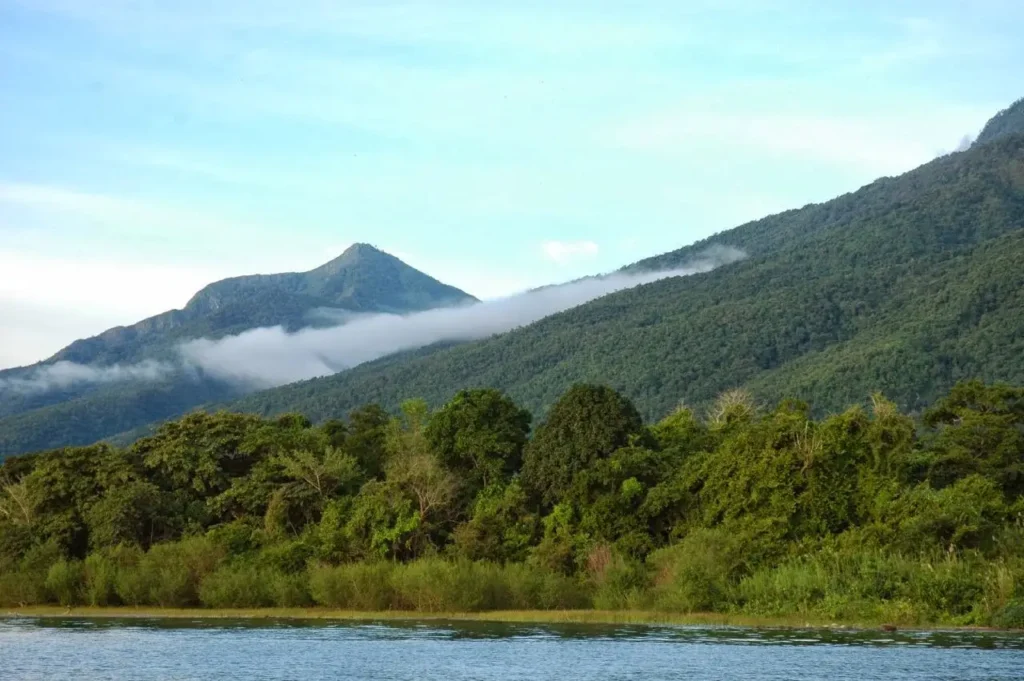
Kigoma is the closest big city to the stunning Mahale Mountains National Park, a fascinating Tanzania wildlife safari destination known for its chimpanzee tracking. The park is situated in western Tanzania on the shores of Lake Tanganyika. The topography of the 1613 square kilometer Mahale Mountains Park is dominated by the Mahale range, and it is located 130 km north of Mahale in an isolated area. The Mahale range is a portion of the Rift Valley Escarpment that climbs rapidly from the Lake Tanganyika shore to the Nkungwe peak, which is 2,462 meters above sea level, and the other 6 summits that are higher than 2,000 meters.
Situated on the eastern shores of Lake Tanganyika in western Tanzania, the Mahale Mountains are a range of mountains that have numerous massive peaks and steep slopes that are covered in montane and intermediate-altitude forests. The Mahale Mountains are home to several summits, including 2,462-meter-high Mount Nkungwe, 2,100-meter-high Mhesabantu, 2,335-meter-high Sisaga, and peaks of Humo, Sibindi, Mfitwa, and Pasagulu. The park’s terrain also has desolate sandy beaches and crystal-clear Lake Tanganyika, which has a beautiful appearance comparable to a volcanic island beach resort.
At a depth of roughly 1,470 meters, Lake Tanganyika, an African Great Lake, is the second-deepest lake in the world. It is also the second-largest lake by volume and the longest freshwater lake in the world.
The name Mahale Mountains National Park comes from the Mahale Mountains, which were formerly home to the Batongwe and Holoholo people. These people were driven from the mountains in 1979 when the Muhale Mountains Wildlife Research Centre was founded, and the park was officially opened in 1985.
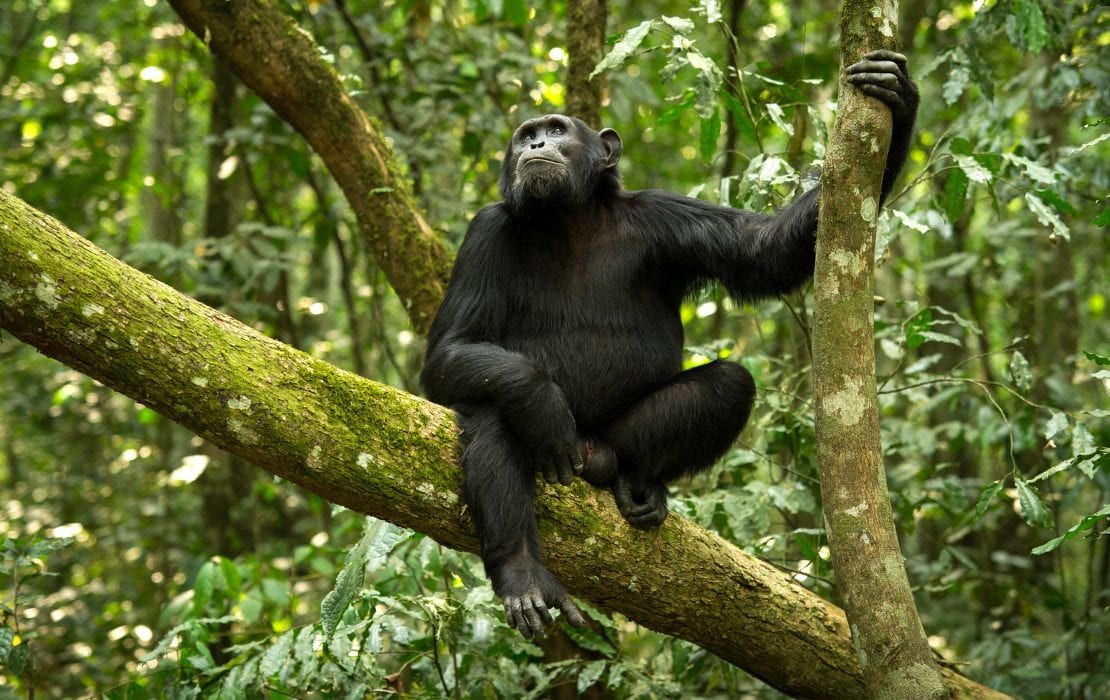
Over 1,000 chimpanzees live in Mahale Mountains Park, a well-known chimpanzee habitat that is home to the Mimikere group, which is made up of over 60 habituated individuals.
The primary animal species and attraction of the Mahale Mountains National area are the chimpanzees, who live in the area’s montane forests and are protected by the park. This is one of the reasons it is a well-known Tanzanian destination for wildlife excursions. There are more than a thousand chimpanzees in Mahale Mountains National Park, making up some of the world’s surviving habituated chimpanzee population. In the Mahale Mountains National Park, chimpanzees live in groups of fifteen, with the Mimikere group having the largest number of members at sixty.
Eight different primate species, including yellow baboons, red colobus monkeys, blue monkeys, red-tailed monkeys, nocturnal smaller greater galagos, and vervet monkeys, can also be found at Mahale Mountains Park. Elephants, roan antelopes, buffaloes, giraffes, bush backs, waterbucks, lions, wild dogs, and many other species are considered mammals.
With over 350 different bird species to protect and call home, the Mahale Mountains National Park in Tanzania is an excellent place for a birding safari. These species include Ross’s turaco, crested guineafowl, African fish eagles, hornbills, and gigantic kingfishers.
Safari activities in Mahale Mountains National Park
Chimpanzee trekking
The most popular safari activity in Mahale Mountains National Park is trekking with chimpanzees, which provides a chance to see some of the few remaining chimpanzee populations in the world. Tanzania’s Mahale National Park is a fantastic place to go on chimpanzee safaris. The experience begins with a briefing at the park’s headquarters, then you travel through the park’s hilly landscape in a group of six people to meet the chimpanzees.
In the event that one hour is adequate for chimpanzee viewing, three hours are provided for a price of US$100. Trekkers are free to take pictures during their one-hour encounters with the primates in Mahale National Park. The finest months to go on a Tanzanian chimpanzee safari are July through October in the Mahale Mountains National Park.
Mountain hiking
The highest peak of the Mahale Mountains, Mount Nkungwe, is located at a height of 2462 meters, making Mahale National Park an excellent place for mountain trekking safaris in Tanzania. This is one of the most amazing and daring safari experiences available. A 3-day hike up Mount Nkungwe includes two days at the top and one day downhill, during which time you can camp near the midway and halfway down the mountain.
Hikers are recommended to bring their own food and camping supplies when mountain hiking, and May through October is the ideal time to climb this peak.
Sport fishing
Sport fishing on Lake Tanganyika is a fun sport that fosters group bonds in the Mahale Mountains National Park. The lake has several approved fishing areas where this activity is carried out. Tourists are recommended to purchase a sport fishing permit in order to partake in the activity, as sport fishing is permitted within the Mahale Mountains National Park from 7:00 am to 5:00 pm.
Boat safari
One of the most memorable activities available in Lake Tanganyika is boat safari in the Mahale Mountains National Park. Boat safaris provide a chance to see many of the animals that congregate along the lake’s shores to drink water, including crocodiles, lions, buffaloes, rhinos, and elephants. They also offer a relaxing experience in the cool breeze of the waters.
Birding
One of the greatest places in Tanzania for birding safaris is the Mahale Mountains National Park, which is home to over 350 different species of birds, both migratory and resident. The best place to go birding in this park is the Kabezi area in the north. There, you can see a variety of bird species, including the Scaly francolin, Stuhlmann’s starling, Trumpeter hornbill, Blue-cheeked bee-eater, Bamboo warbler, Livingstone’s turaco, Palm-nut vulture, Ross’s turaco, Crowned eagle, Giant kingfisher, and many more. The greatest times to go birding in Mahale Mountains National Park are from November to April, when the park is home to migratory birds.
Snorkeling
In the calm waters of Lake Tanganyika, snorkelling safaris are conducted in the Mahale Mountains National Park. Participants in these safaris wear fins, a shaped tube, a diving mask, and a wetsuit to help them swim in the lake. Only a few areas of Lake Tanganyika are suitable for snorkelling because the lake is home to crocodiles.
Kayaking safaris
In Mahale Mountains National Park, kayak safaris are conducted in small, narrow boats with double-bladed paddles. These safaris provide an excellent opportunity to see the serene waters of Lake Tanganyika. The way a paddler sits makes all the difference between a canoeist and a kayaker.
Cultural tours
Cultural tours in the Mahale Mountains National Park take visitors to the nearby villages of the Batongwe and Holoholo people, as well as to Kigoma town and the historic town of Ujiji. These tours provide an insight into Tanzanian culture and the border, and you will have the chance to interact with the locals and take part in many local activities such as dance and drama. Ujiji town is a historic town with a rich history dating back to the German colonial rule in what was then Tanganyika. In the 19th century, Dr. Livingstone visited the town in an effort to stop the slave trade. Kigoma town, which is visited during the Tanzania cultural safari, is the capital of Kigoma district and an economic hub of the region.
Where to stay in Mahale Mountains National Park
There are many different types of accommodations in Mahale Mountains National Park, including lodges and camps that provide lodging to tourists coming to the park for a Tanzania safari. These lodging options range in status from luxurious to affordable. Greystoke Mahale Camp, Mbali Mbali Mahale Lodge, Mahale Mango Bandas, and numerous other establishments provide lodging in the Mahale Mountains National Park.
How to get to Mahale Mountains National Park
Getting to Mahale Mountains National Park for a Tanzanian safari is most easily accomplished by road, air, or boat.
By air, chartered flights are offered by numerous flight companies such as Northern Air, Air Excel, and Regional Air from major cities of Tanzania such as Arusha, Kilimanjaro, Dar-es-Salaam, Mwanaza and Zanzibar.
By road, there are well maintained routes connecting to Mahale Mountains National Park from various cities in Tanzania such as Arusha, Kilimanjaro, Dar-es-Salaam, Mwanaza and Zanzibar.
By Boat, Mahale Mountains National Park is accessed using boat ride on Lake Tanganyika