Located in Tanzania’s Miombo woods, the Selous Game Reserve lies roughly 130–500 kilometers southwest of Dar es Salaam. The Selous Game Reserve borders the national parks of Mikumi and Udzungwa Mountains in the northwest, while the Kilombero game managed area is in the west.
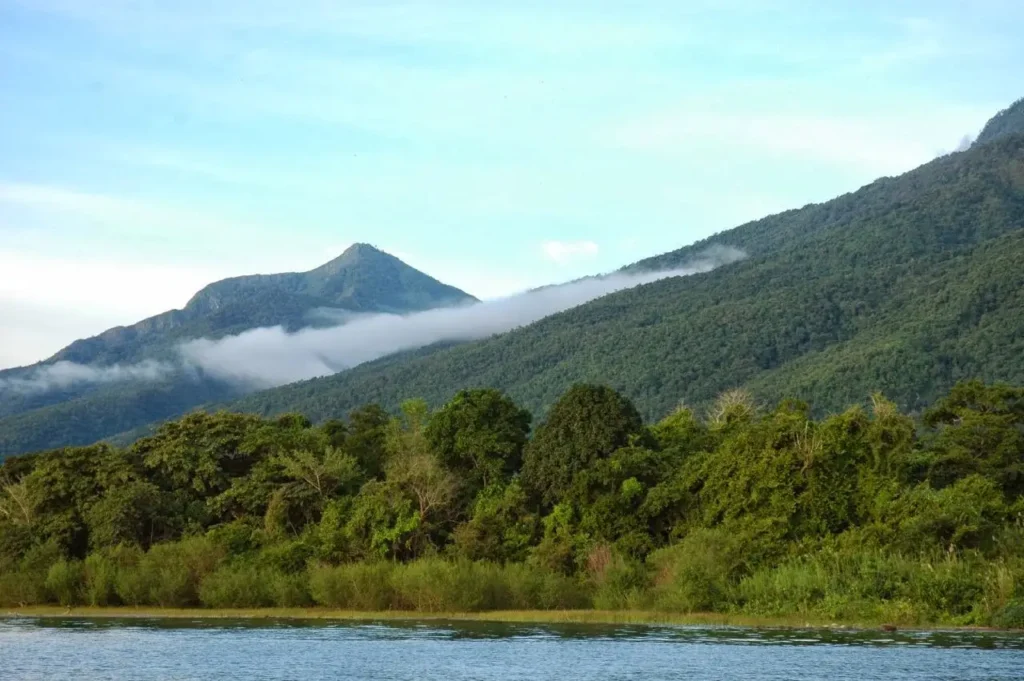
UNESCO recognizes Selous National Park, a UNESCO World Heritage site, with a total area of 50,000 square kilometers and a variety of vegetation zones. The centre area of the Selous Game Reserve is characterized by a gently sloping terrain with river basins, inselbergs that stand out, thickets, and constrained woods. The Mbarika Mountains, which climb to a height of 1300 meters, are located in the southwestern region, while the south is covered in forests and has a harsh, steep terrain. The east and north of the Selous Game Reserve are made up of tree grasslands that are flooded by the Rufji River during the rainy season. The west of the reserve is mountainous and forested, with intervening wet lowlands.
The Selous Game Reserve is home to a wide range of animals and birds. It also has the greatest population of elephants on the African continent, numbering 110,000, as well as the largest concentration of lions anywhere on the continent. The Selous Game Reserve is home to one of Tanzania’s populations of black rhinos. You can also find elands, African wild dogs, buffaloes, zebras, impalas, giraffes, greater kudus, waterbucks, bushbucks, Lichtenstein’s hartebeest, sable antelopes, warthogs, leopards, spotted hyenas, crocodiles, and many more animals there.
The lakes that make up the Selous Game Reserve are Tagalala, Mzizimia, Siwandu, Manze, and Nzelekela. These lakes are home to a variety of wildlife and bird species. Additionally, animals are drawn to the Rufji River and its tributaries, particularly in the dry season when they come to drink water.
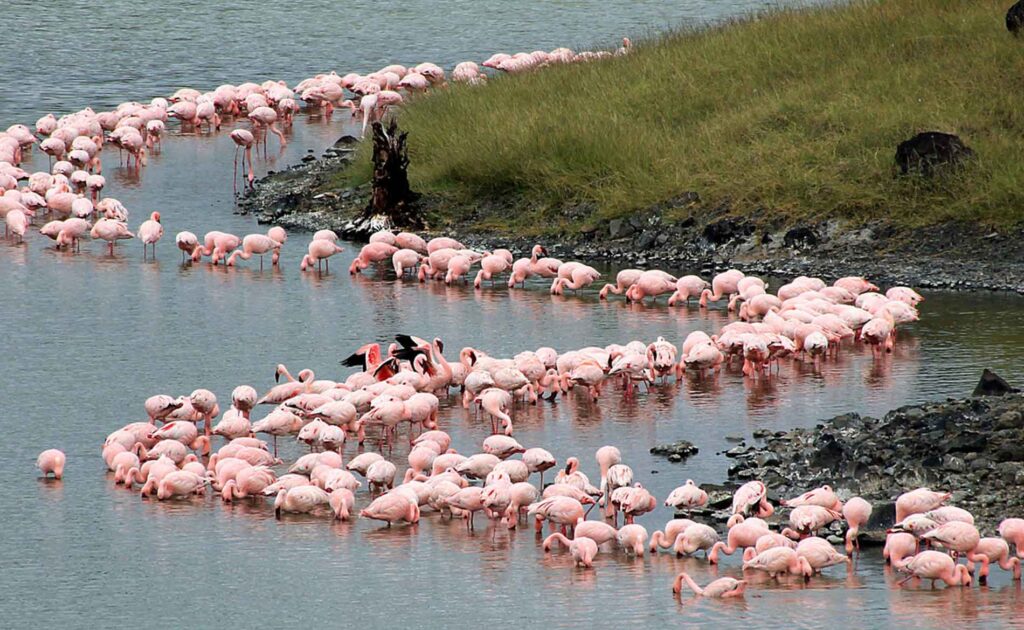
One of Tanzania’s most well-known birding habitats and destinations is the Selous Game Reserve, home to over 400 different kinds of birds that largely inhabit the reserve’s lake and river banks. The Selous game reserve is home to spur-winged lapwings, African wattled lapwings, white-fronted bee-eaters, Pel’s fishing owls, African spoonbills, common-white-headed vultures, pearl-spotted owlets, white-headed lapwings, Bohm’s bee-eaters, yellow-billed storks, thick-billed cuckoos, white-backed night herons, carmine bee-eaters, giant kingfishers, spur-winged plovers, palm nut vultures, ibises, palm swifts nest, and many more migratory bird species.
History of Selous game reserve
Under the direction of Hermann Von Wissmann, the German Governor of Tanganyika, the modern-day Tanzania, the Selous Game Reserve was first established as a protected area in 1896. It was then reclassified as a hunting reserve in 1905, and its boundaries were expanded in 1922. The region was given the name Selous Game Reserve in honour of British explorer Fredrick Courteney Selous. Selous was killed in the First World War and is buried there, with a monument in his honour. The Selous Game Reserve’s borders were expanded over time, reaching their current ones in 1975. The reserve was designated as a lion conservation unit in 2005. The reserve was placed on the list of World Heritage in Danger in 2014, and the decision was upheld in 2017 as a result of growing uranium mining and poaching in the reserve’s southern section.
Safari activities in Selous game reserve
Game viewing
The Selous Game Reserve, home to a wide range of animal species, including the largest population of the endangered African wild dog, is a popular safari activity for game viewing. You can see a variety of wildlife from the comfort of your 4X4 vehicle, including sable antelopes, warthogs, leopards, spotted hyenas, crocodiles, Lichtenstein’s hartebeest, elands, African wild dogs, brindled and Nyasaland gnus, zebras, impalas, giraffes, greater kudus, waterbucks, bushbucks, and much more. The banks of the Rufji River offer great views of animals during game viewing. A vast number of animals visit this area to drink water.
Birding
Over 440 different bird species may be seen in Tanzania’s Selous Game Reserve, which is a great place to go on a fantastic birdwatching safari. The game reserve is home to islands, channels, sandbanks of the Rufji River, and lagoons. Due to its location on the migratory bird migration path between Europe and northern Africa, the Selous Game Reserve welcomes migrating bird species in April. African wattled lapwing, white-fronted bee-eater, Pel’s fishing owl, African spoonbill, common-white headed vulture, pearl-spotted owlet, white-headed Lapwing, Bohm’s bee-eater, yellow-billed stork, thick-billed cuckoo, white-backed night heron, carmine bee-eater, rock pratincole, giant kingfishers, spur-winged plovers, and many other bird species can be seen while birdwatching in the Selous game reserve.
Walking safaris
The amazing Rufji River flows through the riverine forests and along the sandbanks during walking safaris in the Selous Game Reserve. This is an ideal way to fully appreciate and explore the Selous Game Reserve. Walking safaris are conducted in groups of no more than six people under the direction of an expert armed safari guide. During this safari, you can see a variety of creatures playing in the River Rufji, including lions, giraffes, waterbucks, elephants, hippos, and crocodiles.
Boat safaris
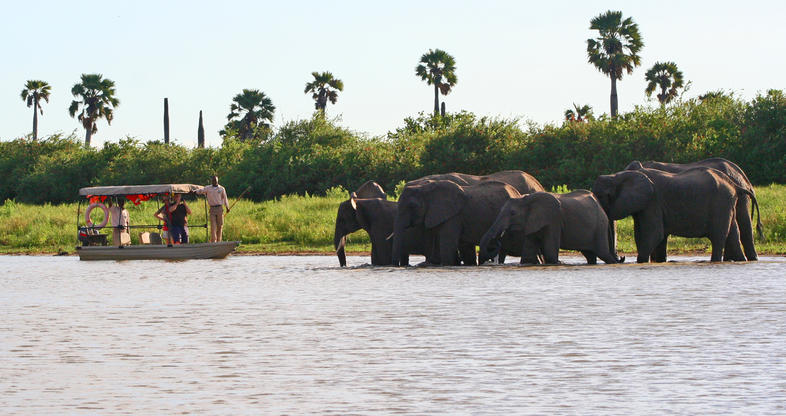
One of the few national parks in Tanzania where visitors can see wildlife up close is the Selous Game Reserve. Selous River Camp arranges boat safaris on the Rufji River and Lake Tagalala. Boat safaris are available in two different time slots per day: from 7 a.m. to 9 a.m. and from 4 p.m. to 6 p.m. The short boat safari lasts two hours. Boat safaris provide an ideal opportunity to witness the sights of aquatic creatures like crocodiles and hippos, as well as land species like lions, giraffes, impalas, and waterbucks gathering near water bodies to drink. A full day boat safari is available from 10 am to 6 pm.
Fishing safaris
The Rufji River, which crosses the Selous Game Reserve, is home to a variety of fish species that are captured during fishing safaris. Selous Game Reserve is an excellent place to visit for fishing safaris. Fish species like the Rufji Tilapia, Oreochromis Urolepis elephant fish, Marmyrus Longirostris, and Heterobrancus catfish, among many more, can excite and amaze you when you go fishing on a safari. In addition to fishing expeditions, the boat cruise experience to the fishing locations is included.
Cultural excursions
A visit to the Mloka village, which is located near the park and downstream of the Selous River camp, is a must-do for any safari in the Selous Game Reserve. A cultural tour provides an opportunity for tourists to engage in a variety of local and cultural experiences, including meeting the residents and touring markets, primary schools, and other establishments. Cultural trips can be customised to a visitor’s liking and available time frame.
How to get to Selous game reserve
Selous game reserve is accessed by road, air and railway which are affordable to tourists going to the park for a Tanzania safari, by road Selous Game Reserve is situated in a drivable distance of 240 kilometers taking approximately 6 hours from Dar-es-Salaam to Mtemere gate via Kibiti and Mloka. By train: The Selous Game Reserve may be reached in four to five hours. The train stops in Matambwe, from where you can continue on to the park. By air, daily scheduled chartered flights are offered from Arusha, Dar-es-salaam to Selous game reserve. Domestic airlines include Air Tanzania, Regional Air, Precision Air, ZanAir, Safari Air Link, and Coastal Aviation offer these services. Flights to Selous game reserve land at Mtemere airstrip serving the game reserve.
Where to stay in Selous game reserve
In Selous game reserve there is numerous accommodation establishments of various status established to offer a place to stay to tourists in Selous game reserve, the accommodation establishments include Sand river Selous, Jimbiza Lodge, Selous Kulinda camp, Selous Mbega Camp, Selous Wilderness Camp, Africa safari camp, Selous Ngalawa camp, Selous river camp, The Retreat, Roho ya Selous, Selous Serena camp, Mivumo River Lodge and many more.