Mount Elgon National Park is a UNESCO Man and Biosphere Reserve located on the Uganda-Kenya border. The park has an area of 494 square miles. A larger portion of the park (430 square miles) is on the Ugandan side of the border. In 1992, the Ugandan part was designated as a national park, up from forest reserve status. The park is named after Mount Elgon, a notable physical feature in the area. Mount Elgon is an extinct volcano that erupted more than 24 million years ago. It is the tallest volcanic peak in East Africa and the eighth highest in Africa. Mount Elgon features the world’s largest caldera, measuring around 60 kilometres long and 40 kilometres wide. This Caldera formed when magma drained from the bottom, causing the cone to collapse. Scientists believe Mount Elgon was formerly Africa’s highest mountain until millions of years of erosion significantly lowered its height.
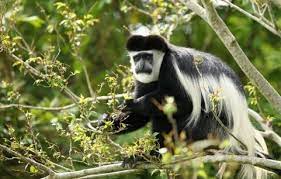
Mount Elgon’s rich slopes promote a type of vegetation that varies with altitude. They contain montane forests at the lower elevations, bamboo forests on higher levels, and alpine moorlands near the peak. There have been around 400 plant species and 143 bird species reported. Mount Elgon National Park is home to half of Uganda’s butterfly species, including the rare Maathai’s Lonleg dragonfly, which was discovered in 2000. The lower slopes of the highlands are home to a variety of species, including black-and-white colobus, blue monkeys, buffalos, elephants, red-tailed monkeys, spotted hyenas, Oribi, Defassa waterbuck, Bushbuck, and lesser antelopes.
The Sabiny and Bagisu are the main tribes living on the Ugandan side of the park, and they rely on subsistence farming. The Bagisu have specialised in the cultivation of Arabica coffee, which thrives in the lush soils on the lower slopes of the mountains. The higher slopes of the mountains are protected and administered by the Uganda Wildlife Authority in close collaboration with Kenyan equivalents. The Mountain Elgon National Park office is on Masaba Road in Mbale town. This is where visitors go to get information or obtain permits for park-related activities. The Uganda Wildlife Authority’s Kampala office also offers permits for activities in Mountain Elgon National Park. The office is open from Monday to Friday.
How to get to Mount Elgon National Park?
The distance between Kampala and Mount Elgon National Park is approximately 230 km. The roads are well-paved and constructed of tarmac, however traffic congestion is a concern on the Kampala-Jinja Highway. Mbale town is approximately 4 to 5 hours away from Kampala via Jinja and Iganga. The travel by road provides opportunity to stop and explore spectacular sights such as the Nile River’s source and the Mabira Forest. From Mbale, one must drive to the park headquarters outside of town or proceed directly to the nearest mountain climbing starting point in Budadiri. Visitors can rent a car or take public transportation to get to the park, but booking your trip through a reputable tour company is more convenient.
Visitors who dislike long car rides can hire a chartered flight from Entebbe International Airport to Soroti Airfield near Mount Elgon. The journey from the airfield to Mbale town or Kapchorwa would take around an hour by road.
How to prepare for mountain climbing on Mount Elgon.
Like any peak above 2600 meters, there is a genuine risk of altitude sickness, particularly for first-time climbers. Altitude sickness impact anyone, regardless of previous experience, fitness, or age.
When climbing mountains or participating in activities like as animal viewing and camping, you must accompany park rangers and porters. By hiring/employing these porters, you are supporting the local population while also contributing to the general conservation of the park and its wildlife. When communities understand the benefits of tourism for them, they are less likely to poach park animals. The park’s porters and rangers have been qualified and trained in first aid. Visitors to the park benefit greatly from the rangers’ knowledge of the various plant and animal species present. The total cost of each guide should not exceed $15.
Mount Elgon National Park is best visited during the dry season (June-August and December-March). It is crucial to note that all park activities, including hiking to the summit of the mountain, continue throughout the wet/rainy season. It is also worth noting that the mountain receives rains virtually all year. Expect rain even during Uganda’s driest seasons.
A parking list for Mount Elgon National Park should include bottled drinking water, adequate food supplies, cooking utensils, a first aid kit, a torch, rain gear, hand gloves, a cap, hiking shoes, a sleeping bag, a tent and warm clothing.
Attractions of Mount Elgon National Park
Mountain Elgon National Park, like Uganda’s Rwenzori Mountains National Park, is more recognised for its mountain climbs and ecological treks. Aside from reaching the summit, climbing Mount Elgon provides many possibilities to explore a vast caldera, caves, cliffs, gorges, hot springs, mesas, and waterfalls. Mount Elgon National Park supports a sizable number of large species such as elephants, buffaloes, and monkeys. Aside from ascending the mountain, visitors to the park enjoy game viewing, nature hikes, bird watching, cave exploration, and camping. Activities can be planned both inside and beyond the park, including trips to Sipi Falls and Kapchorwa’s wildlife reserves. The activities are described in greater detail below:
Climbing Mount Elgon
Climbing Mount Elgon provides advantages over the Rwenzori Mountains or Mount Kilimanjaro in Tanzania. It is less expensive, less hard, and the temperatures are acceptable even at the summit. The most distinctive aspect of ascending Mount Elgon is not reaching the Wagagai top, but rather descending from it to see the world’s largest caldera.
Climbing Mount Elgon takes 4 to 6 days, depending on the trail followed. There are three main beginning points: the Salsa Trail, the Pisa Trail, and the Sipi Trail. The Salsa Trail, also known as the Buddukiro Trailhead, is a shorter trail with very steep hills. It starts near Mbale town and takes only four days to reach the summit. Despite being the most direct path, it passes through the park’s thickest bamboo forests. The second trail is the Pisa Trail, also known as the Kapkwata Trailhead. This trek begins in a forest in Kapkwata and winds through vast Podocarpus forests. This is the longest (7 days) but has fewer difficult sections. The trail provides opportunity to see the park’s animals and birds. The third trail is the Sipi Trail, which starts at the Kapkwai Forest Exploration Centre. It takes 4 to 6 days to reach the peak using the Sipi path.
Hikers can ascend the Sipi Trail and descend the Salsa Trail to enjoy the best of everything and more mountain features. More daring hikers may begin on the Ugandan side and descend into Kenya. Hikers who opt to end their walk in Kenya must obtain documentation to cross the border. The migration office in Mbale can assist with obtaining the border crossing papers necessary by their Kenyan counterparts.
Before ascending the mountain, hikers must report to the Uganda Wildlife Authority offices located outside of the main town. International travellers can climb Mount Elgon for $75 per day, which includes park entrance fees. The cost also includes ranger and guide fees. Hikers also need to hire porters and cooks to accompany them and assist them in setting up camp. It is customary to pay extra tips to guides, porters, cooks, and even park rangers.
Explore the Mount Elgon Caves.
Those who are not ready to climb all the way to the mountain peak can request shorter day treks or explore some of the many caverns on the mountain’s slopes. The three most popular caverns are Chepnyali, Mackingeny, and Kitum. These caverns attract park creatures such as elephants and antelopes, who come to lick the salt off the walls. There are additional old caverns, like as those found in Budadiri, with murals dating back thousands of years. The Khauka and Kapkwai caves in Wanale are popular among visitors due to its structure and the abundance of bats that produce manure through their droppings. These caverns provided shelter for the locals and their domestic animals. The Nyero Rock Painting Caves, located outside Mbale town, are well worth a visit. These caves provided sanctuary for the early humans who roamed the world. They left their imprint with incredible drawings illustrating how they lived thousands of years ago.
Bird watching
Bird watching at Mount Elgon National Park entails spotting species found nowhere else. Birds can be seen in a variety of locations, including the park’s thick shrubs, the Cheptui waterfall, and the Forest Exploration Centre in Kapwai. The park is home to the African Blue Fly-catchers, African Goshawk, Baglafecht Weaver, Black and White Casqued, Chin-spot Batis and the Baglafecht Weaver, black collared Apalis, Black-shouldered Kite, Chubb’s Cisticola, Crowned Hornbills, eastern bronze-naped pigeon, Doherty’s and Luhder’s Bush-Shrikes, Golden Winged and Tacazze sunbirds, Hartlaub’s turaco, Mackinon’s Fiscal, Ross’s and Hartlaubs Turacos, White-chinned Prinia. In Uganda, the endangered Jackson’s Francolin and lammergeyer can only be found in Mount Elgon National Park.
Forest and Nature Walks
Mount Elgon National Park’s high rainfall and excellent soils promote the establishment of dense forests and other plants, making nature treks extremely enjoyable. Visitors will see innumerable birds, fauna, and thick montane forest when climbing the mountain or exploring the caverns. Entering the moor lands on the mountain’s top slopes exposes travellers to stunning scenery and unknown wilderness. The Forest Exploration Centre near Sipi Falls organises 3- to 7-kilometer day treks that allow visitors to see more of the park’s plants, mountains, valleys, caverns, and animals.
A path leads to the enormous Tutum cave, which is located distant from the centre. Visitors that stroll along this trail can see a variety of birds and primates, including the black and white Colobus. Tewei Hill, where the former monarch of the Sabiny held meetings, is well worth a visit. This hill offers stunning views of Mount Elgon, the Karamoja plains, and the Sipi Falls.
Game drives and wildlife viewing.
Mountain Elgon National Park is an excellent destination for animal viewing. Game drives are organised to transport guests to the best places to watch the animals. Hyena, leopard, and duiker are some of the species to keep an eye out for. The park is home to various primates, including blue monkeys, vervet monkeys, colobus monkeys, and buffalo.
Camping
Mountain Elgon National Park and its surroundings are ideal for camping. The park authorities have established camping areas along the mountain climbing pathways for individuals who wish to hike to the summit. Camping is not permitted near the caldera itself. Tourists should pack sleeping bags, tents, rain coats, warm garments and a fuel-efficient camp stove. The park office in Mbale town rents out tents and sleeping bags.
Visit waterfalls.
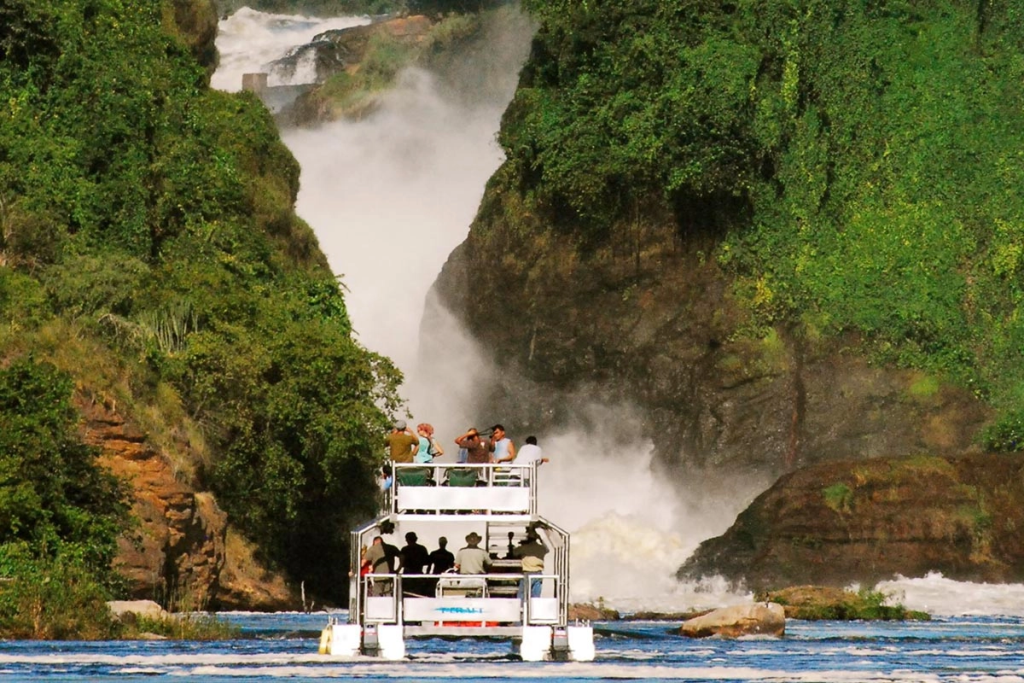
The rivers that pour from the summit pass through cliffs, creating stunning waterfalls. The Sipi Falls are the most picturesque waterfalls in the vicinity. These stunning waterfalls are located just outside the park’s perimeter, before the Forest Exploration Centre. Hiking to the waterfall necessitates passing past local village homes and farmlands. There are high-quality hotels and resorts in the surrounding areas around the falls. Aside from Sipi Falls, other waterfalls can be seen in Bulago, Chebonet, Sisyi, and Wanale.
Mount Elgon and Sipi Falls are noted for their mountain/rainbow trout. Anglers are drawn to these fish because of their vibrant colouring and tendency to struggle when caught. In the Sipi area, fish are caught and released back into the ocean. For the best results, the activity should begin in the morning. Guides are available to lead fisherman to the best fishing sites. Anglers must move with their own fishing gear and permit. Lunch and water are also included in the packing list.
Abseiling
Abseiling entails down a cliff using a solid rope-like gear attached around the harness. The Sipi Falls are Uganda’s sole organised abseiling site. The activity is well-organised, with high-quality imported equipment and well-trained teachers and guides to assure the safety of all participants.
Mountain Biking
The entire Mountain Elgon Region, including Mbale and Kapchorwa, provides excellent bike paths. One such trail leads from the Sipi commercial centre to a hill in Chema Kapchorwa. Kapchorwa District produces the majority of Uganda’s greatest long distance runners. A running track has been developed for training runners near the Sipi area, which travellers can also use for biking or jogging.
Rock Climbing
Rock climbing is one of the most popular activities available outside Mount Elgon National Park. The Sipi Falls region is ideal for rock climbing. The most difficult ascent in the Sipi area is approximately 35 meters. Hikers can also travel to the nearest town, Tororo, which has a lovely rock near the centre. Climbing Tororo Rock takes approximately 3 hours. The reward for reaching the top is stunning views of the town, towns, and Mount Elgon.
Bugisu Arabica Coffee Tour.
The highland Elgon region receives ample rainfall and has healthy soils that promote the growing of Bugisu Arabica coffee. Visitors can request an organised mission to learn about how coffee is grown, harvested, and processed. A local guide usually takes guests to the home of one of the area’s well-known farmers. This task can be completed near the Sipi Falls or by heading directly to the processing factory that purchases and processes agricultural products near Budadiri.
Visiting the Abuyudaya Jews
For more than a century, a tiny population of Abuyudaya Jews had lived in the Sipi and Mount Elgon locations. They are Jews by choice, not by birth, and have converted to the Jewish faith. The Abuyudaya Jews collaborate with other religious denominations such as the Pentecostal churches. The firm has had an impact on the local community by constructing schools and a huge hospital with a contemporary dental unit. The schools follow both Jewish and Ugandan curricula. The Abuyudaya also purchase Bugisu Arabica coffee from local producers at an affordable cost.
Spiritual, Community and Cultural Encounters
The Bagisu continue to practise an old culture of initiation of young males into adulthood through a series of ceremonies culminating in circumcision. No guy would be allowed to marry until he had completed the entire ritual process and been circumcised. No lady would marry a man who had not been circumcised or had not completed the traditional rites. During the months of August and December, the entire town and villages of Mbale are filled with people singing and dancing as they accompany young men to collect blessings and presents from their family before proceeding to the circumcision location. The place attracts thousands of people to observe the public ritual. The Sabiny practise female circumcision, which has been forbidden owing to demand from female human rights organisations. Some people continue to circumcise their daughters in secret.
Another intriguing cultural activity is the Budadiri Cultural Walk near Mount Elgon. The Bugusi cultural group organises traditional dances, storytelling, and educational events regarding their cultural history. This group may show tourists how to cook and eat delectable bamboo shoots known as malewa.
Pian Upe Wildlife Reserve and Matheniko Wildlife Reserve
The Pian Upe and Matheniko Game Reserves are situated in the huge Karamojong plains, bordering Mount Elgon. These two reserves comprise 2,788 square kilometres and are the country’s second largest protected areas. Several bird species live in the reserves, particularly in swamps like Loporokocho, including the African Hill Babbler, Alpine Chat, Black-throated Wattle-eye, Dusky Turtle Dove, Eastern Bronze-napped Pigeon, Grey Cuckoo-Shrike, Hartlaub’s Turaco, Lemon Dove, Mountain Yellow Warbler, and Thick-billed Honeyguide. Bright’s gazelle, lesser kudu, ostriches, and roan antelope are among the natural species that live here. In Uganda, the majority of these creatures can only be found in Kidepo Valley National Park. The Matheniko Bora Wildlife Reserve contains cave complexes with murals that are more than 2000 years old.