Rwenzori Mountain National Park is one of East Africa’s national parks with the third highest peak, known as Margherite Peak, rising 5,109 meters above sea level. The park spans four districts in southwestern Uganda: Kase, Bundibugyo, Kaborole, and Ntoroko. It shares a boundary with Virunga National Park in Congo at a low and high altitude of 2,500 meters [8,200 feet] on the edge of the African rift valley. The park covers 996 square kilometres of land, which is 120 kilometres long and 48 kilometres wide.
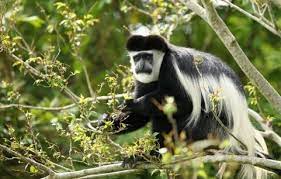
Six glacial peaks make up Rwenzori Mountain National Park, including Mount Stanley, which borders Congo, Mount Baker, Mount Emin Pasha, and Mount Speke, to name a few. It also contains waterfalls, snowfields, and lakes. The park features mountains that are higher than the Alps and snow-covered land. The park is home to a wide variety of endemic species, including 15 species of insects, 4 species of primates such as black and white monkeys, L’Hoest’s monkeys, duikers, Rwenzori turaco, hyrax, and chimpanzees, 89 species of birds like the handsome francolin, Rwenzori Batis, golden-winged sunbirds, long-eared owls, Rwenzori brown woodland warbler, and many others, antelopes like bush bush, reptiles like three-horned chameleons, and over 200 species of mammals like In 1994, the Uganda Wildlife Authority designated it as a UNESCO Heritage Site, safeguarding the diverse species.
Rwenzori mountain was previously known as the “mountain of the moon” by the mediaeval Alexandrine geographer in the A150 century. Later, on May 24, 1888, a man named Henry Stanley investigated the mountain and marked this part of it on a map. The local phrase for “cloud king” inspired Henry Stanley to name it Ruwenzori, leading to its current designation as Rwenzori Mountain National Park.
The park was considered the world’s most unique area because of its highest mountain in Africa, known as the Margherita Mountain, which is twin to Mount Stanley and measures 5,109 meters long and 167 feet wide above sea level. The park is hilly terrain that rises above sea level at both low and high elevations.
Activities at Rwenzori Mountain National Park
Mountain Trekking
Climbing to the summit of the peaks takes 7 to 9 days with the support of a skilled climber. The tourists receive a circle tour of the mountain as they ascend. They can also join the core circular trip after visiting Bujuku Valley via Nyabitaba. They can also enjoy good views of flora and animal species while on mountain trekking safaris.
Cultural encounter.
Various tribes surround the park, including the Bakonzo tribe, who live along the Bulembe ihandiro cultural paths, also known as the Bakonzo Community. A community guide will introduce tourists to locals skilled in traditional medicine. Travellers can also visit their craft shops, which sell handcrafted items such as baskets, bags, shoes, and more. They can enjoy traditional dances.
Bird watching
The park is a sanctuary for forest reserves, and tourists who enjoy bird-watching safaris can visit the Rwenzori Mountain National Park to see a variety of birds, including malachite sunbirds, brown woodland warblers, long-eared owls, handsome francolins, Rwenzori batis, golden-winged sunbirds, and many others.
Guided hikes
Tourists can engage in chimpanzee trekking along the hiking routes of Lake Mahooma, Karangura Ridge, and Buraro Chimp Forest. The trails connect you to nearby locations, such as Bundibugyo, via Bwamba Pass. Tourists can enjoy good views of many bird, mammal, and flora species, as well as a panoramic vista of Mount Baker.
Rwenzori Mountain National Park is roughly 6 hours and 40 minutes by car from Kampala, covering a distance of 297 kilometres. Alternatively, a tourist can fly from Entebbe airport to Kasese airport in two hours and 45 minutes.
Rwenzori Mountain National Park has a variety of hotels where travelers can stay, including the Equators Snow Geo Lodge, Executive Lodges, Equators Snow Lodge, Long Bellavista, and many others based on their budget.
The best time to visit Rwenzori Mountain National Park is during the dry season, which runs from January to December and includes the months of March, June, August, and November.