Namiri Plains Camp | Eastern Serengeti National Park
In Swahili, “Namiri” means big cat, and the name is no marketing flourish. For more than two decades before this camp ever existed, the area known as Soit Le Motonyi in the eastern Serengeti was closed entirely to tourism, set aside specifically as a cheetah conservation and breeding zone.
That two-decade closure worked: the region now holds the highest density of cheetah found anywhere in East Africa, alongside strong resident populations of lion and leopard, and Namiri Plains Camp, operated by Asilia Africa, was the first camp ever permitted back into this previously restricted research zone.
As a travel consultant, I recommend Namiri Plains specifically to travelers whose priority is predator density and genuine seclusion over migration spectacle, since its remote eastern position, with the nearest neighboring camp typically over an hour’s drive away, delivers a level of exclusivity that few other Serengeti properties can match.
From Restricted Research Zone to Award-Winning Camp
Namiri Plains sits directly on the Ngare Nanyuki River in the eastern Serengeti, within Soit Le Motonyi, an area protected and closed to visitors for more than twenty years specifically to allow the region’s cheetah population to recover and thrive undisturbed.
That conservation legacy remains visible in the wildlife today, and the camp continues to support ongoing cheetah research directly, offering guests the opportunity to spend an informative evening with Namiri Plains’ resident cheetah researcher, gaining real, in-depth insight into these endangered cats while contributing directly to the ongoing Serengeti Cheetah Project.
Five years after the original camp first opened, Namiri Plains underwent a complete rebuild and stylish redesign, emerging with seamlessly molded calcrete rooms, a natural, soothing color palette, and striking alfresco bathtubs, a genuine step change from the original property while retaining the same remote, secluded location that made it special in the first place.
Architecture Built From the Land Itself
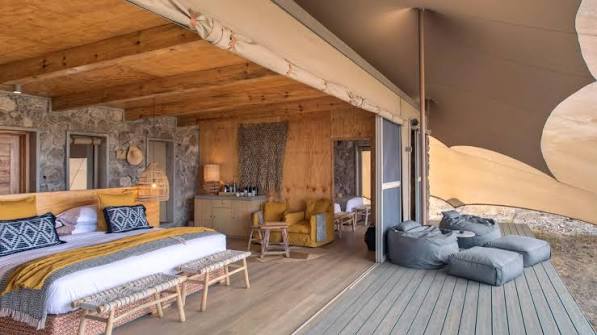
The suites’ distinctive stone walls are made from solidified ash left behind by ancient erupting volcanoes, a unusual and locally sourced building material that naturally insulates the rooms, keeping them cool during the heat of the day and comfortably warm once temperatures drop after dark.
From a distance, the tents are deliberately designed to blend into the landscape, resembling natural rock formations rather than obvious built structures, and canvas walls open fully to deliver uninterrupted views straight out onto the surrounding plains.
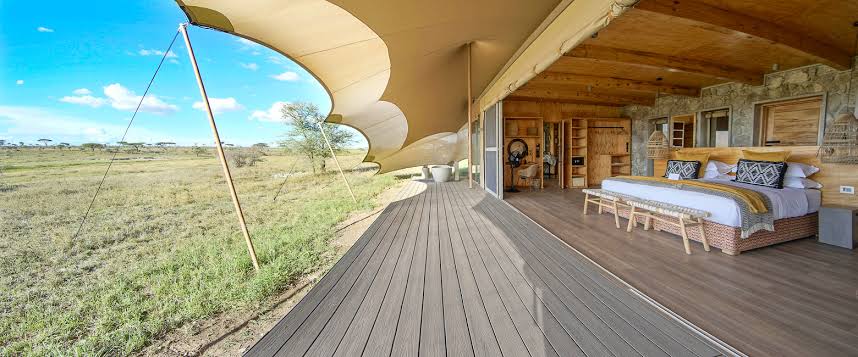
Interior decor draws on hand-woven materials and artefacts handcrafted by local Tanzanian artisans, giving each suite an authentic, grounded character that complements rather than competes with the dramatic, wide-open landscape visible just beyond the sliding glass doors.
The Suites
Namiri Plains holds eleven tented suites in total, including a recently refurbished two-bedroom family suite and additional two-bedroom retreats for larger groups or families wanting more space. Each suite features sliding doors opening onto an expanded viewing deck, an outdoor standalone resin bathtub, and bathroom windows offering full views of the seasonal riverbed directly from the shower, an experience unlike almost any other bathroom in East Africa’s safari circuit.
The Retreats at Namiri Plains, a newer addition to the property, offer an even more private two-bedroom configuration with a comfortable lounge and private dining area positioned between the two bedrooms, sliding doors opening onto the middle of a shared veranda to create a seamless indoor-outdoor living space, all designed by Caline Williams-Wynn, the interior designer behind several of Asilia’s most celebrated properties across the region.
Wildlife on the Doorstep
Namiri Plains’ position directly overlooking the Ngare Nanyuki River’s seasonal riverbed means wildlife regularly comes directly to camp rather than requiring a game drive to find it. Guest accounts consistently describe remarkable sightings within the immediate camp vicinity, a large male leopard posing for photographs just outside the property, multiple lion prides settling in around camp for days at a stretch, and consistently strong cheetah sightings reflecting the area’s decades-long conservation legacy.
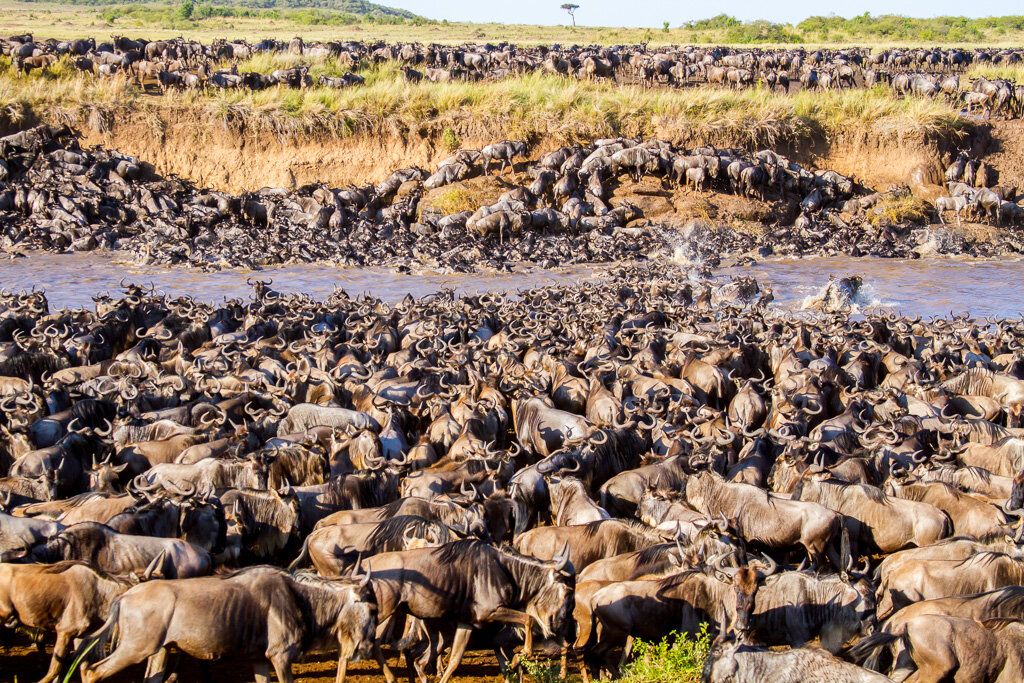
Guided game drives venture further afield in search of lion, cheetah, leopard, buffalo, hyena, and a wide range of plains game, and between November and May, or in some seasons stretching into June, the camp’s position gives it excellent access to migrating wildebeest herds as they pass through Soit Le Motonyi and gather on the plains to the southwest, adding genuine migration viewing to an already exceptional resident predator population.
Activities and the Camp’s Big Cat Exhibit
Beyond twice-daily game drives, Namiri Plains offers safari bush walks, hot air balloon safaris at an additional cost, and access to a dedicated photographic vehicle for guests specifically prioritizing serious wildlife photography.
The camp’s main area houses a curated exhibit on the history and big cats of the region, alongside a library and an intimate bar, giving guests an engaging way to deepen their understanding of the area’s conservation story between game drives.
The swimming pool, positioned in the shade for relief during the heat of the day, and the camp’s spa round out the wellness offering, and the entire property sits beneath a beautiful thorny acacia tree, with comfortable chairs arranged for guests to lazily survey the horizon at their leisure.
A Conservation Contribution Built Into Every Stay
Asilia Africa, the operator behind Namiri Plains, pioneers sustainable investment across vulnerable East African wilderness areas, fostering conservation economies for local communities while working to increase overall biodiversity. A contribution of $10 per guest, already included in the nightly rate rather than charged separately, goes directly toward these broader conservation goals, currently including a significant project focused on the Usangu Wetlands within Ruaha National Park further south in Tanzania.
Genuine Seclusion, By Design
With the nearest neighboring camp typically more than an hour’s drive away, Namiri Plains delivers a level of privacy and exclusivity difficult to replicate elsewhere in the Serengeti, particularly during peak migration season when the ecosystem’s more centrally located camps can see considerably more vehicle traffic at popular sightings. Guests here can reasonably expect entire game drives without encountering another vehicle, a genuine rarity anywhere in East Africa’s more famous safari destinations.
Getting There
Namiri Plains is reached via the Seronera Airstrip in the central Serengeti, followed by a road transfer to the camp itself, with scheduled and chartered flights available from Arusha and other regional hubs. Given the camp’s remote eastern position, fly-in access is the standard and recommended approach for the vast majority of guests.
Best Time to Visit
Namiri Plains operates year-round, and its resident predator population, particularly cheetah, remains consistently strong throughout the calendar, meaning there’s no bad time to visit for wildlife viewing alone. For travelers specifically hoping to combine this exceptional predator density with migration viewing, November through May, and in some years extending into June, offers the strongest chance of encountering wildebeest herds passing through the surrounding plains.
Frequently Asked Questions
Why is Namiri Plains known specifically for cheetahs?
The camp sits within Soit Le Motonyi, an area closed to tourism for more than twenty years as a dedicated cheetah conservation and breeding zone. Namiri Plains was the first camp permitted back into this previously restricted research area, and the region now holds the highest cheetah density in East Africa.
How many suites does Namiri Plains have?
Eleven tented suites, including a two-bedroom family suite and additional two-bedroom retreats for larger groups, each featuring an outdoor resin bathtub and an expanded viewing deck.
Is Namiri Plains open year-round?
Yes. Unlike many seasonal Serengeti camps, Namiri Plains operates throughout the year, with consistently strong resident predator wildlife regardless of season.
Can I see the Great Migration from Namiri Plains?
Yes, during part of the year. Between roughly November and May or June, migrating wildebeest herds pass through the surrounding plains, adding genuine migration viewing to the camp’s already exceptional resident predator population.
What makes Namiri Plains’ architecture distinctive?
The suites’ stone walls are built from solidified volcanic ash, a naturally insulating local material, and the tents are deliberately designed to blend into the surrounding landscape, resembling natural rock formations from a distance.