Lemosho Route
Lemosho has become many guides’ favorite Kilimanjaro route, and for good reason. It combines a remote, uncrowded start with a gradual ascent across the Shira Plateau, before joining the Machame route for the classic southern circuit beneath the glaciers. Climbed over eight days, it offers one of the best acclimatization profiles on the mountain and consistently high summit success rates.
Plan a Lemosho Route climb on Kilimanjaro. 7 days vs 8 days itineraries, camps and altitudes, Shira Plateau crossing, success rates, crowds, costs, best season and why many guides rate it the best route.
This guide explains the Lemosho Route day by day, compares seven- and eight-day options, and covers difficulty, crowds, costs, seasons and why it suits so many first-time climbers.
Lemosho Route at a Glance
| Feature | Details |
| Start | Lemosho trailhead via Londorossi Gate, western slopes |
| Finish | Mweka Gate, about 1,630 m |
| Duration | 7 days or 8 days |
| Distance | About 70 km |
| Accommodation | Tents |
| Summit approach | Barafu Camp to Stella Point and Uhuru Peak |
| Highlights | Remote western forest, Shira Plateau, Lava Tower, Barranco Wall |
| Crowds | Quiet early days, busier after joining Machame |
Lemosho Route Itinerary: 8 Days
| Day | Route | Altitude | Distance | Time |
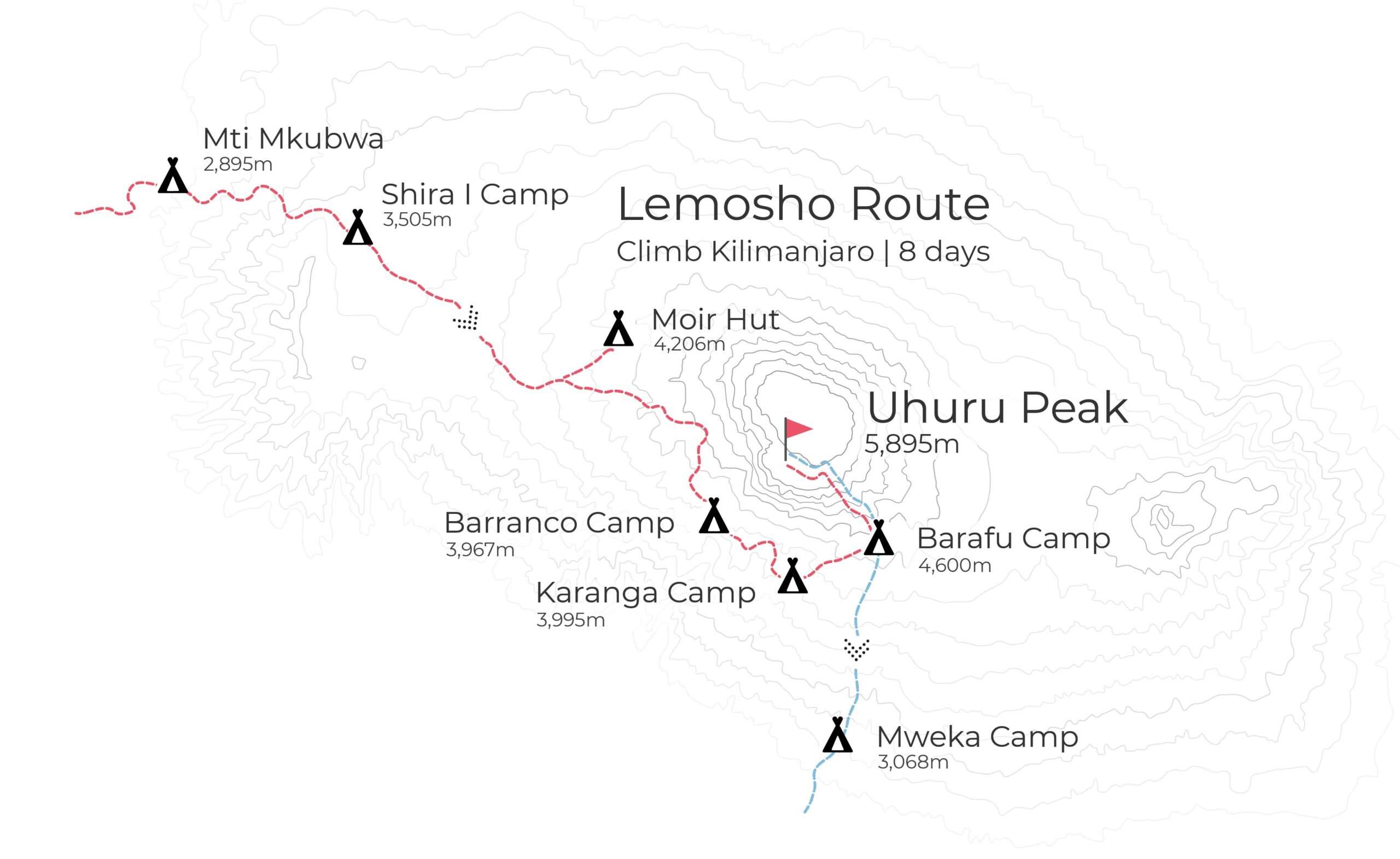
| 1 | Lemosho trailhead to Mti Mkubwa (Big Tree) Camp | About 2,100 to 2,650 m | About 6 km | 3 to 4 hours |
| 2 | Mti Mkubwa to Shira 1 Camp | 2,650 to 3,610 m | About 8 km | 5 to 6 hours |
| 3 | Shira 1 to Shira 2 Camp | 3,610 to 3,850 m | About 7 km | 4 to 5 hours |
| 4 | Shira 2 to Lava Tower to Barranco Camp | 3,850 to 4,630 to 3,960 m | About 10 km | 6 to 8 hours |
| 5 | Barranco Camp to Karanga Camp | 3,960 to 3,995 m | About 5 km | 4 to 5 hours |
| 6 | Karanga Camp to Barafu Camp | 3,995 to 4,673 m | About 4 km | 3 to 4 hours |
| 7 | Barafu Camp to Uhuru Peak to Mweka Camp | 4,673 to 5,895 to 3,100 m | About 17 km | 12 to 16 hours |
| 8 | Mweka Camp to Mweka Gate | 3,100 to 1,630 m | About 10 km | 3 to 4 hours |
Day 1: Into the western forest
After a drive to Londorossi Gate for registration, you continue to the Lemosho trailhead. The first walk is short, through pristine montane rainforest with giant trees and lush undergrowth. Colobus monkeys and forest birds are common. Mti Mkubwa, or Big Tree Camp, sits in the forest.
Day 2: Climbing onto the Shira Plateau
The trail leaves the forest and climbs through heath and giant heathers to the rim of the Shira Plateau. Views open up dramatically, with Kibo ahead. Shira 1 Camp lies on the western plateau.
Day 3: Crossing the plateau
A gentle walk across the Shira Plateau, with views of Kibo and the Shira Cathedral, brings you to Shira 2 Camp. This easier day helps acclimatisation and offers time to rest or take an acclimatisation hike.
Day 4: Lava Tower and Barranco
The route climbs to Lava Tower at about 4,630 metres, then descends to Barranco Camp. This key acclimatisation day follows the “climb high, sleep low” principle.
Day 5: The Barranco Wall and Karanga
You scramble up the Barranco Wall, then traverse valleys to Karanga Camp, with spectacular views of the southern glaciers.
Day 6: Karanga to Barafu
A short climb to Barafu Camp, the high camp, where you rest and prepare for summit night.
Day 7: Summit night
You start around midnight, climbing to Stella Point by dawn and continuing to Uhuru Peak. After the summit, you descend to Barafu and then to Mweka Camp.
Day 8: Descent to Mweka Gate
A final walk through rainforest to Mweka Gate, where you receive your summit certificate.
Lemosho Route: 7 Days vs 8 Days
| Factor | 7 days | 8 days |
| Acclimatisation | Good | Excellent |
| Success rate | High | Higher |
| Shira Plateau | Crossed more quickly | Full crossing with extra camp |
| Cost | Lower | Higher |
| Recommended for | Fit climbers with some altitude experience | Most climbers |
The eight-day version is widely recommended, giving more time on the Shira Plateau and a gentler ascent.
Why Lemosho Has High Success Rates
- Gradual ascent through the western forest and across the plateau
- Climb high, sleep low at Lava Tower
- Longer itinerary of seven to eight days
- Extra acclimatisation on the Shira Plateau
- Quiet early days, allowing a relaxed pace
Scenery Highlights
| Highlight | Description |
| Western rainforest | Remote, lush and quiet |
| Shira Plateau | Vast caldera with views of Kibo and Mount Meru |
| Shira Cathedral | Dramatic volcanic ridge |
| Lava Tower | Towering volcanic plug |
| Barranco Valley | Giant senecios beneath the glaciers |
| Barranco Wall | Famous scramble with panoramic views |
| Southern glaciers | Spectacular from Karanga and Barafu |
Crowds on the Lemosho Route
The first two to three days are quiet, often with only a few groups. After joining the Machame route near Lava Tower, camps become busier, especially in peak season. Overall, Lemosho is less crowded than Machame.
Route Closures and Wildfires
Lemosho approaches from the western slopes, which can be affected by dry-season wildfires. In late September 2026, the park authority temporarily suspended Lemosho and Londorossi while a fire burned in the western area, rerouting climbers to Machame, Marangu or Rongai. The routes reopened in early October. Good operators monitor such situations and adapt itineraries promptly.
Costs
| Item | Approx. cost |
| Park fees for 8 days | Around US$1,100 to 1,200 including VAT |
| Mid-range 8-day package | US$3,000 to 4,500 per person |
| Premium package | US$4,500 and above |
| Tips | US$250 to 400 per climber |
Best Time to Climb the Lemosho Route
| Months | Conditions |
| January to early March | Dry, clear, moderate crowds |
| June to October | Dry, colder, busier |
| April to May | Long rains, muddy forest |
| November | Short rains |
| December | Good, busy around holidays |
Lemosho Compared With Machame and the Northern Circuit
| Factor | Lemosho | Machame | Northern Circuit |
| Duration | 7 to 8 days | 6 to 7 days | 8 to 9 days |
| Crowds | Moderate | Busy | Very quiet |
| Scenery | Outstanding | Excellent | Outstanding |
| Acclimatisation | Excellent | Good | Excellent |
| Cost | Higher | Moderate | Highest |
The Western Forest: Lemosho’s Quiet Beginning
Lemosho’s first day is one of the great pleasures of the route. The western rainforest receives fewer visitors than the southern forests above Moshi, and the trail is often quiet. Giant trees, hanging moss and dense undergrowth create a cool, green world, and wildlife is more likely to be seen. Black-and-white colobus monkeys are common, blue monkeys may be heard, and occasionally signs of larger animals, such as buffalo, are found on the lower slopes.
This gentle start allows climbers to settle into the rhythm of the mountain. Walking times are short, giving you time to rest, adjust to camp life and enjoy the forest.
Crossing the Shira Plateau
The Shira Plateau is one of the highlights of Lemosho. Formed when the Shira volcano collapsed, it is one of the highest plateaus in the world. The landscape is wide and open, covered in heather, grassland and volcanic rock. Lemosho’s extra day here allows a relaxed crossing and time for acclimatisation hikes, such as a walk to Shira Cathedral or other viewpoints.
Evenings on the plateau can be cold, but the views are exceptional, with sunsets over Mount Meru and clear night skies filled with stars.
Joining the Southern Circuit
After Lava Tower, Lemosho joins the Machame route for the southern circuit beneath Kibo. From here, you share camps with Machame climbers, so camps become busier. The Barranco Wall, Karanga Valley and Barafu Camp follow, offering some of the most spectacular views on the mountain.
Because Lemosho climbers have had more time to acclimatise, many find these days more comfortable than climbers on shorter Machame itineraries.
Why Many Guides Prefer Lemosho
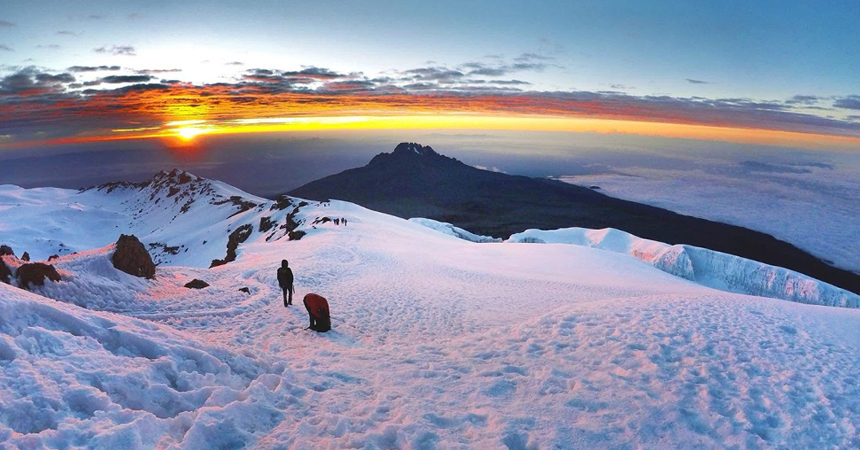
Guides often recommend Lemosho because it combines the best elements of Kilimanjaro: a quiet forest start, a full Shira Plateau crossing, the Lava Tower acclimatisation day and the classic southern circuit. Its longer itinerary gives climbers a strong chance of reaching the summit, and its varied scenery keeps each day interesting. For first-time climbers willing to invest in an extra day or two, Lemosho offers excellent value for the experience it provides.
A Note on Transfers to the Trailhead
The drive to Lemosho’s starting point is longer than for southern routes. From Moshi, it usually takes three to four hours, including registration at Londorossi Gate. The road passes through farmland and plantations and can be rough in places, particularly after rain. Operators usually leave early in the morning, and climbers often enjoy the scenery of the western slopes along the way. Because the first walking day is short, the long drive is manageable, and you arrive at Mti Mkubwa Camp with time to settle in.
Final Week Before Your Climb
The last week before a Kilimanjaro climb matters more than many people realise. Reduce training intensity so your legs are fresh. Prioritise sleep, eat well and avoid illness by washing hands often while travelling. Arrive in Moshi or Arusha at least a day before the climb, ideally two, to recover from flights and adjust to the climate. Use this time to attend your operator’s briefing, check rental gear, pack your duffel within the weight limit and organize your daypack for the first day. A calm, rested start sets the tone for the whole climb.
Frequently Asked Questions About the Lemosho Route
Is Lemosho the best route on Kilimanjaro?
Many guides consider it one of the best for scenery, acclimatisation and success.
How long is the Lemosho Route?
Seven or eight days, covering about 70 kilometres.
Is Lemosho difficult?
It is a moderately difficult trek with a demanding summit night, but its gradual ascent helps acclimatisation.
Is Lemosho crowded?
The first days are quiet; it becomes busier after joining Machame.
What is the success rate on Lemosho?
Eight-day Lemosho climbs generally report high success rates.
Was Lemosho closed in 2026?
It was temporarily suspended in late September 2026 due to a wildfire and reopened in early October.
Where does the Lemosho Route start?
On the western slopes, reached via Londorossi Gate after a drive from Moshi or Arusha.
Is there wildlife on Lemosho?
The western forest often has colobus monkeys, and signs of larger animals are sometimes seen on the lower slopes.
What is the difference between Lemosho and Londorossi?
Londorossi is the park gate where climbers register; the Lemosho trailhead is the starting point of the walk.
What is the best month for Lemosho?
January to early March and late June to October offer the best conditions.
Can beginners climb Lemosho?
Yes. Its gradual ascent makes it one of the best routes for first-time climbers.