Kilimanjaro Routes Compared—Which Route Is Best for You?
Every Kilimanjaro climb ends at the same place, Uhuru Peak on the rim of Kibo crater at 5,895 meters, but the journey there varies enormously depending on which route you choose. One route offers huts with bunk beds and a dining hall. Another crosses the vast Shira Plateau before circling the mountain in near solitude. A third climbs a steep forest ridge so directly that only fit, experienced trekkers should attempt it.
Choosing the right route is one of the most important decisions in planning your climb. It affects your chance of reaching the summit, the scenery you see, how crowded your camps are, how comfortable you feel and how much you pay. Yet many climbers choose based on price or a friend’s recommendation without understanding the differences.
This guide compares all seven main Kilimanjaro routes side by side, explains their strengths and weaknesses, and helps you identify the right route for your experience, budget and goals.
How to Choose a Kilimanjaro Route
Before comparing routes, consider the factors that matter most to you.
| Factor | Why it matters |
| Acclimatization | The single most important factor for summit success |
| Duration | Longer climbs allow more acclimatization but cost more. |
| Scenery | Some routes cross more varied landscapes. |
| Crowds | Popular routes can feel busy in peak season. |
| Accommodation | Huts on Marangu; tents on all other routes |
| Difficulty | Some routes are steeper or longer |
| Cost | Determined largely by number of days |
The Seven Routes at a Glance
| Route | Days | Distance | Start | Descent | Scenery | Crowds | Acclimatization |
| Marangu | 5 to 6 | About 70 km | Marangu Gate, southeast | Marangu | Good | Moderate | Fair |
| Machame | 6 to 7 | About 62 km | Machame Gate, south | Mweka | Excellent | Busy | Good |
| Lemosho | 7 to 8 | About 70 km | London, West | Mweka | Outstanding | Moderate | Excellent |
| Rongai | 6 to 7 | About 75 km | Nale Moru, north | Marangu | Good | Quiet | Good |
| Northern Circuit | 8 to 9 | About 90 km | London, West | Mweka | Outstanding | Very quiet | Excellent |
| Umbwe | 6 to 7 | About 53 km | Umbwe Gate, south | Mweka | Dramatic | Quiet | Poor |
| Shira | 7 to 8 | About 56 km | Shira, west (by vehicle) | Mweka | Excellent | Moderate | Fair |
Route-by-Route Comparison
Marangu Route
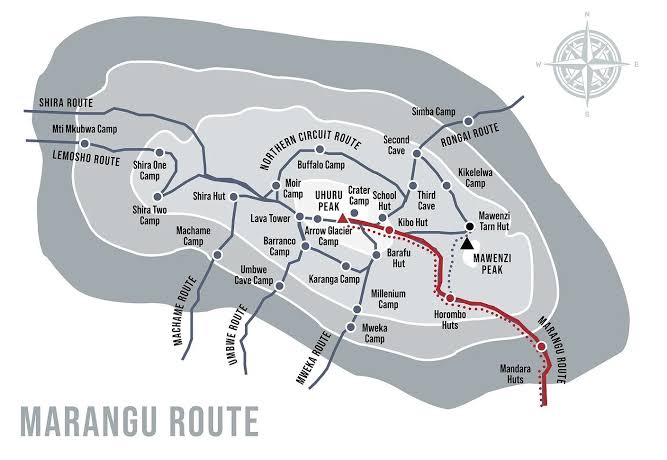
Marangu is the oldest and most established route and the only one with hut accommodation. Climbers sleep in dormitory huts at Mandara, Horombo and Kibo. The trail is gradual and well defined, and the ascent and descent follow the same path.
Pros: huts, gentle gradients, shorter duration.
Cons: less scenic variety, same route up and down, and five-day versions have low success rates.
Best for: climbers who prefer huts or are climbing in the rainy season.
Machame Route
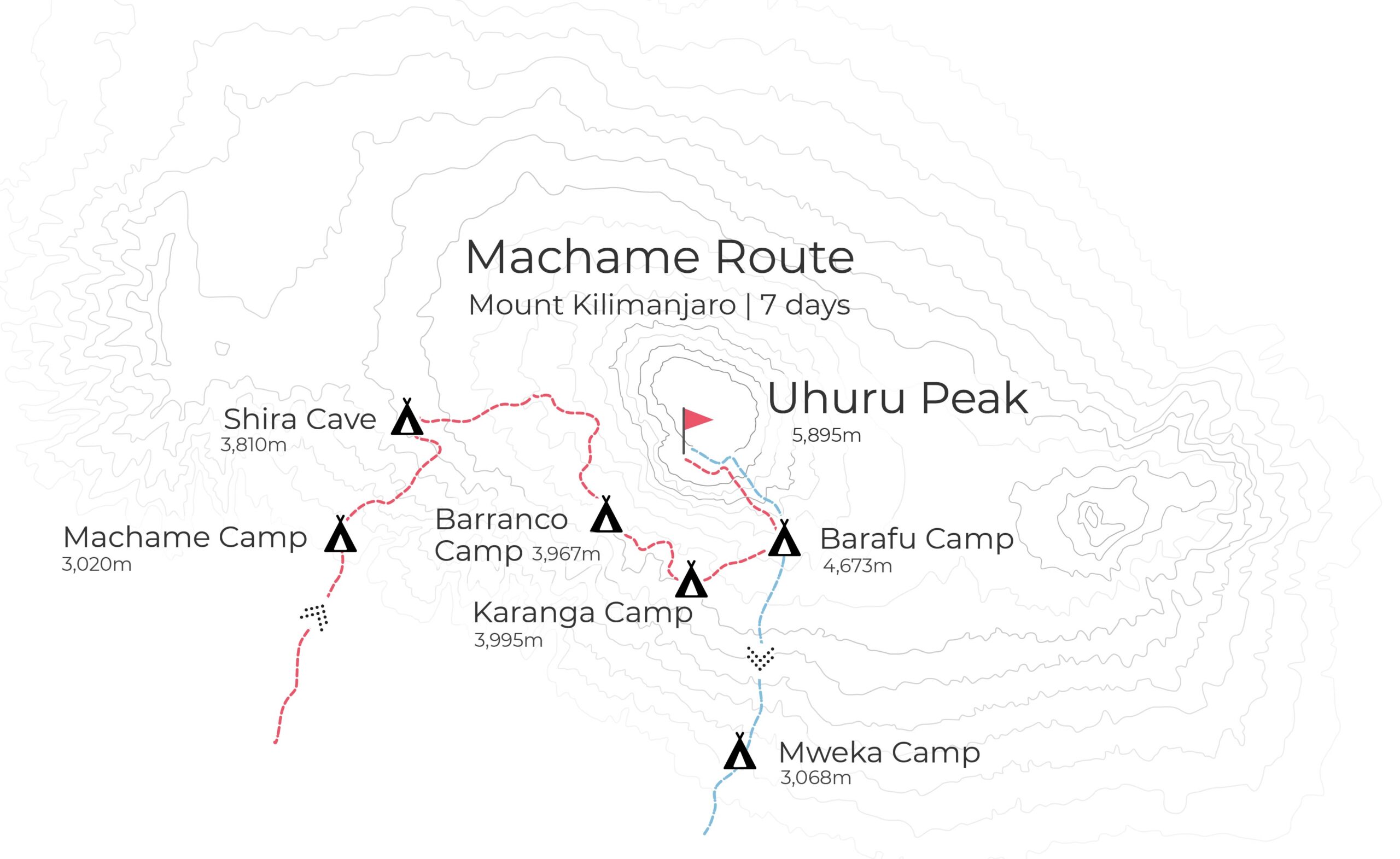
Machame is Kilimanjaro’s most popular route. It climbs through the rainforest to the Shira Plateau, passes Lava Tower and crosses the famous Barranco Wall before reaching Barafu camp. The “climb high, sleep low” profile helps acclimatization.
Pros: spectacular scenery, good acclimatization on seven-day versions, good value.
Cons: busy in peak season, steeper first days.
Best for: fit first-timers wanting scenic variety at a reasonable price.
Lemosho Route
Lemosho begins on the remote western side of the mountain, crossing pristine rainforest and the Shira Plateau before joining the Machame route. It is widely regarded as one of the most beautiful routes.
Pros: outstanding scenery, quieter first days, excellent acclimatization, high success rates.
Cons: higher cost due to more days and longer transfers.
Best for: most first-time climbers who want the best balance.
Rongai Route
Rongai approaches from the north, near the Kenyan border. It is drier, quieter and gentler, with views across to Kenya’s plains. Climbers descend via Marangu, seeing both sides of the mountain.
Pros: drier side, fewer crowds, gradual ascent.
Cons: less dramatic scenery in the early days, longer transfer to the trailhead.
Best for: climbers in the rainy seasons and those wanting quiet trails.
Northern Circuit
The Northern Circuit is the longest route, starting like Lemosho and then circling around the northern slopes before summiting. It offers the most time for acclimatization and the fewest crowds.
Pros: highest success rates, solitude, panoramic views.
Cons: longest duration and highest cost.
Best for: climbers prioritizing summit success and solitude.
Umbwe Route
Umbwe is the steepest and most direct route, climbing a narrow forest ridge before joining the southern circuit at Barranco. Its rapid altitude gain makes it unsuitable for most first-timers.
Pros: dramatic, quiet, challenging.
Cons: poor acclimatization profile, physically demanding.
Best for: experienced trekkers already acclimatized, for example, after climbing Mount Meru.
Shira Route
Shira begins at a high altitude, reached by vehicle, and then crosses the Shira Plateau before joining the Machame and Lemosho routes. The high start can increase altitude sickness risk.
Pros: shorter walking distances, beautiful plateau scenery.
Cons: starts high without gradual acclimatization.
Best for: climbers already acclimatized or short on lower-forest time.
Success Rates by Route and Duration
Official statistics are limited, but operators and guides consistently report that duration matters more than route.
| Itinerary length | Typical success range reported by operators |
| 5 days | Low |
| 6 days | Moderate |
| 7 days | Good |
| 8 days | High |
| 9 days | Very high |
Routes that allow seven to nine days, such as Lemosho, Machame (seven days) and the Northern Circuit, generally have the highest success rates.
Scenery Compared
| Route | Scenic highlights |
| Marangu | Mandara rainforest, Maundi Crater, and Horombo views of Mawenzi |
| Machame | Shira Plateau, Lava Tower, Barranco Wall, Karanga Valley |
| Lemosho | Remote western forest, full Shira Plateau crossing, Barranco Wall |
| Rongai | Northern wilderness, Mawenzi Tarn, views of Kenya |
| Northern Circuit | Shira Plateau, remote northern slopes, panoramic views |
| Umbwe | Steep forest ridges, Barranco Valley |
| Shira | High Plateau, Shira Cathedral, Lava Tower |
Crowds Compared
| Route | Peak season crowd level |
| Machame | High |
| Marangu | Moderate to high |
| Lemosho | Moderate (busy after joining Machame) |
| Shira | Moderate |
| Rongai | Low |
| Umbwe | Low |
| Northern Circuit | Very low |
Cost Compared
Costs depend mainly on the number of days, since park fees are charged per day.
| Route | Typical days | Relative cost |
| Marangu | 5 to 6 | Lower |
| Machame | 6 to 7 | Moderate |
| Umbwe | 6 to 7 | Moderate |
| Rongai | 6 to 7 | Moderate |
| Shira | 7 to 8 | Moderate to higher |
| Lemosho | 7 to 8 | Higher |
| Northern Circuit | 8 to 9 | Highest |
Choosing the cheapest route by cutting days often reduces your chance of success, which can be a false economy.
Which Route Is Best for You?
| Traveler | Best route |
| First-time climber wanting the best balance | Lemosho (8 days) |
| Scenic route on a moderate budget | Machame (7 days) |
| Maximum success and solitude | Northern Circuit (9 days) |
| Prefer huts | Marangu (6 days) |
| Climbing in the rainy season | Rongai or Marangu |
| Avoiding crowds | Rongai or Northern Circuit |
| Experienced and acclimatized | Umbwe |
| Starting high with less forest walking | Shira |
Seasonal and Practical Considerations
Rainy seasons: the northern Rongai route is generally drier; Marangu’s huts offer shelter.
Peak seasons: Lemosho and the Northern Circuit offer quieter first days than Machame.
Route closures: occasionally, authorities close routes due to weather or fire. In late 2026, wildfires on the western slopes temporarily closed Lemosho and Londorossi before they reopened in October. Good operators reroute climbers when needed.
Combining with Mount Meru: climbing Meru first offers excellent acclimatization, making shorter or steeper Kilimanjaro routes more achievable.
Understanding Altitude Profiles
The shape of a route’s altitude profile is often more important than its total length. Routes that gain height gradually, with days where you climb high and then descend to sleep lower, give your body time to produce more red blood cells and adapt to reduced oxygen. Routes that climb steeply in the first days or start at high altitude place more strain on the body.
Machame and Lemosho both include the Lava Tower day, where climbers reach about 4,630 meters before descending to Barranco Camp at about 3,960 meters. This “climb high, sleep low” pattern is one reason these routes perform well. The Northern Circuit extends this principle over several days on the northern slopes. Marangu and Rongai follow simpler profiles, so adding acclimatization days makes a big difference. Umbwe and Shira gain height quickly or start high, which is why they suit acclimatized climbers.
Descent Routes Explained
Every route has a descent path, and some share them.
| Ascent route | Descent route |
| Marangu | Marangu |
| Rongai | Marangu |
| Machame, Lemosho, Shira, Umbwe, Northern Circuit | Mweka |
The Mweka descent is steep and direct, passing through moorland and rainforest to Mweka Gate. The Marangu descent is longer but more gradual. Knowing your descent route helps you prepare for the final days, which can be hard on the knees.
Route Choice for Different Fitness Levels
Fitness affects comfort and enjoyment, but it does not guarantee acclimatization. Very fit climbers sometimes struggle because they walk too fast. Less fit climbers who walk slowly and choose longer routes often succeed. If your fitness is moderate, choose a route with gentler gradients and more days, such as Rongai over seven days or Lemosho over eight. If you are very fit and have altitude experience, Machame or even Umbwe may suit you, though more days still improve your chances.
A Note on Route Closures
Occasionally, Kilimanjaro National Park authorities close or restrict routes for safety reasons, such as wildfires, heavy rain or maintenance. In late 2026, wildfires on the western slopes led to temporary closures of Lemosho and Londorossi, and briefly Rongai, before the routes reopened in October. Reputable operators keep track of these changes and can switch you to a suitable alternative.
Our Experience With Route Choice
Experienced guides often say that most climbers who struggle on Kilimanjaro did not choose the wrong route; they chose the wrong itinerary length. A seven-day Machame climb and an eight-day Lemosho climb both give excellent chances of success. A five-day Marangu or six-day Machame, by contrast, leaves little room for the body to adapt. When comparing routes, start by deciding how many days you can commit, then choose the route that best fits that time and your preferences for scenery and crowds.
It also helps to think about what kind of experience you want. If you love quiet wilderness, the Northern Circuit or Rongai will suit you. If you want dramatic variety and do not mind company, Machame and Lemosho are ideal. If comfort matters most, Marangu’s huts provide shelter. Every route reaches the same summit, and each offers its own memories.
Final Week Before Your Climb
The last week before a Kilimanjaro climb matters more than many people realise. Reduce training intensity so your legs are fresh. Prioritise sleep, eat well and avoid illness by washing hands often while travelling. Arrive in Moshi or Arusha at least a day before the climb, ideally two, to recover from flights and adjust to the climate. Use this time to attend your operator’s briefing, check rental gear, pack your duffel within the weight limit and organise your daypack for the first day. A calm, rested start sets the tone for the whole climb.
Our Recommendations
- Best overall: Lemosho, eight days.
- Best value scenic route: Machame, seven days.
- Best for success and solitude: Northern Circuit, nine days.
- Best for comfort: Marangu, six days.
- Best in the rainy season: Rongai, seven days.
Frequently Asked Questions About Kilimanjaro Routes
What is the easiest Kilimanjaro route?
Marangu and Rongai have gentler gradients, but longer itineraries on any route make the climb easier.
Which route has the highest success rate?
The Northern Circuit and eight-day Lemosho itineraries generally report the highest success rates.
What is the most scenic route?
Lemosho and the Northern Circuit are widely considered the most scenic.
Which route is least crowded?
The Northern Circuit and Rongai are the quietest.
Is the Machame route too busy?
It can be busy in peak months, but it remains a superb route with good acclimatisation on seven days.
Which route has huts?
Only the Marangu route.
Can I change routes after booking?
Many operators allow changes if made well in advance, subject to availability and price differences.
Which route is best for older climbers?
Longer, gentler routes such as eight-day Lemosho, seven-day Rongai or the Northern Circuit suit older climbers best.