Tanzania Great Migration Safaris: A Complete Guide
The Serengeti holds the Great Migration for most of the year, making Tanzania the migration’s true home base within the broader Serengeti-Mara ecosystem. Unlike Kenya’s chapter, defined almost entirely by the Mara River crossing spectacle, Tanzania’s migration story spans the full cycle: the calving season’s intense predator drama on the southern plains, the herds’ movement through the central and western Serengeti, and, eventually, the same northern crossings that draw crowds on the Kenyan side of the border.
This guide focuses on the migration’s Tanzanian chapters specifically: the calving season, the western corridor’s Grumeti crossings, and the northern Serengeti’s own Mara River crossing points, covering when and where to position yourself for each phase.
Understanding the Migration’s Tanzanian Chapters
Tanzania offers three genuinely distinct migration experiences within its own borders: the calving season on the southern Serengeti plains around Ndutu, January through March, delivering the single most concentrated predator-prey drama of the entire migration cycle; the western corridor’s Grumeti River crossings, roughly May through July, as herds move northwest, offering a quieter alternative to the peak crossing season; and the northern Serengeti’s own Mara River crossing points, July through October, which see the same crossing spectacle as the Kenyan Mara but from the Tanzanian side, often with lower visitor density.
How Tanzania’s Migration Cycle Works
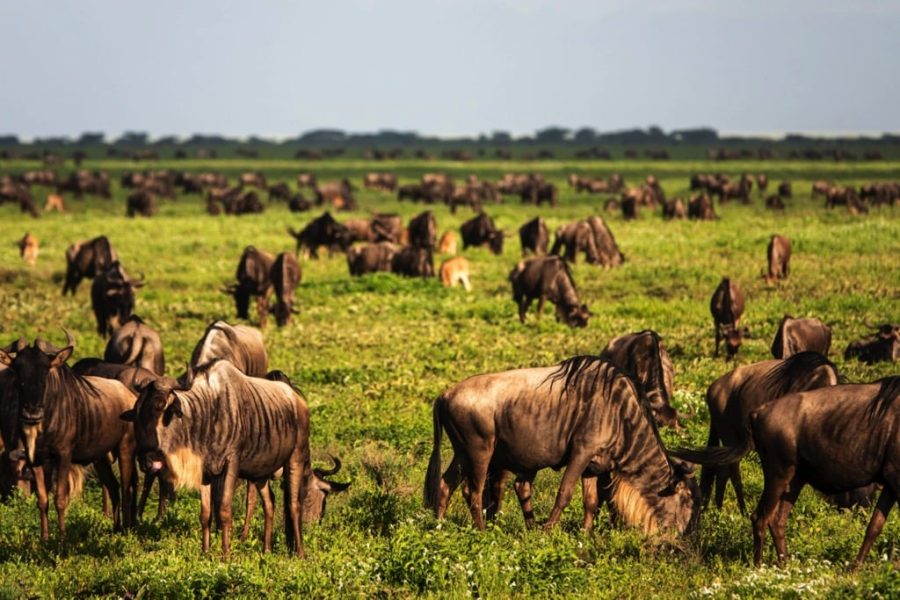
From December through March, the herds gather on the short-grass plains of the southern Serengeti, particularly around Ndutu, for the calving season, producing around 400,000 calves within a few weeks and drawing intense lion, cheetah and hyena activity.
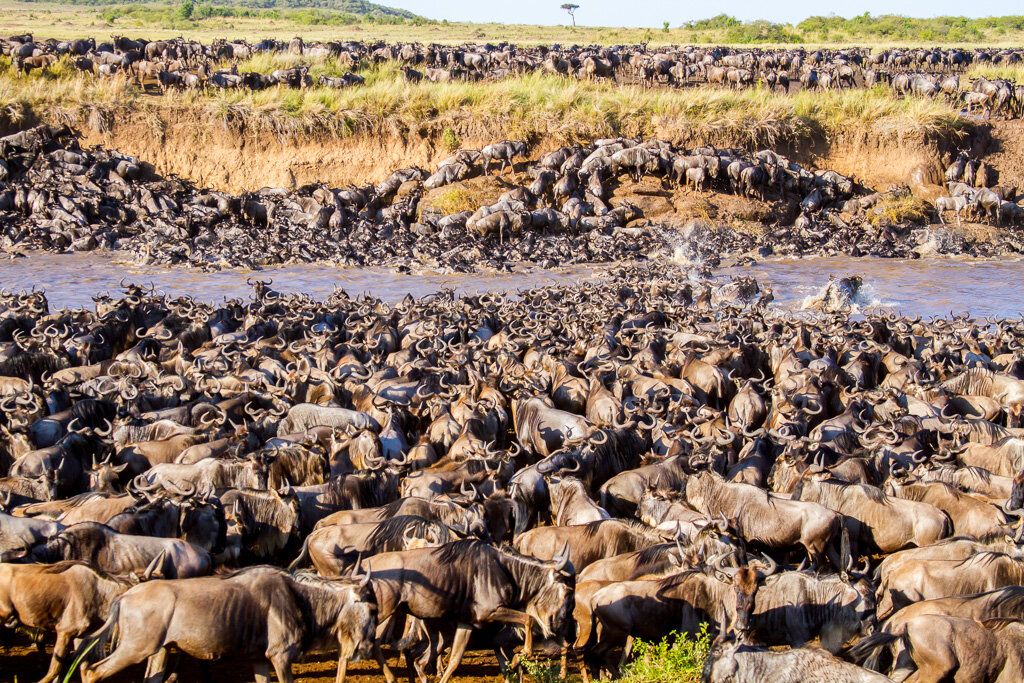
From April through June, the herds move north and west through the central Seronera area and the western corridor, where the Grumeti River presents its own crossing opportunities, generally less crowded than the later Mara crossings. From July onward, the herds reach the northern Serengeti and cross the Mara River into Kenya, with crossings continuing at various points through October before the cycle reverses as the rains return.
Tanzania’s Migration Cycle at a Glance
Here is a month-by-month summary of the migration’s presence within Tanzania.
| Period | Herd Location | Key Event | Best Base |
| January – March | Southern Serengeti (Ndutu) | Calving season; intense predator activity | Ndutu area camps |
| April – June | Central and western Serengeti | Herds moving north; Grumeti crossings possible | Western corridor camps |
| July – October | Northern Serengeti | Mara River crossings (Tanzanian side) | Northern Serengeti / Kogatende |
| November – December | Southern Serengeti (returning) | Herds moving south toward calving grounds | Southern Serengeti |
Migration Viewing Locations Within Tanzania
What follows covers the migration’s key viewing locations within Tanzania specifically.
Ndutu and the Southern Serengeti Plains
The definitive calving season location, technically spanning both Serengeti National Park and the Ngorongoro Conservation Area, drawing the migration’s most intense predator-prey activity of the year from January through March.
Western Corridor and the Grumeti River
As the herds move northwest roughly May through July, the Grumeti River presents its own crossing points, generally less crowded than the later Mara crossings, offering a quieter alternative for travellers wanting genuine crossing drama without peak-season crowds.
Northern Serengeti and Kogatende
The Tanzanian side of the famous Mara River crossings, seeing the same spectacle as Kenya’s Masai Mara from July through October, often with lower visitor density than the more famous Kenyan crossing points.
Month-by-Month Migration Planning in Tanzania
Matching your specific travel dates to the migration’s likely location within Tanzania is the most practical planning step.
| Month | Likely Herd Location | Recommendation |
| Jan-Mar | Southern Serengeti/Ndutu | Base in Ndutu for calving season |
| Apr-Jun | Central/Western Serengeti | Base in western corridor for Grumeti crossings |
| Jul-Oct | Northern Serengeti | Base near Kogatende for Mara River crossings |
| Nov-Dec | Southern Serengeti (returning) | Base centrally or south; transitional period |
What Does a Tanzania Migration Safari Cost?
Peak calving season (February) and peak crossing season (August-September) carry the highest accommodation rates given concentrated demand for well-positioned camps.
Budget migration safari — Shared vehicle, central Serengeti base
A shared vehicle safari with a centrally based camp, accepting some compromise on positioning for specific migration phases.
Mid-range migration safari — Private vehicle, phase-specific positioning
A private vehicle and guide, positioned specifically at Ndutu, the western corridor or the north depending on season.
Premium mobile camp safari — Camps that relocate with the migration
Mobile camps that physically follow the migration’s movement offer the most positioned, premium migration experience.
Where to Stay for Each Migration Phase
Camp positioning relative to the migration’s current phase matters considerably.
| Migration Phase | Best Camp Location | Example Properties |
| Calving season | Ndutu area | Ndutu Safari Lodge, seasonal mobile camps |
| Western corridor crossings | Grumeti area | Singita Grumeti, Kirawira Serena |
| Northern crossings | Kogatende/Northern Serengeti | Singita Mara River Camp, Nomad Lamai |
Migration-Specific Activities in Tanzania
Beyond standard game drives, several activities specifically enhance migration viewing within Tanzania.
Calving Season Predator Tracking
During January through March, guides specifically track predator movement relative to the calving herds around Ndutu, since this period produces the most sustained predator activity of the year.
Hot Air Balloon Over the Migration
Available over the Serengeti year-round, giving a spectacular aerial perspective particularly striking during both calving season and crossing season.
River Crossing Vigils
Positioning early at an active crossing point on either the Grumeti or Mara River and waiting for herd build-up, the standard approach for witnessing a crossing.
| Activity | Best Season | Location |
| Calving season predator tracking | January – March | Ndutu, southern Serengeti |
| Hot air balloon | Year-round | Serengeti (Seronera, Central) |
| River crossing vigil | May-July (Grumeti), Jul-Oct (Mara) | Western corridor or northern Serengeti |
Planning Your Tanzania Migration Trip
Book six to twelve months ahead for peak calving season (February) or peak crossing season (August-September) dates given intense demand. Allow at minimum four nights at your chosen migration-phase location for the best odds of a rewarding experience.
Migration Safari Recommendations by Priority
Here is a direct guide to matching migration priorities to timing and location within Tanzania.
| Priority | Best Timing | Best Location |
| Intense predator-prey drama | January – March | Ndutu, southern Serengeti |
| Quieter crossing viewing | May – July | Western corridor / Grumeti |
| Classic Mara River crossings, fewer crowds than Kenya | July – October | Northern Serengeti / Kogatende |
Frequently Asked Questions
Is the migration better in Tanzania or Kenya?
The Serengeti holds the herds for most of the year, including the calving season, which only happens in Tanzania. Kenya’s Masai Mara is the destination specifically for the July-October crossing season, though Tanzania’s northern Serengeti sees the same crossings, often with fewer crowds.
When is the Tanzania calving season?
Roughly January through March, concentrated on the southern Serengeti plains around Ndutu, producing around 400,000 calves within a few weeks.
What are the Grumeti crossings?
A quieter, less-visited crossing spectacle on the western corridor’s Grumeti River, typically occurring May through July as herds move northwest.
Can you see a Mara River crossing from the Tanzanian side?
Yes, the northern Serengeti holds the same crossing points as Kenya’s Masai Mara, often with lower visitor density than the more famous Kenyan side.