Combining Gorilla Trekking With a Tanzania Safari
A trip that pairs gorilla trekking with a classic Tanzania safari gives you the full spectrum of African wildlife, from the intimate magic of the rainforest to the sweeping drama of the savannah.
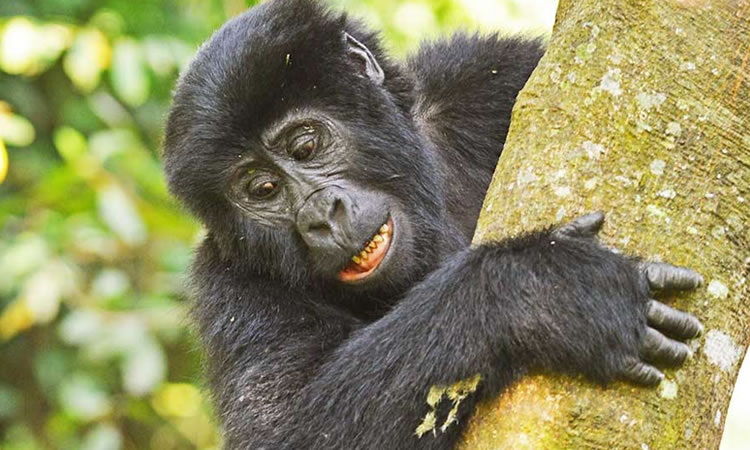
Tanzania is the home of the quintessential African safari, with the Serengeti, the Ngorongoro Crater, and the Great Migration, yet Tanzania has no mountain gorillas of its own. To trek gorillas, travelers cross into neighboring Rwanda or Uganda, both within easy reach, where the forests of the Virunga volcanoes and Bwindi shelter the world’s last mountain gorillas.
Thanks to good regional flight connections, particularly through Kigali in Rwanda, linking a gorilla trek with a Tanzanian safari has become one of the most sought-after combinations in African travel, delivering two bucket-list experiences in one trip.
This guide explains how to combine gorilla trekking with a Tanzania safari, covering where to go, how the logistics work, the best routes and itineraries, when to travel, what it costs, and how to make the most of this extraordinary pairing. Whether your dream is gorillas and the Great Migration or primates and the Big Five, here is how to bring these two iconic African journeys together into one seamless adventure.
Why Combine Gorilla Trekking With a Tanzania Safari?
Some travellers wonder whether it is worth the effort of adding a gorilla trek to a Tanzania safari, or vice versa. The answer, for most, is a resounding yes. The two experiences could hardly be more different, and it is precisely that contrast that makes combining them so special. One is close, quiet, and emotional; the other is vast, wild, and endlessly dramatic, and together they tell the whole story of African wildlife.
- Two bucket-list experiences in one trip: gorilla trekking and an East African safari are both dreams of a lifetime, and combining them makes the most of your long-haul journey to Africa.
- Contrasting landscapes: you experience both misty mountain rainforest and open savannah plains, a remarkable range of scenery and ecosystems.
- Unmatched wildlife variety: mountain gorillas, the Big Five, the Great Migration, chimpanzees, and countless other species across forest and plain.
- Efficient use of a long journey: since you have already travelled far to reach East Africa, adding the second experience adds enormous value for relatively little extra travel.
- Regional connectivity: good flights between Kigali, Kilimanjaro, and Tanzania’s parks make linking the two smoother than many travellers expect.
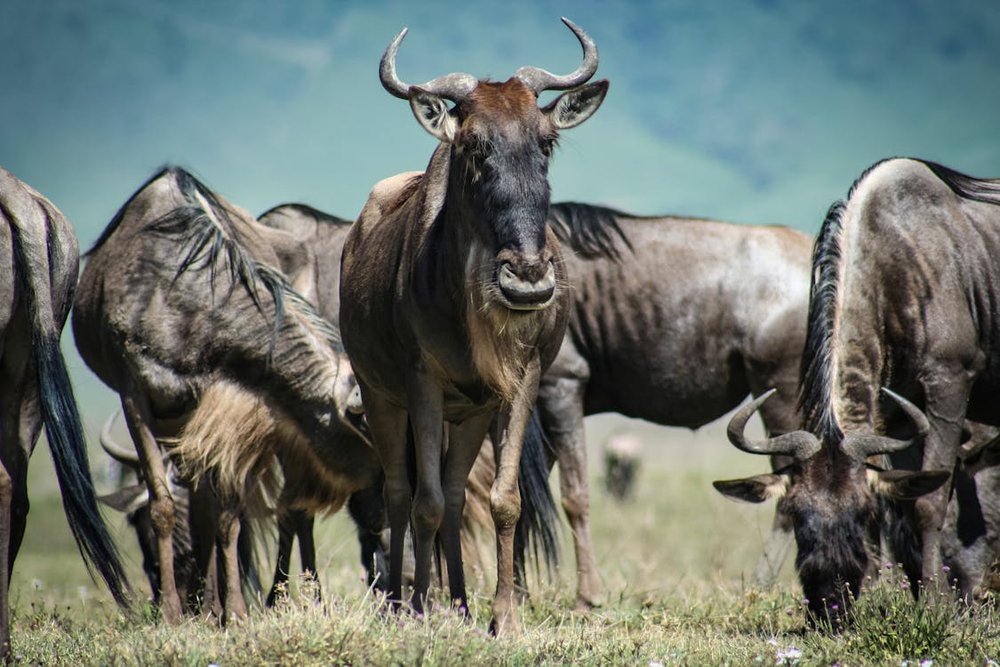
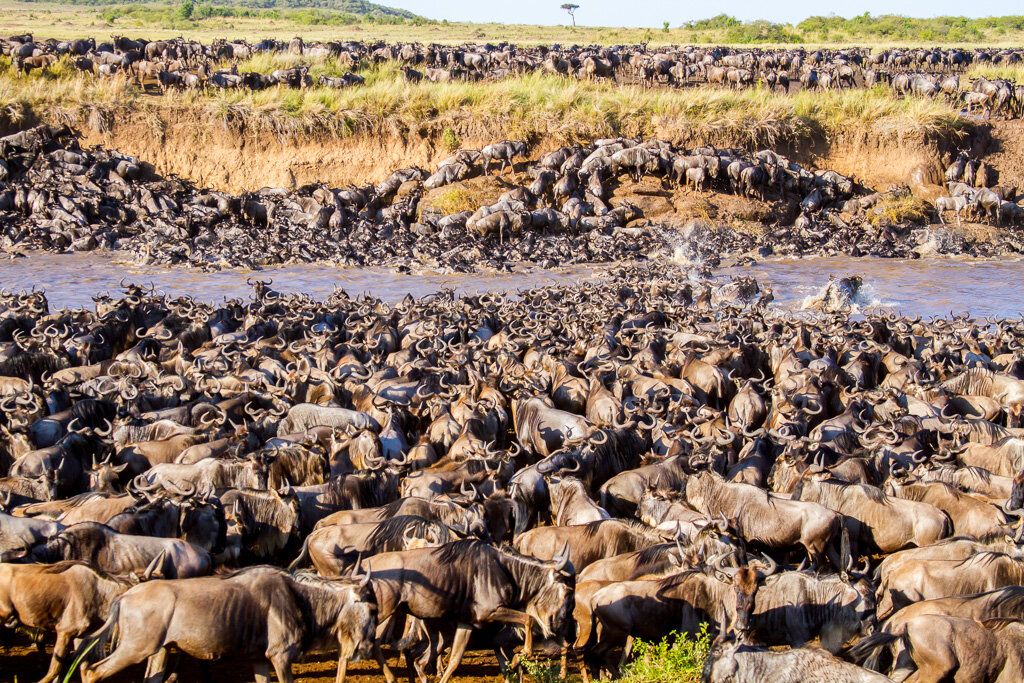
Wildebeests
Where to Trek Gorillas: Rwanda or Uganda
Since Tanzania has no gorillas, the first decision is where to trek them, and the two options are Rwanda and Uganda. Both offer superb mountain gorilla trekking, and the right choice depends on your budget, time, and how you plan to link the trek with Tanzania.
Rwanda: The Easiest to Combine
Rwanda is by far the most convenient choice for combining with a Tanzania safari. Its Volcanoes National Park, home to many habituated gorilla families, lies just a two to three-hour drive from Kigali International Airport, which enjoys excellent regional flight connections, including to Kilimanjaro and the Tanzanian safari circuit.
This means you can fly between a Rwandan gorilla trek and a Tanzanian safari quickly and easily, often in a single short flight plus transfers.
Rwanda’s gorilla permit costs 1,500 US dollars, and while this is a premium price, the ease, speed, and polish of the Rwandan experience make it the top choice for a smooth combined trip, especially for those with limited time.
Uganda: More Affordable and Wildlife-Rich
Uganda offers gorilla trekking in Bwindi Impenetrable National Park and Mgahinga Gorilla National Park at a lower permit cost of 800 US dollars, along with the chance to add chimpanzees, the Big Five, and more within Uganda itself. Uganda can also be combined with Tanzania, usually via flights connecting through Kigali or Entebbe to the Tanzanian circuit, though the logistics can involve a little more travel time than the slick Rwanda option.
Uganda suits travellers who want a more wildlife-rich and budget-friendly gorilla add-on and do not mind slightly longer connections. Both countries deliver the same magnificent mountain gorillas; the difference lies in cost, convenience, and the wider trip around the trek.
The Tanzania Safari: What to See
Tanzania is one of the world’s greatest safari destinations, and the northern safari circuit is the natural partner for a gorilla trek, offering the country’s most iconic parks within a compact and well-connected area. A classic Tanzania safari on this circuit delivers extraordinary wildlife and scenery.
The Serengeti and the Great Migration
The Serengeti National Park is Tanzania’s crown jewel, a vast expanse of golden plains famous for its abundant predators and, above all, the Great Migration, the year-round movement of around two million wildebeest and zebra across the ecosystem, including dramatic river crossings between roughly July and October. The Serengeti offers some of the finest big-cat viewing in Africa alongside the spectacle of the migration, making it the centrepiece of most Tanzanian safaris and the perfect counterpoint to the intimacy of a gorilla trek.
The Ngorongoro Crater
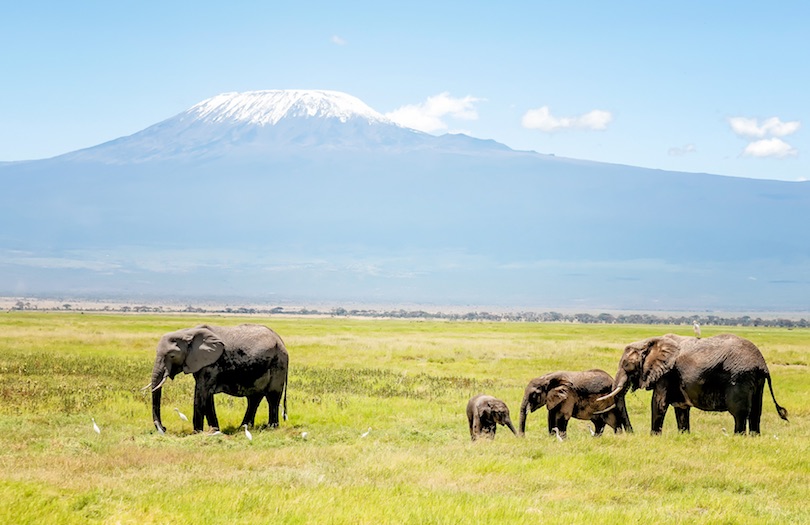
The Ngorongoro Crater, a vast volcanic caldera and UNESCO World Heritage Site, is one of the most remarkable wildlife arenas on earth, a natural amphitheatre packed with an astonishing density of animals, including the chance to see all of the Big Five in a single day. Its dramatic scenery and reliable wildlife make it a highlight of any northern-circuit safari and a favourite among first-time visitors.
Tarangire and Lake Manyara
The northern circuit also includes Tarangire National Park, famous for its huge elephant herds and iconic baobab trees, and Lake Manyara National Park, known for its tree-climbing lions and flamingo-fringed lake. These parks add further variety and are easily included on a Tanzanian safari, enriching the journey beyond the headline Serengeti and Ngorongoro.
How the Logistics Work
The key to a successful combined trip lies in understanding the flight connections, and the good news is that they are more straightforward than many travellers expect. The most popular and efficient routing uses Kigali as the hub for the gorilla portion and connects by air to Tanzania’s northern safari circuit.
A typical flow begins with an international arrival into Kigali, Rwanda, for the gorilla trek in Volcanoes National Park, followed by a flight from Kigali to Kilimanjaro International Airport, the gateway to Tanzania’s northern circuit, from where you transfer to Arusha, the safari hub, and continue into the parks, often by light aircraft to airstrips in the Serengeti.
Alternatively, the trip can run in reverse, starting with the Tanzania safari and finishing with the gorillas. For those combining Uganda with Tanzania, flights typically connect through Kigali or Entebbe to Kilimanjaro. A good tour operator will coordinate these international and internal flights, transfers, permits, and park logistics into one seamless itinerary, which is highly recommended for such a multi-country trip.
| Trip Element | Typical Routing |
| Gorilla trekking base | Kigali, Rwanda (or Entebbe, Uganda) |
| Connecting flight | Kigali to Kilimanjaro International Airport |
| Tanzania safari hub | Arusha, gateway to the northern circuit |
| Safari parks | Serengeti, Ngorongoro, Tarangire, Lake Manyara |
| Internal safari flights | Light aircraft to Serengeti airstrips |
Sample Combined Itineraries
The Classic Combination | 7 to 8 Days | Gorillas and the Serengeti
- Day 1: Arrive Kigali, Rwanda
- Day 2: Gorilla trekking in Volcanoes National Park
- Day 3: Fly Kigali to Kilimanjaro, transfer to Arusha
- Day 4: Fly to the Serengeti, afternoon game drive
- Day 5: Full day exploring the Serengeti and the migration
- Day 6: Serengeti to Ngorongoro, crater rim overnight
- Day 7: Ngorongoro Crater game drive, transfer to Arusha
- Day 8: Depart from Kilimanjaro
The Comprehensive East Africa Safari | 10 to 12 Days | Gorillas, Chimps and the Full Northern Circuit
- Day 1: Arrive Kigali, Rwanda
- Day 2: Gorilla trekking in Volcanoes National Park
- Day 3: Golden monkey trekking or a second gorilla trek, or fly to Tanzania
- Day 4: Fly Kigali to Kilimanjaro, transfer to Arusha
- Day 5: Tarangire National Park, elephants and baobabs
- Day 6: Lake Manyara National Park en route to the Serengeti
- Day 7: Fly or drive into the Serengeti, game drives
- Day 8: Full day in the Serengeti and the migration
- Day 9: Serengeti to Ngorongoro Crater rim
- Day 10: Ngorongoro Crater game drive
- Day 11: Optional Lake Manyara or cultural visit, return to Arusha
- Day 12: Depart from Kilimanjaro
The shorter itinerary captures the two headline experiences, gorillas and the Serengeti with the Ngorongoro Crater, in a week or so, ideal for travellers with limited time. The longer version adds Tarangire, Lake Manyara, and optional extra primate treks, giving the fullest possible combined East African adventure.
Best Time to Take a Combined Trip
Both gorilla trekking and Tanzania safaris are possible year-round, but the ideal timing balances the conditions for each. Gorilla trekking is best in the drier months, from June to September and December to February, when forest trails are less muddy, though gorillas are seen in all seasons.
Tanzania’s northern circuit is rewarding throughout the year, with the dry season from June to October offering excellent general game viewing and the famous Serengeti river crossings of the Great Migration typically occurring between July and October.
This means the long dry season, roughly June to September or October, is the sweet spot for a combined trip, offering the best gorilla-trekking conditions and prime savannah game viewing, including the migration river crossings, at the same time.
The short dry season around December to February is also excellent, coinciding with the migration’s calving season in the southern Serengeti. Whichever window you choose, aligning your travel with the dry seasons gives the most comfortable and rewarding combined experience, though careful planning around the migration’s location is wise if the crossings are a priority.
What It Costs
A combined gorilla trekking and Tanzania safari is a significant investment, bringing together two premium experiences, but for many it represents the trip of a lifetime and superb value given how much it delivers in one journey.
The largest fixed costs are the gorilla permit, 1,500 US dollars in Rwanda or 800 US dollars in Uganda, and the Tanzania safari itself, which includes park fees, accommodation, guiding, and internal flights. Add international and regional airfares, and a combined trip typically starts from several thousand US dollars per person and rises considerably for luxury lodges and camps.
While not a budget undertaking, combining the two makes excellent sense financially when you consider that you have already made the long journey to East Africa. Adding the second iconic experience for relatively modest extra cost, rather than returning on a separate trip another year, delivers exceptional value and a far richer overall adventure. Working with a specialist operator helps optimise the itinerary and cost, bundling permits, flights, and lodges efficiently, and ensuring the complex logistics run smoothly across borders.
Tips for a Smooth Combined Trip
- Use a specialist operator: a multi-country trip with permits and flights is best arranged by an experienced East Africa operator who can coordinate every detail.
- Book gorilla permits early: permits are limited and in high demand, so secure them well in advance, then build the rest of the trip around them.
- Choose Rwanda for the smoothest link: Volcanoes National Park’s proximity to Kigali and its flight connections make Rwanda the easiest gorilla base to combine with Tanzania.
- Pack for two climates: bring warm, waterproof layers and sturdy boots for the cool gorilla forest, and lighter safari clothing for the warm Tanzanian plains.
- Sort visas and vaccinations: check visa requirements for each country, consider the East Africa Tourist Visa where applicable, and carry your yellow-fever certificate.
- Allow buffer time: build a little flexibility around flights and border crossings so a delay never costs you a gorilla trek or a key safari day.
- Consider the migration: if the Great Migration river crossings are a priority, time your Serengeti days for July to October and plan your route accordingly.