Tanzania Photo Safari
Tanzania Photo Safari; Tanzania is arguably the single most photographed safari country on earth, and for good reason: the Great Migration, the Ngorongoro Crater’s density of wildlife, and Tarangire’s baobab-studded landscapes have appeared in more wildlife photography portfolios than almost anywhere else in Africa. This popularity is exactly why generic advice falls short here.
Getting strong images out of a Tanzania trip depends heavily on specific timing decisions, migration phase, crater arrival time, golden hour positioning, that a standard safari itinerary built for general wildlife viewing does not always prioritise. The gap between an itinerary built for comfort and one built specifically around light and animal behavior is where the difference between good and exceptional images usually lives.
This guide covers how to plan a Tanzania trip specifically around photography, which months deliver which images, the gear that genuinely matters across the Serengeti, Ngorongoro, and Tarangire, and how a hot air balloon safari changes your compositional options entirely, so your itinerary works as hard for your portfolio as it does for your general wildlife checklist.
Should You Plan Around Photography Specifically?
Short answer: yes, if strong images are a real priority rather than a nice-to-have, since the difference between a generic Tanzania itinerary and a photography-optimized one comes down to a handful of specific, high-impact decisions about timing and positioning.
A standard Tanzania safari, built around comfortable game drive timing and general wildlife viewing, will still produce good photographs simply because the wildlife density is so high. A photography-focused itinerary goes further: choosing camps positioned for specific light directions, timing your Ngorongoro Crater descent for the earliest possible entry before other vehicles arrive, and selecting your Serengeti sector based on the specific migration phase you want to capture rather than general availability. None of these decisions cost significantly more than a standard itinerary; they simply require knowing to ask for them in advance.
Why Timing Matters More in Tanzania Than Almost Anywhere Else
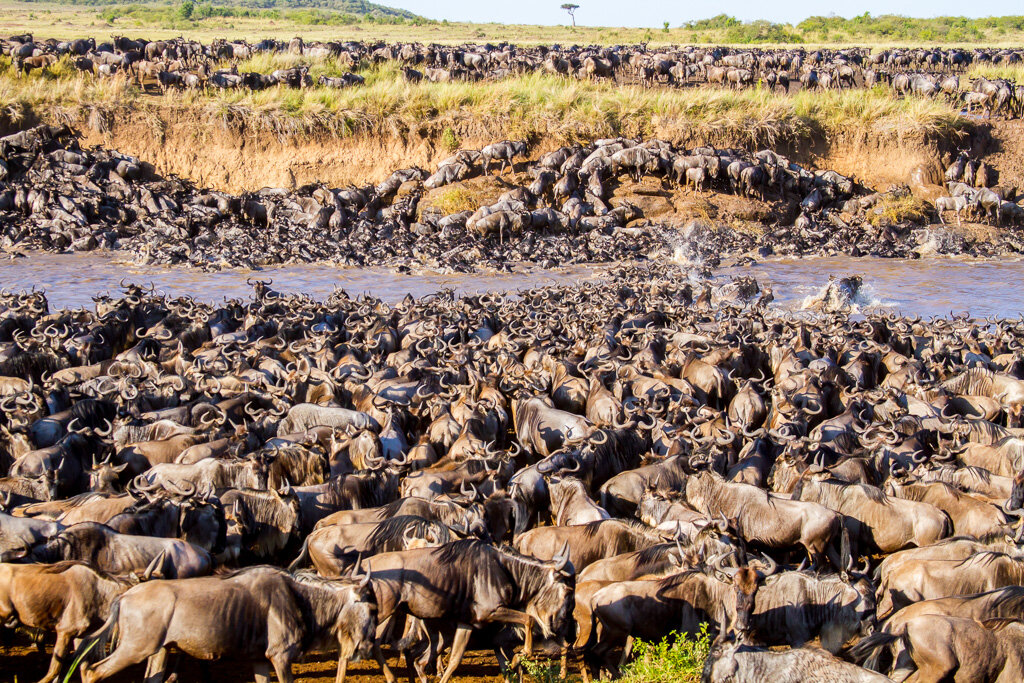
The Great Migration is not a fixed location but a moving, seasonal event, and the difference between photographing a dramatic Mara River crossing in August and calm grazing herds on the southern plains in February is enormous, both compositionally and in terms of predator action.
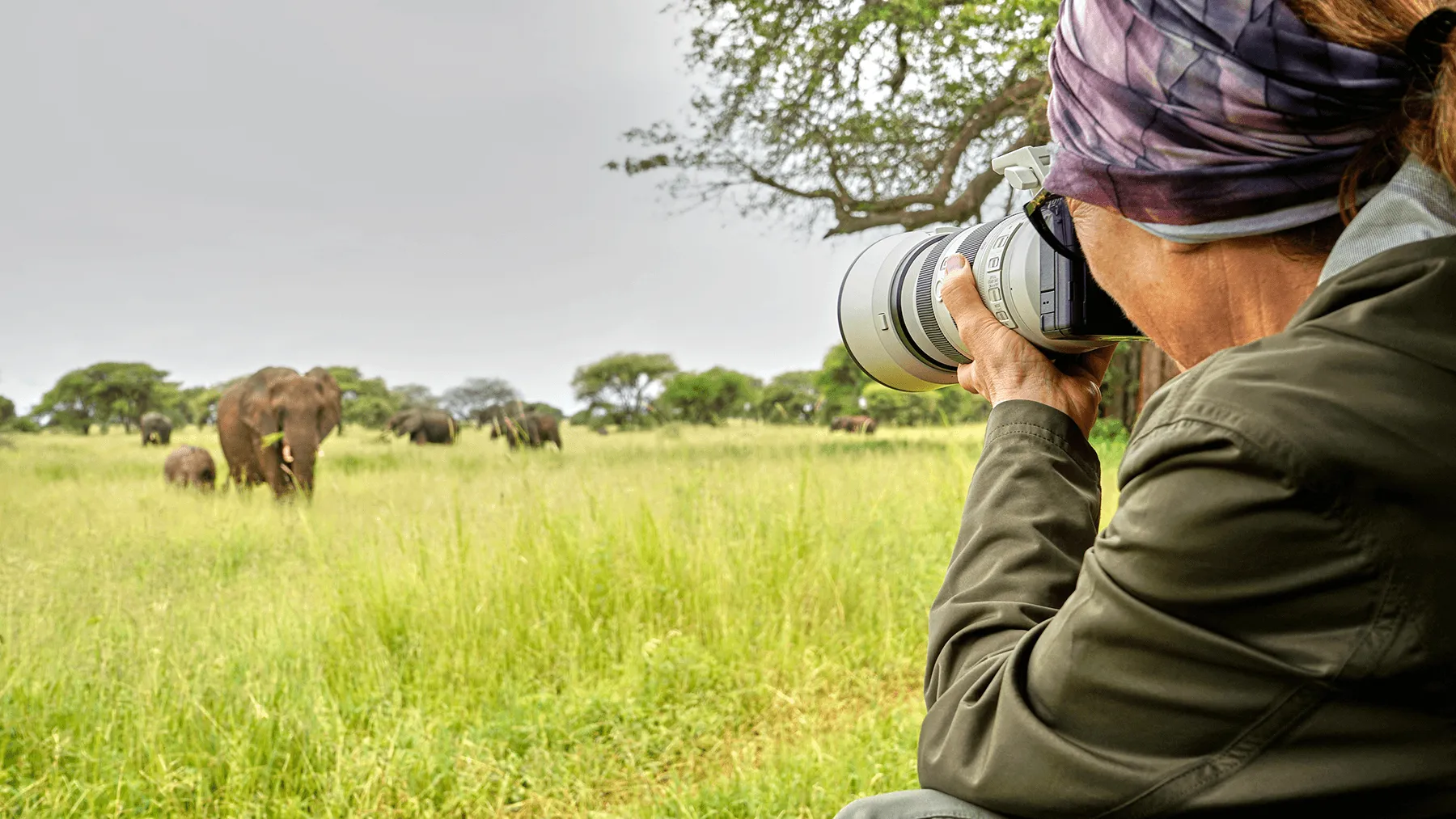
Get the timing wrong relative to what you are hoping to photograph, and no amount of gear or guiding skill fully compensates. This is worth repeating because it is the single most common planning mistake we see among photography-focused guests booking a Tanzania trip.
Practical implication: decide what specific image or scene you most want before booking dates, then work backward to the migration phase and camp location that gives you the best chance at it, rather than booking convenient dates first and hoping the migration cooperates.
Tanzania’s Photographic Regions and What They Offer
| Region | Signature Photographic Subject | Best Months |
| Serengeti (northern sector, Mara River) | River crossings, dramatic predator-prey action | August to October |
| Serengeti (southern plains) | Calving season, newborn wildebeest, concentrated predator activity | January to March |
| Ngorongoro Crater | High-density Big Five in a contained, dramatic landscape | Year-round, best in early morning light |
| Tarangire National Park | Elephant herds, iconic baobab tree silhouettes | June to October (dry season concentrates elephants near the river) |
| Lake Manyara | Tree-climbing lions, flamingos, forest and lake edge scenery | June to October |
Photographing the Ngorongoro Crater
The crater’s unique, closed ecosystem means wildlife density is unusually high within a relatively small, accessible area, but this also means most visitors descend at a similar time each morning, creating vehicle congestion at popular sightings by mid-morning.
Photographers who arrange the earliest possible crater entry, often before 6:30am, gain a genuine advantage: softer early light, less dust kicked up by other vehicles, and considerably more space around sightings before the crowds arrive. This single scheduling decision consistently makes a bigger difference to image quality than any lens upgrade.
Practical implication: request an early crater entry specifically when booking, and confirm your lodge or camp can support the early departure this requires.
Photographing Tarangire’s Baobabs and Elephants
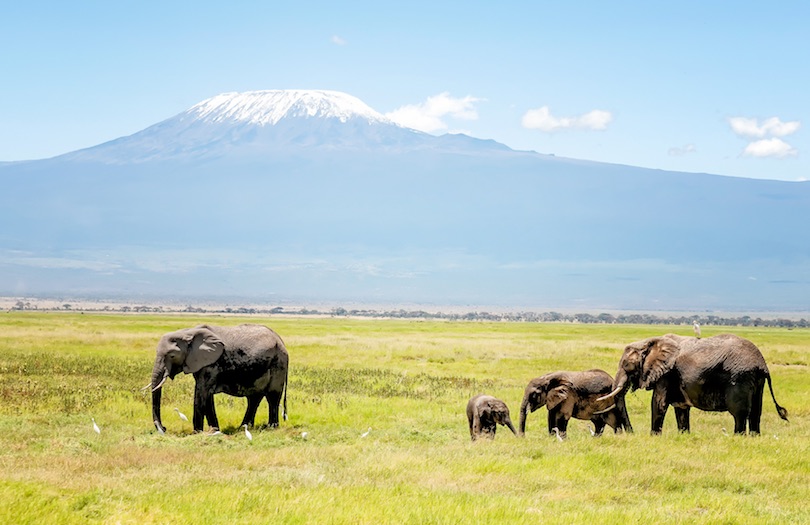
Tarangire’s ancient baobab trees, some estimated at over a thousand years old, provide a genuinely distinctive photographic backdrop unavailable in the Serengeti’s more open grassland, particularly striking during golden hour when their thick, twisted silhouettes catch low-angle light.
Combine this with the park’s large dry-season elephant herds, drawn to the Tarangire River as surrounding water sources dry up, and you have one of Tanzania’s most underrated photographic locations, often overlooked by first-time visitors who default straight to the Serengeti.
A single afternoon spent purely on baobab compositions, without chasing additional wildlife sightings, is time well spent for photographers prioritizing landscape work.
Gear Recommendations for Tanzania’s Savannah Photography
| Gear | Recommendation | Why |
| Primary lens | A telephoto zoom, 100-400mm or similar | Versatile reach for both close crater sightings and more distant Serengeti wildlife |
| Second lens | A wider zoom, 24-70mm | Captures landscape context, baobab silhouettes, and environmental portraits of wildlife within the wider scene |
| Support | A bean bag for vehicle-mounted stability | More practical than a tripod for vehicle-based shooting, and works well braced on a window frame or roof hatch |
| Camera body | One with fast, reliable autofocus tracking | Essential for capturing fast-moving predator action during migration season |
| Backup storage | Multiple memory cards and a portable backup drive | Migration season generates an enormous volume of images across long shooting days |
Hot Air Ballooning: A Different Perspective Entirely
A sunrise hot air balloon safari over the Serengeti offers a compositional opportunity unavailable from any ground-based vehicle: aerial views of herd patterns, river systems, and the sheer scale of the plains that no wide-angle lens can replicate from ground level.
This is a premium add-on, priced separately from your standard safari package, and worth booking specifically during migration season when herd patterns are at their most visually dramatic from above. The perspective shift alone, seeing thousands of animals moving as a single, coherent pattern across the landscape, is something ground-level photography simply cannot replicate.
Practical implication: bring a wider lens than you might otherwise pack specifically for the balloon flight, since the compositional opportunity here is landscape scale rather than close wildlife detail.
Composition Tips by Location
Beyond timing and gear, a few location-specific compositional habits consistently separate strong images from merely adequate ones across Tanzania’s different regions, and they cost nothing extra to apply beyond a bit of forethought before you press the shutter.
- Serengeti plains: use the flat horizon deliberately, positioning it low in the frame to emphasise sky and cloud drama during golden hour, rather than centring it out of habit.
- Ngorongoro Crater: the crater walls provide a natural backdrop for environmental portraits; include them intentionally rather than cropping tight on wildlife alone, since the sense of scale is part of what makes crater images distinctive.
- Tarangire’s baobabs: shoot baobabs in silhouette against the rising or setting sun for maximum dramatic impact, rather than in flat midday light where their shape reads less distinctly.
- Lake Manyara: the tree-climbing lions here are a genuinely rare sight; prioritise patience over movement, since a static, well-composed wait near a known resting tree often outperforms constant repositioning.
Night Sky and Low-Light Photography
Tanzania’s remote safari camps, far from significant light pollution, offer genuinely excellent conditions for night sky photography, an underused opportunity most standard itineraries never mention. The Serengeti’s clear dry-season nights in particular allow for striking Milky Way and star trail images from camp, requiring only a sturdy tripod, a wide-angle lens, and a camera capable of long exposures.
This is a worthwhile activity to schedule deliberately on a clear evening rather than assuming your camp will suggest it, since not every guide raises it proactively. A short conversation with camp staff about the best open sightline away from any camp lighting is usually all it takes to set up a rewarding half-hour session after dinner.
Practical implication: pack a compact travel tripod specifically for this purpose, even if you skip a tripod for daytime game drives, since night sky photography is genuinely impossible to do handheld.
Who a Tanzania Photo Safari Suits
| Traveller Type | Fit | Reasoning |
| Serious wildlife photographers chasing migration action | Strong fit | Few destinations anywhere offer comparable predator-prey drama at this scale |
| First-time safari photographers | Strong fit | High wildlife density makes for a forgiving, confidence-building environment even for developing skills |
| Landscape photographers | Strong fit | The Ngorongoro Crater, Serengeti plains, and Tarangire’s baobabs offer genuinely striking scenery beyond wildlife alone |
| Photographers with limited time (under 5 days) | Moderate fit | Achievable, but concentrate on one or two regions rather than attempting the full circuit |
| Astrophotography enthusiasts | Strong fit, though often overlooked | Minimal light pollution across most safari camps supports excellent night sky imagery |
Field Workflow for a Long Photography Trip
A Tanzania photography trip spanning the northern circuit generates a substantial volume of images across long, dust-exposed game drive days, and a simple nightly routine protects your work. Back up memory cards to a laptop or portable storage device each evening, clean your camera sensor and lenses regularly given the Serengeti dry season’s genuinely significant dust levels, and review your strongest images from the day while conditions are still fresh in memory, which helps you adjust framing or settings for the following day rather than only noticing an issue once you are home.
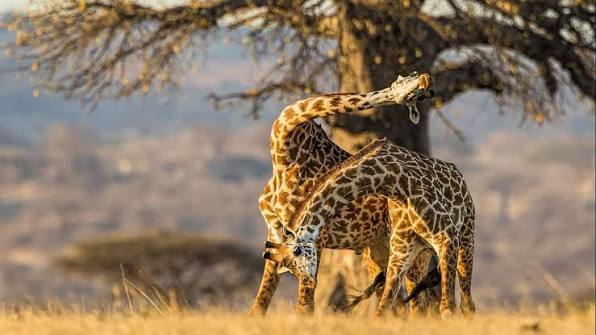
When to Photograph Tanzania for Specific Images
| Target Image | Best Timing | Location |
| Mara River crossing drama | August to early October | Northern Serengeti (Kogatende area) |
| Newborn wildebeest and predator action | Late January to March | Southern Serengeti plains (Ndutu area) |
| Big Five in one contained setting | Year-round, best at dawn | Ngorongoro Crater |
| Baobab silhouettes with elephants | June to October | Tarangire National Park |
| Aerial migration patterns | June to October | Serengeti balloon safari |
Planning a Photography-Focused Tanzania Itinerary
- Days 1 to 2: Arrive at Kilimanjaro International Airport, road transfer to Tarangire for baobab and elephant photography.
- Days 3 to 4: Road transfer to Ngorongoro Crater, with an early-entry crater floor day booked specifically for optimal light.
- Days 5 to 8: Serengeti, timed to your target migration phase, including a hot air balloon safari on one morning.
- Day 9: Departure, or extend to Zanzibar for a change of pace and coastal or cultural photography.
Planning Advice
- Book a private vehicle if photography is a serious priority. Shared vehicles compromise your ability to dictate positioning and dwell time at a sighting.
- Request a photography-savvy guide specifically. Not every guide has the same eye for anticipating animal movement and positioning your vehicle for the best light and angle.
- Time your Ngorongoro Crater visit for the earliest possible entry. This single decision does more for your image quality than almost any gear choice.
- Book your balloon safari for early in your Serengeti stay, not the last morning. This leaves room to rebook if weather forces a cancellation on your first scheduled date.
- Bring a dust-proof camera bag and cleaning kit. Tanzania’s dry season, while excellent for photography light, generates genuinely significant dust during game drives.
Frequently Asked Questions
What is the single best month for Tanzania wildlife photography?
This depends entirely on what you want to photograph. August through October is the strongest time for river crossing drama, while January through March suits predator and newborn wildlife photography on the southern plains.
Is a professional photography permit required in Tanzania’s parks?
Standard personal photography requires no separate permit. Commercial shoots, drone photography, and filming intended for publication typically require separate authorization from Tanzania National Parks; confirm requirements in advance if this applies to you.
Can I fly a drone in Tanzania’s national parks?
No, drone use is prohibited in Tanzania’s national parks without special government authorization, which is rarely granted for tourism purposes. Do not bring a drone expecting to fly it casually during a safari.
How many days should I budget specifically for Serengeti migration photography?
A minimum of three to four days improves your odds considerably, since migration timing and location can shift day to day and a longer stay allows your guide to reposition based on current herd movement.
Is the hot air balloon safari worth it for photography specifically?
Yes, most photographers describe it as one of the most valuable additions to a Tanzania photography trip, given the genuinely unique aerial perspective unavailable from any other activity.
What is the best way to protect camera gear from Serengeti dust?
A dedicated dust-proof camera bag, lens changes done inside a vehicle rather than in the open, and a daily cleaning routine for both camera bodies and lenses all meaningfully reduce dust-related issues over a multi-day dry season trip.
Should I bring a laptop for editing while on safari?
A lightweight laptop or tablet is useful for backing up images and doing a first-pass review each evening, though full editing is best saved for after your trip when you have reliable power and a proper screen for colour-accurate work.
Capturing Tanzania at Its Best
Tanzania’s photographic reputation is well earned, and the difference between a good trip and a truly exceptional one for photography comes down to specific, deliberate planning decisions rather than luck or gear alone: choosing your migration phase intentionally, prioritizing early crater access, and building in the balloon safari’s unique aerial perspective. None of these require exceptional equipment, only the willingness to plan around them from the outset rather than treating photography as incidental to a standard game-drive schedule.