The Great Wildebeest Migration is a continuous, roughly 3,000-kilometre clockwise loop, more than 1.5 million wildebeest alongside 200,000 to 400,000 zebra and hundreds of thousands of gazelle, moving between Tanzania’s Serengeti and Kenya’s Masai Mara in an endless search for rain and fresh grazing. Because the herds’ exact position shifts month by month, choosing where to stay is genuinely the single most important decision in planning a migration safari, considerably more important than star rating alone.
As a travel consultant, I always match a client’s chosen camp to the specific month they’re travelling, since the same excellent lodge can be perfectly positioned in July and virtually empty of migration action in December. This guide walks through 20 of the best places to stay, organized by where the herds actually are throughout the year.
January-March: Calving Season, Southern Serengeti and Ndutu
Calving season, when roughly 500,000 wildebeest calves are born within a three-week window, up to 8,000 per day at peak, delivers extraordinary predator activity across the southern Serengeti’s Ndutu area, and remains far less crowded than the peak crossing months.
- Ndutu Safari Lodge, a longstanding, well-positioned property directly within the calving grounds. 2. Ang’ata Migration Camp, a mobile tented camp specifically positioned to follow the calving herds. 3. Serengeti Safari Camp (Ndutu location), offering genuine mobile flexibility during this specific window. 4. Kusini Camp, a permanent luxury camp on a scenic kopje in a quiet southern Serengeti setting.
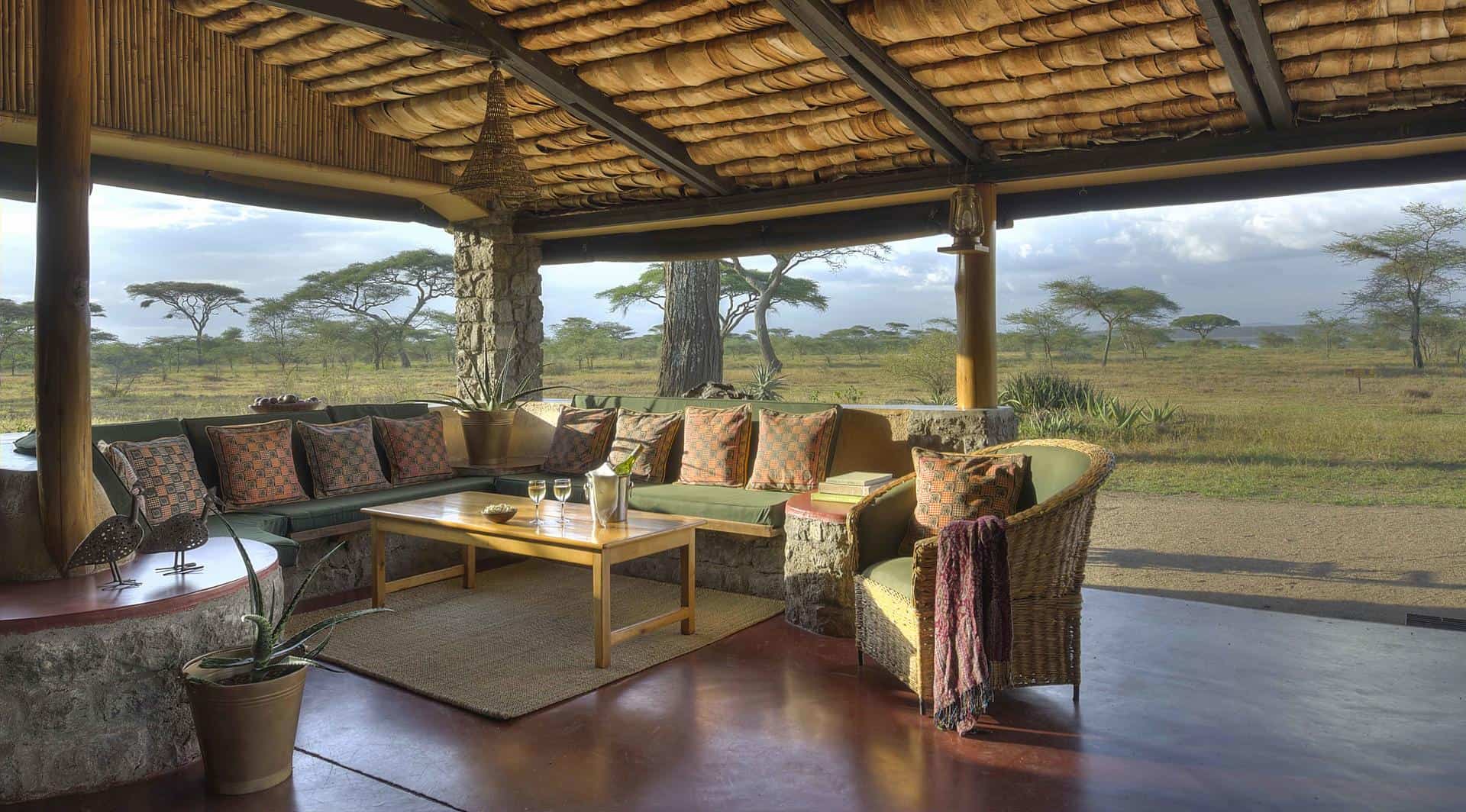
Ndutu Safari Lodge
April-May: Central Serengeti, the Quiet Green Season
As the herds begin moving north and west off the central plains, the long rains bring lush, vivid green landscapes and considerably lower rates, alongside excellent overall wildlife density even though river-crossing drama itself isn’t yet on the cards.
- Four Seasons Safari Lodge Serengeti, centrally positioned with strong resident wildlife regardless of migration timing. 6. Serengeti Serena Safari Lodge, a well-established central property offering good value during this quieter window.
June-July: The Grumeti River, Western Corridor
The Western Corridor sees the first major crossing phase at the Grumeti River, considerably less crowded than the northern Serengeti during peak crossing season, genuinely rewarding travelers who want migration drama without dozens of other vehicles sharing the view.
- Singita Sasakwa Lodge, within the private 350,000-acre Grumeti Reserve, ideally positioned for this specific window. 8. Singita Faru Faru Lodge, directly on the Grumeti River within the same private reserve. 9. Mbalageti Serengeti, a well-run lodge in the quiet western corridor, ideal during this specific April-through-June migration phase.
July-October: The Mara River, Northern Serengeti and Masai Mara
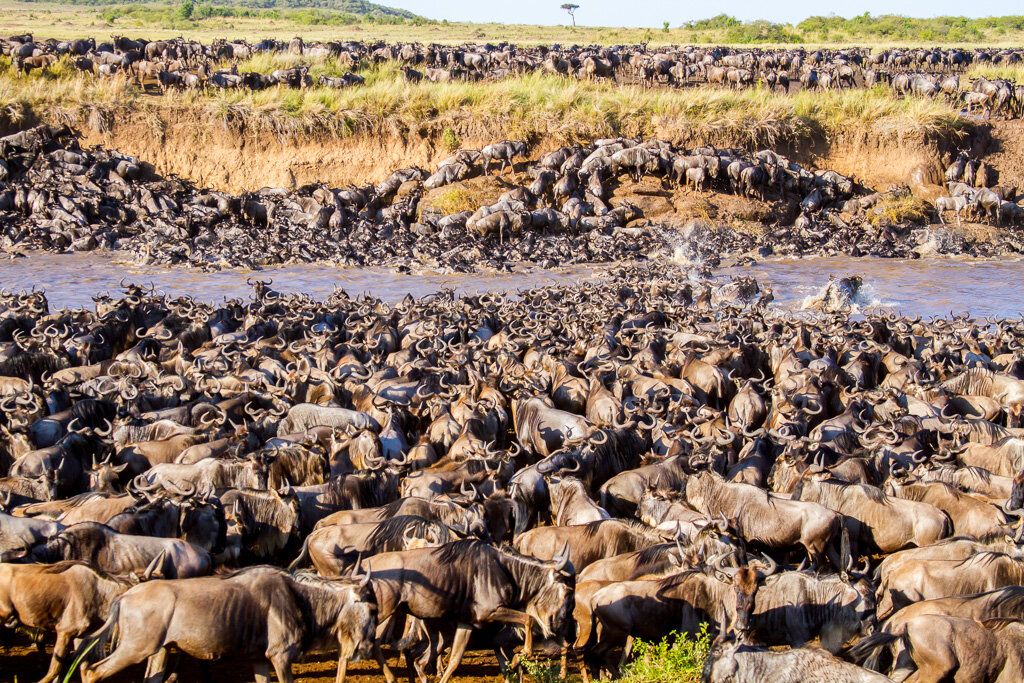
This is the stretch most people picture when they think of the Great Migration: more than 1.5 million wildebeest funnel toward the Mara River, gather in vast congregations along the banks, and erupt across the water in dramatic, chaotic crossings. This period represents peak demand, and top camps fill twelve to eighteen months in advance.
- Sayari Camp, the closest permanent camp to the Mara River in the northern Serengeti, Tanzania’s first fully solar-powered safari camp. 11. Lemala Kuria Hills Lodge, in the Wogakuria Hills roughly thirty minutes from the river. 12. Olakira Migration Camp, an Asilia property specifically positioned for northern Serengeti crossing action. 13. Ubuntu Migration Camp, with locations on the Lamai Wedge offering fewer camps and vehicles, ideal for photographers. 14. Kaskaz Mara Camp, a short drive from Kogatende Airstrip and the Mara River. 15. Lamai Serengeti, perched on a prime kopje just a couple of kilometres from the river with eight open-fronted rooms.
The Masai Mara Side: Kenya’s Peak-Season Camps
- Angama Mara, positioned 300 metres above the Mara Triangle, offering genuinely strong migration viewing alongside the finest view in African safari travel. 17. Mahali Mzuri, within the Olare Motorogi Conservancy directly in the migration’s path. 18. Mara Plains Camp, within the Olare Motorogi Conservancy, favoured by serious photographers for consistently strong sightings. 19. Entim Mara Camp, positioned directly on the Mara River itself for unmatched, immediate access to crossings.
For travelers wanting strong migration viewing without riverfront-camp pricing, properties like Mara Sopa Lodge sit slightly further from the river but remain well within the ecosystem the herds move through, meaning guests still enjoy outstanding migration viewing on game drives, often at a considerably more accessible price point than the most exclusive riverfront camps.
November-December: The Return South
As the short rains arrive, herds begin their return journey south, completing the annual cycle before calving begins again in January.
- Naboisho Camp, within the Naboisho Conservancy, offering strong late-season resident wildlife alongside the tail end of migration activity as herds move back toward the Serengeti.
The Migration’s Annual Cycle at a Glance
| Months | Location | What’s Happening |
| January-March | Southern Serengeti/Ndutu | Calving season, peak predator activity |
| April-May | Central Serengeti | Herds moving north/west, green season, lower rates |
| June-July | Western Corridor (Grumeti River) | First major river crossings, fewer crowds |
| July-October | Northern Serengeti/Mara River | Peak dramatic crossings, highest demand |
| August-October | Masai Mara, Kenya | Herds cross into Kenya, peak crossing season |
| November-December | Return south. | Herds head back toward the Serengeti |
How to Maximise Your Chances of Seeing a Crossing
Crossings are never guaranteed on any specific day, herd movement depends entirely on rainfall and grazing conditions, so plan to spend a minimum of three to four nights in whichever region you’ve chosen, giving genuine time for a crossing to unfold near your camp rather than a rushed single-night stop.
Shorter drives from camp to the river mean faster access once a crossing begins, a genuine advantage of riverfront camps over those positioned further away, though the trade-off is typically a meaningfully higher nightly rate.
Stay flexible wherever possible, and work with an operator whose guides communicate in real time with pilots and other camps to track herd movement, since this kind of live, on-the-ground intelligence consistently outperforms planning based purely on a static seasonal calendar.
Booking Timeline
For the 2026 and 2027 peak crossing seasons (July through September), book top-tier camps in the Mara and northern Serengeti a full year in advance, since demand for this specific window consistently outpaces even genuinely substantial camp capacity. For calving season (January-February) and the quieter shoulder months, four to six months ahead is generally sufficient, and these windows also offer meaningfully better value alongside considerably lower visitor density.
Understanding Specific Crossing Points
Beyond simply choosing a camp near the Mara River, understanding the specific crossing points genuinely helps set realistic expectations. Crossing Point No. 6, near Serena Safari Lodge on the Kenyan side, remains a particular favourite, its steep riverbanks make the crossing itself genuinely dramatic, since animals often struggle to climb out on the far side, occasionally falling back into the water.
Lookout Hill, on high ground overlooking the river, offers one of the best vantage points in the entire Masai Mara for watching wildebeest gather in large numbers before taking the plunge, with crocodiles waiting below and lions frequently watching from the surrounding bushes.
No single crossing point can be guaranteed on any given day, since the herds themselves decide where and when to cross based on factors humans can’t fully predict, but guides with strong local knowledge and active radio communication with other camps and vehicles genuinely improve your odds of being positioned at the right spot when a crossing does begin.
The Wildebeest Rut: A Lesser-Known Migration Chapter
Beyond calving and crossing season, the wildebeest rut, or mating season, peaks around late May into June, typically as the long rains ease. Hundreds of thousands of animals breed within just a few weeks, and this specific period sets the timing for the following year’s calving season entirely.
Out on the plains during this window, the constant grunting of competing bulls and their determined defence of small territorial patches as herds move through creates a genuinely different, less commonly witnessed spectacle than either the crossings or calving season, worth considering for travelers who’ve already experienced the more famous chapters of the migration story and want something genuinely different on a return visit.
Photography Considerations Specific to Migration Camps
For travelers specifically prioritizing migration photography, several camps on this list, Sayari, Mara Plains, and Angama Mara among them, offer dedicated photographic vehicles and guides trained specifically in positioning for optimal light and composition during a crossing. A telephoto lens in the 200 to 400mm range genuinely helps capture crossing action from a safe, appropriate distance, and camps with a strong, established track record of positioning guests ahead of anticipated crossings, rather than reacting only after one has already begun, consistently produce better results for photography-focused travelers.
Combining Migration Viewing With Other Activities
A dedicated migration safari doesn’t need to consist entirely of river-crossing vigils. Most camps on this list also offer hot air balloon safaris over the plains at dawn, genuinely spectacular for viewing the sheer scale of the herds from above, alongside guided walking safaris in select conservancies, cultural visits to nearby Maasai communities, and, for travelers based in the Grumeti Reserve specifically, horseback safaris and other activities unavailable within the more tightly regulated national park and reserve boundaries.
Building in at least one or two of these complementary activities alongside your core migration-focused game drives genuinely rounds out a trip that could otherwise become a single-minded, occasionally exhausting pursuit of one specific spectacle.
Choosing Between the Serengeti and the Mara for Your Base
Travelers with limited time often ask whether it’s better to base themselves in Tanzania’s Serengeti or Kenya’s Masai Mara for migration viewing, and the honest answer depends entirely on timing. If your travel dates fall within June through mid-July, the Serengeti’s Western Corridor and northern reaches offer the strongest positioning, since the herds haven’t yet crossed into Kenya.
From late July through September, the Masai Mara offers the most concentrated, dramatic river-crossing action, since the bulk of the herds have moved north across the border by this point. From October onward, the herds begin their return south, meaning the Serengeti once again becomes the stronger base as the cycle heads back toward calving season.
For travelers with genuinely flexible dates and a full week or more, splitting a stay between both countries, several nights in the northern Serengeti followed by a short flight or road transfer into the Mara, offers the most comprehensive way to experience the migration’s full drama, since it hedges against the herds’ exact position on any given week while delivering two genuinely distinct safari experiences within a single trip.
A Final Word on Realistic Expectations
Even with perfect timing and the best-positioned camp, witnessing a dramatic river crossing ultimately depends on factors no operator, guide, or lodge can fully control. Herds sometimes gather at a crossing point for hours, or even days, before actually committing to cross, and it’s entirely possible to spend several nights near the Mara River without witnessing a full-scale crossing, even during peak season.
Setting realistic expectations from the outset, and appreciating the migration’s broader spectacle, the sheer scale of the herds moving across open plains, the predator interactions along the way, the calving season’s newborn calves, genuinely enriches the experience regardless of whether a specific crossing happens to unfold during your exact visit.
Frequently Asked Questions
What is the single best month to see a Mara River crossing?
August and September offer the highest probability of witnessing dramatic river crossings, as the bulk of the migration funnels through the Mara River during this specific window.
Is calving season a good alternative to the river crossings?
Yes, genuinely excellent. January through February in the southern Serengeti’s Ndutu area offers extraordinary predator activity around newborn calves, with considerably fewer visitors and better value than peak crossing season.
Do I need to stay directly on the Mara River to see a crossing?
Not necessarily. Properties set slightly further from the river, like Mara Sopa Lodge, still offer strong migration viewing on game drives at a more accessible price point, though riverfront camps offer faster access once a crossing begins.
How far in advance should I book for peak migration season?
A full twelve to eighteen months ahead for July-through-September travel, given how quickly top-tier camps in the Mara and northern Serengeti fill for this specific window.
Which is less crowded, the Grumeti River crossings or the Mara River crossings?
The Western Corridor’s Grumeti River crossings (June-July) are considerably less crowded than the northern Serengeti and Mara River crossings (July-October), making June a strong choice for travelers wanting migration drama without dozens of other vehicles.