Sayari Camp | Northern Serengeti National Park
Sayari Camp, meaning “planet” in Swahili, sits closer to the Mara River than any other permanent camp in the northern Serengeti, giving guests front-row access to the single most dramatic chapter of the Great Wildebeest Migration: the river crossings that unfold each year as herds push north into Kenya’s Masai Mara before returning south months later.
Run by Asilia Africa, one of East Africa’s most respected and reliably managed safari operators, Sayari has become one of the region’s genuine showpiece properties, and it also holds a distinctive environmental first, Tanzania’s first fully solar-powered safari camp.
As a travel consultant, I recommend Sayari specifically to travelers whose absolute top priority is witnessing a river crossing, since its proximity to the Mara River gives it a genuine logistical edge over camps positioned further away, while still delivering the design, comfort, and guiding quality expected of a top-tier East African property.
A Design That Blends Japanese Zen With African Flair
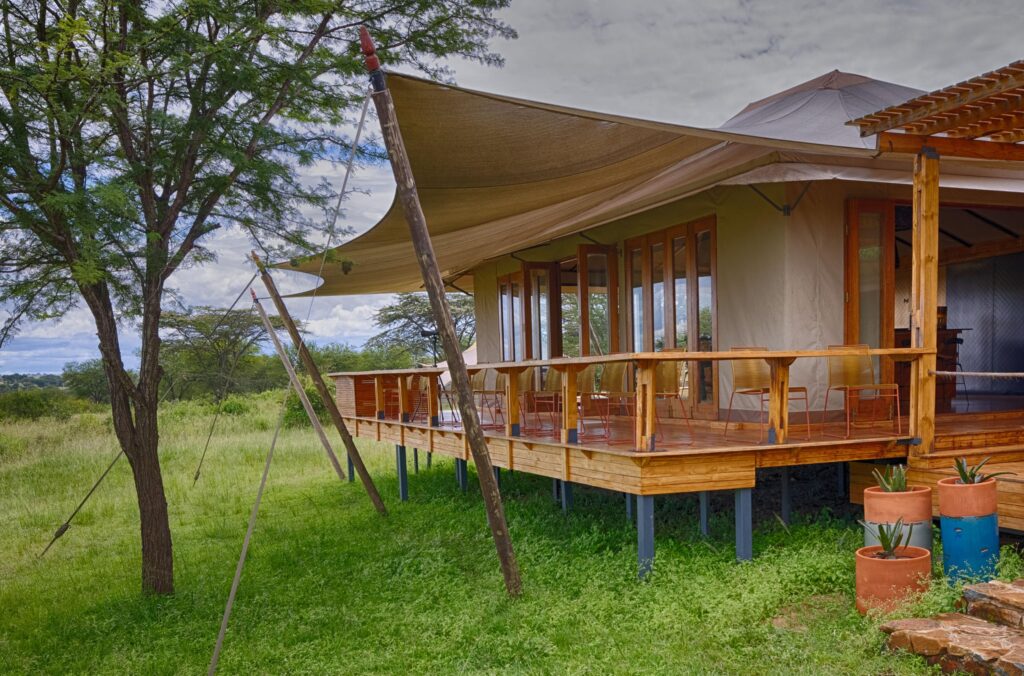
Sayari’s design draws on an unusual, distinctive combination of influences: spacious canvas tents raised on stilts, mahogany floors, and expansive private decks overlooking the Serengeti plains, all shaped by a sensibility that reviewers consistently describe as marrying Japanese Zen aesthetics with African flair. The overall effect is calm, uncluttered, and deliberately spacious, avoiding the visual busyness that can sometimes characterise more elaborately themed safari camps.
The camp is split into two distinct sections, one holding six rooms and the other nine, including a dedicated family room, a layout that gives Sayari a private, boutique feel despite its overall capacity being larger than many comparable Serengeti camps. Between the two sections, a swimming pool built directly into the existing rocks and stones of a natural kopje offers one of the camp’s most memorable settings, and two separate lounges provide quiet, private retreats for guests wanting to read or relax away from the main social areas.
The Suites
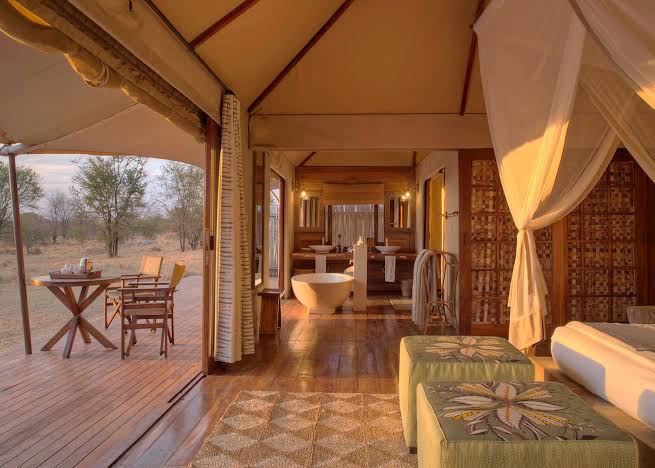
Sayari’s fifteen luxury tents, including one dedicated honeymoon suite, each offer a king-size bed, convertible to twins on request, a private veranda with floor-to-ceiling views stretching across the grasslands, visible even from the bathtub, and an en-suite bathroom with both indoor and outdoor shower options.
The dedicated family room configuration links a standard bedroom with an adjacent second bedroom holding three single beds and its own separate bathroom, a practical layout for families traveling with children who still want some independence and privacy within a shared unit.
Every tent balances genuine comfort with a relaxed, unfussy safari atmosphere: ample storage, reliable plug points and reading lights, a stocked mini-bar, and consistently good water pressure, small details that matter considerably more once you’re actually staying in a remote bush camp than they might seem on paper.
Dining and Asilia’s Taste of Serengeti Initiative
Meals at Sayari are prepared using fresh, locally produced ingredients sourced through Asilia’s own Taste of Serengeti initiative, connecting the camp’s kitchen directly to local farms rather than relying on imported, less sustainable supply chains.
Breakfast offers multiple options, enjoyed either at camp or out in the bush, lunch is served buffet-style with a hearty main dish alongside salads and freshly baked bread, and guests embarking on a full-day game drive can request an alfresco bush lunch instead of returning to camp, a welcome option during peak migration season when the action can keep guides and guests out on the plains well past a typical midday return.
Front-Row Access to the River Crossings
Sayari’s single defining feature is its position: the closest permanent camp to the Mara River anywhere in the northern Serengeti, giving guests exclusive, rapid access to the crossings as they unfold.
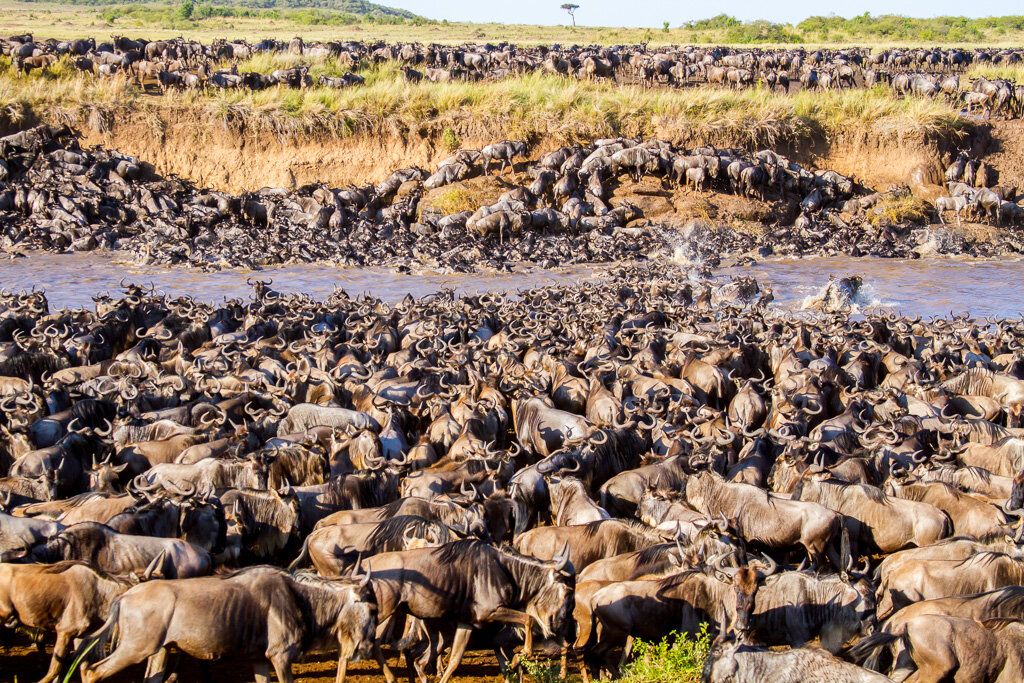
From July through October, herds of wildebeest and zebra engulf the area surrounding camp as they cross back and forth through the river’s treacherous, crocodile-filled waters, and July specifically marks peak season, with near-daily scenes of dramatic, chaotic crossing attempts as the bulk of the migration funnels through this stretch of river.
Like any wildlife spectacle, crossings are never guaranteed on a specific day, but Sayari’s proximity meaningfully improves the odds of reaching an active crossing quickly once one begins, a genuine logistical advantage over camps positioned further from the river itself.
Life Beyond Migration Season
Once the migrating herds and the region’s mobile camps move south for the year, the northern Serengeti transforms into a exclusive haven for discerning travelers willing to visit outside the peak crowds.
Excellent resident wildlife, including black rhino, lion, leopard, and cheetah, remains present year-round, and the vast plains surrounding Sayari can be explored in near-total exclusivity during these quieter months, a considerable draw for repeat Serengeti visitors who’ve already experienced the migration spectacle and want a more contemplative, uncrowded wildlife experience instead.
A Genuine Draw for Photographers
Sayari has built a strong reputation among serious wildlife photographers, offering access to a specialised photographic safari vehicle designed specifically to support serious camera work, low profile, multiple shooting angles, and guides trained to think in terms of light and positioning rather than simply covering maximum ground. Combined with the area’s consistently strong predator density and its front-row position on the Mara River, this makes Sayari one of the strongest single bases in the entire Serengeti-Mara ecosystem for travelers specifically prioritizing photography.
Walking Safaris and Beyond the River
Beyond the migration itself, Sayari offers excellent guided walking safaris, past guests consistently describe learning a considerable amount about the surrounding landscape, spotting rhino tracks and leopard claw marks right around camp, under the guidance of skilled, engaging trackers.
Hot air balloon safaris over the plains at sunrise, twice-daily game drives, and simple relaxation by the rim-flow pool round out a well-balanced activity menu beyond the headline migration viewing.
Accessibility and Family Suitability
Sayari is well suited to families and multi-generational groups, with spacious suites, flexible safari scheduling, and an inclusive overall approach that accommodates travelers of different ages and stamina levels comfortably. The camp is also designed to accommodate guests with limited mobility, a uncommon feature among Serengeti camps and worth flagging specifically for travelers who need this consideration when choosing between properties.
Getting There and Seasonal Closures
Sayari sits a scenic twenty-minute drive from Kogatende Airstrip in the far northern Serengeti, reached via a scheduled or chartered flight from Arusha or the central Serengeti’s airstrips.
The camp closes annually during the heaviest of the long rains, typically April and May, reopening in June with lush, green landscapes and increasingly exciting game viewing as the migration begins arriving, ahead of the high-season price increases that follow shortly after.
Frequently Asked Questions
Why is Sayari Camp considered the best location for witnessing river crossings?
Sayari sits closer to the Mara River than any other permanent camp in the northern Serengeti, giving guests rapid access to active crossings once they begin, a meaningful logistical advantage during the July-through-October peak crossing season.
Is Sayari Camp environmentally sustainable?
Yes, notably so. Sayari is Tanzania’s first fully solar-powered safari camp, and it sources much of its kitchen produce through Asilia’s own Taste of Serengeti local farming initiative.
When does Sayari Camp close each year?
The camp closes during the heaviest long rains, typically April and May, reopening in June as the landscape turns green and the migration begins arriving in the area.
Is Sayari Camp good for photographers?
Yes, well suited. The camp offers access to a specialised photographic safari vehicle and sits in an area with consistently strong predator density, making it a favourite among serious wildlife photographers.
Can families stay comfortably at Sayari Camp?
Yes. The camp offers a dedicated family room configuration, flexible scheduling, and is designed to accommodate guests with limited mobility, a uncommon feature among Serengeti properties.