Marangu Route: Kilimanjaro’s Hut-to-Hut Coca-Cola Route
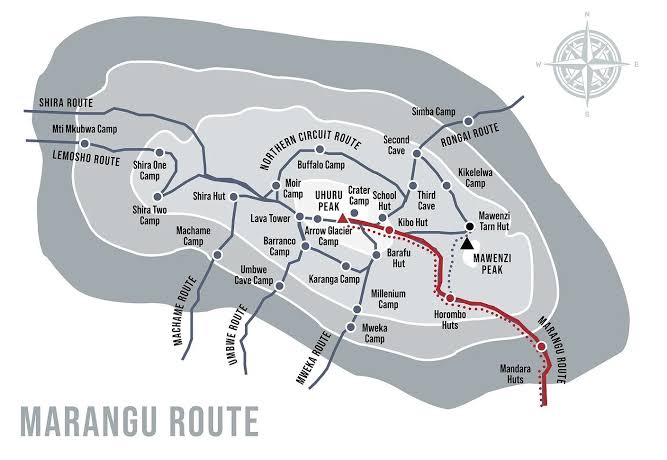
For decades, the Marangu Route was the way to climb Kilimanjaro. It is the oldest established path on the mountain, rising from the Chagga village of Marangu on the southeastern slopes through rainforest and moorland to the barren saddle between Kibo and Mawenzi. It is also the only route where climbers sleep in huts rather than tents, which gives it a character unlike any other route.
The Marangu Route earned the nickname “Coca-Cola Route” because soft drinks were once sold at the huts and because its gentle gradients made it seem the easiest option. That reputation can be misleading. Marangu is often climbed in five days, which leaves little time for acclimatisation, and success rates on short itineraries are lower than many climbers expect. Climbed over six days, with an acclimatisation day at Horombo Hut, it becomes a far more sensible and rewarding choice.
Plan a Marangu Route climb on Kilimanjaro. Hut accommodation, 5-day vs 6-day itineraries, Mandara, Horombo and Kibo huts, Gillman’s Point, success rates, costs, best season and tips.
This guide explains the Marangu Route day by day, what the huts are like, how five- and six-day versions compare, and who should choose this classic path to Uhuru Peak.
Marangu Route at a Glance
| Feature | Details |
| Start and finish | Marangu Gate, about 1,860 m |
| Duration | 5 or 6 days |
| Distance | About 70 km round trip |
| Accommodation | Dormitory-style huts |
| Huts | Mandara, Horombo, Kibo |
| Summit approach | Kibo Hut to Gillman’s Point and Uhuru Peak |
| Crowds | Moderate to busy |
| Nickname | The Coca-Cola Route |
Marangu Route Itinerary: 6 Days
| Day | Route | Altitude | Distance | Time |
| 1 | Marangu Gate to Mandara Hut | 1,860 to 2,720 m | About 8 km | 3 to 4 hours |
| 2 | Mandara Hut to Horombo Hut | 2,720 to 3,720 m | About 12 km | 5 to 7 hours |
| 3 | Acclimatisation day at Horombo | Hike to about 4,000 m and return | Short | 2 to 4 hours |
| 4 | Horombo Hut to Kibo Hut | 3,720 to 4,720 m | About 10 km | 5 to 6 hours |
| 5 | Kibo Hut to Uhuru Peak to Horombo Hut | 4,720 to 5,895 to 3,720 m | About 21 km | 11 to 15 hours |
| 6 | Horombo Hut to Marangu Gate | 3,720 to 1,860 m | About 20 km | 5 to 7 hours |
Day 1: Marangu Gate to Mandara Hut
The climb begins with registration at Marangu Gate. The trail follows a wide path through lush rainforest, where black-and-white colobus monkeys and blue monkeys are often seen. Mandara Hut sits in a forest clearing. In the afternoon, a short walk to Maundi Crater offers views over the surrounding countryside.
Day 2: Mandara Hut to Horombo Hut
The trail leaves the forest and enters the heath and moorland zone, with giant heathers, senecios and lobelias. Views of Kibo and Mawenzi open up. Horombo Hut is a large hut complex with panoramic views.
Day 3: Acclimatisation day at Horombo
On the six-day itinerary, this day is spent acclimatising. A hike to Zebra Rocks or towards Mawenzi Hut gains altitude before returning to Horombo to sleep. This “climb high, sleep low” day makes a significant difference.
Day 4: Horombo Hut to Kibo Hut
The trail crosses the vast alpine desert saddle between Mawenzi and Kibo. The landscape is stark and lunar. Kibo Hut, a stone building at about 4,720 metres, is the base for summit night.
Day 5: Summit night and descent
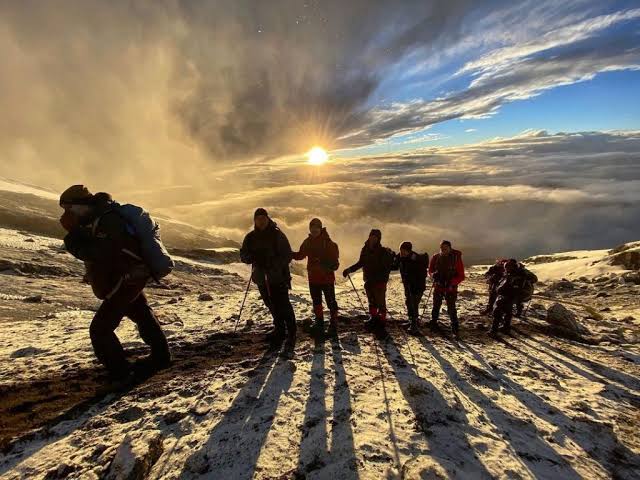
You start climbing around midnight, ascending steep switchbacks to Gillman’s Point on the crater rim, then continue along the rim to Uhuru Peak. After the summit, you descend to Kibo Hut and continue to Horombo Hut. This is the longest and hardest day.
Day 6: Horombo Hut to Marangu Gate
The final descent passes through moorland and rainforest back to Marangu Gate, where you receive your certificate.
What the Huts Are Like
| Hut | Altitude | Facilities |
| Mandara Hut | About 2,720 m | A-frame wooden huts, shared bunks, dining hall |
| Horombo Hut | About 3,720 m | Larger complex, bunk rooms, dining hall |
| Kibo Hut | About 4,720 m | Stone building, dormitory rooms |
Huts provide bunks with mattresses, but you still need a warm sleeping bag. Toilets are basic flush or pit toilets. Huts are shared with other climbers, so earplugs are useful.
Marangu Route: 5 Days vs 6 Days
| Factor | 5 days | 6 days |
| Acclimatisation | Very limited | Better, with a rest day at Horombo |
| Success rate | Low | Higher |
| Cost | Lower | Higher |
| Recommended for | Pre-acclimatised climbers | Most climbers |
Five-day Marangu climbs are among the least successful options on Kilimanjaro. The six-day itinerary is strongly recommended.
Why It’s Called the Coca-Cola Route
The nickname comes from the days when soft drinks were sold at the huts, and from the route’s reputation as easier than Machame, the “Whiskey Route.” While the gradients are gentler, the summit night from Kibo Hut is steep and demanding, and altitude remains the main challenge.
Pros and Cons of the Marangu Route
| Pros | Cons |
| Hut accommodation | Same route up and down |
| Gentle gradients | Less scenic variety |
| Good in rainy seasons | Huts can be noisy and crowded |
| Clear, well-maintained path | Shorter itineraries have low success |
| Often slightly lower cost | Summit night from Kibo Hut is steep |
Costs
| Item | Approx. cost |
| Hut fees | US$60 per person per night, plus VAT |
| Park fees for 6 days | Several hundred to over a thousand US dollars |
| Mid-range 6-day package | US$2,200 to 3,500 per person |
| Tips | US$200 to 350 per climber |
Best Time to Climb the Marangu Route
| Months | Conditions |
| January to early March | Dry, clear |
| June to October | Dry, colder, busier |
| April to May | Long rains; huts provide shelter |
| November | Short rains |
| December | Good, busy around holidays |
Marangu is one of the better options in the rainy seasons, as huts keep you dry.
Marangu Compared With Rongai
| Factor | Marangu | Rongai |
| Start | Southeast | North |
| Accommodation | Huts | Tents |
| Descent | Same route | Marangu route |
| Crowds | Moderate to busy | Quiet |
| Rainfall | Higher on southern slopes | Drier northern slopes |
Life in the Huts
Staying in huts creates a different atmosphere from camping. At Mandara and Horombo, climbers share wooden A-frame huts or bunk rooms, and meals are served in a communal dining hall or prepared by your operator’s cook. You meet climbers from around the world, sharing stories and encouragement. Huts offer protection from rain and wind, which many climbers appreciate, especially in the wetter months.
There are trade-offs. Huts can be noisy, with climbers coming and going at different times, and snoring can make sleep difficult. Bunk rooms are shared, so privacy is limited. Earplugs, an eye mask and a good sleeping bag help. Kibo Hut, at the base of summit night, is busy and cold, and many climbers rest rather than sleep before setting off around midnight.
Horombo Hut and the Acclimatisation Day
Horombo Hut, at around 3,720 metres, is the heart of the Marangu Route. Its wide views over the clouds and towards Mawenzi and Kibo make it one of the most scenic huts on Kilimanjaro. On the six-day itinerary, you spend two nights here, with an acclimatisation hike in between.
Popular acclimatisation hikes include Zebra Rocks, a short walk to striped rock formations, or a longer hike towards Mawenzi Hut and the Mawenzi saddle. These hikes take you higher during the day before returning to sleep at Horombo, helping your body adapt. Climbers on the descent also stop at Horombo, so the hut is often busy with both ascending and descending groups.
The Saddle: Crossing a Lunar Landscape
The walk from Horombo to Kibo Hut crosses the Saddle, a wide expanse of alpine desert between Mawenzi and Kibo. Vegetation almost disappears, and the landscape becomes a sea of volcanic gravel and rock. On clear days, Kibo looms ahead and Mawenzi’s jagged peaks rise to the east. The walk is long but not steep, and climbers often feel the altitude here. Walking slowly and drinking regularly is essential.
Who Should Choose Marangu?
Marangu suits climbers who value huts, gentle gradients and a well-established route. It is a good choice in the rainy seasons and for climbers who prefer not to camp. It also suits climbers who have already acclimatised elsewhere, such as on Mount Meru. If scenery and acclimatisation are your top priorities, a longer tented route such as Lemosho or the Northern Circuit may be a better fit.
Marangu Gate and Village
Marangu Gate is about an hour’s drive from Moshi, near the village of Marangu. The village is one of the oldest Chagga settlements on the mountain and offers interesting cultural experiences, such as visits to coffee farms, traditional houses, caves and small waterfalls. Many climbers spend an extra day in Marangu before or after the climb to explore. Lodges in the village provide a quiet, green setting close to the trailhead, avoiding an early-morning drive from Moshi.
Combining Marangu With a Safari or Beach
Because Marangu is a shorter route, it fits well into longer Tanzania itineraries. After descending, many climbers rest for a night in Moshi or Arusha before starting a safari in Tarangire, Ngorongoro and the Serengeti. Others fly to Zanzibar to relax on the beach. Allowing at least one rest day between the climb and other activities helps your body recover.
Final Week Before Your Climb
The last week before a Kilimanjaro climb matters more than many people realise. Reduce training intensity so your legs are fresh. Prioritise sleep, eat well and avoid illness by washing hands often while travelling. Arrive in Moshi or Arusha at least a day before the climb, ideally two, to recover from flights and adjust to the climate. Use this time to attend your operator’s briefing, check rental gear, pack your duffel within the weight limit and organise your daypack for the first day. A calm, rested start sets the tone for the whole climb.
Frequently Asked Questions About the Marangu Route
Is Marangu the easiest route?
It has gentle gradients, but summit night is demanding and short itineraries have low success rates.
Does Marangu have huts?
Yes. It is the only Kilimanjaro route with hut accommodation.
How long does the Marangu Route take?
Five or six days. Six days is strongly recommended.
What is the summit point on Marangu?
Climbers reach Gillman’s Point on the crater rim, then continue to Uhuru Peak.
Is Marangu good in the rainy season?
Yes. Huts provide shelter, making it a good wet-season option.
Why is it called the Coca-Cola Route?
Because soft drinks were once sold at the huts and it was seen as easier than Machame.
Can I upgrade to private huts?
Huts are shared, though operators may arrange smaller rooms when available.
Are there showers at the huts?
Facilities are basic. Washing is usually with warm water provided by your crew.
Is Marangu cheaper than other routes?
It can be slightly cheaper because it is often shorter, but hut fees and park fees still apply.
Can I see Mawenzi on Marangu?
Yes. Mawenzi is visible from Horombo and the Saddle, and the acclimatisation hike goes towards it.