One of the wonders of the world and a UNESCO World Heritage Site, the Ngorongoro Conservation Area is situated in the northern part of Tanzania. It is roughly 153 kilometres west of Arusha Town, a popular tourist destination in Tanzania, and is part of the country’s northern safari circuit. The Ndutu region serves as the meeting point between the Ngorongoro conservation area and the southern Serengeti national park. The Ngorongoro conservation area is a distinctive Tanzania safari destination and a component of the vast Serengeti ecosystem. The Ngorongoro Conservation Area is located 50 kilometres from the national parks of Lake Manyara, Tarangire, and Arusha and 139 kilometres from each other.
Ngorongoro crater, the world’s biggest intact volcanic caldera at 2,000 feet in depth and 260 square kilometres in width, is the primary feature of the Ngorongoro conservation area, making it a unique travel destination. The Ngorongoro Crater collapsed between two and three million years ago, having been created by a volcanic explosion. Ngorongoro Crater was designated as a World Heritage site of global significance in 1979 due to its uniqueness. Aside from the Ngorongoro Crater, the Ngorongoro Conservation Area has other stunning attractions that serve as additional safari highlights in Tanzania. Among these are the Oldupai, also known as Olduvai Gorge, which is renowned as the “cradle of man.” Louis Leakey and his wife Mary Leaky, paleoanthropologists, discovered the last remnants of early human evolution at this mysterious archaeological site in the 1950s. The Olduvai Gorge Museum, Nasera rock, and Laetoli footprints are among the other archaeological treasures that can be found in the Ngorongoro conservation area.
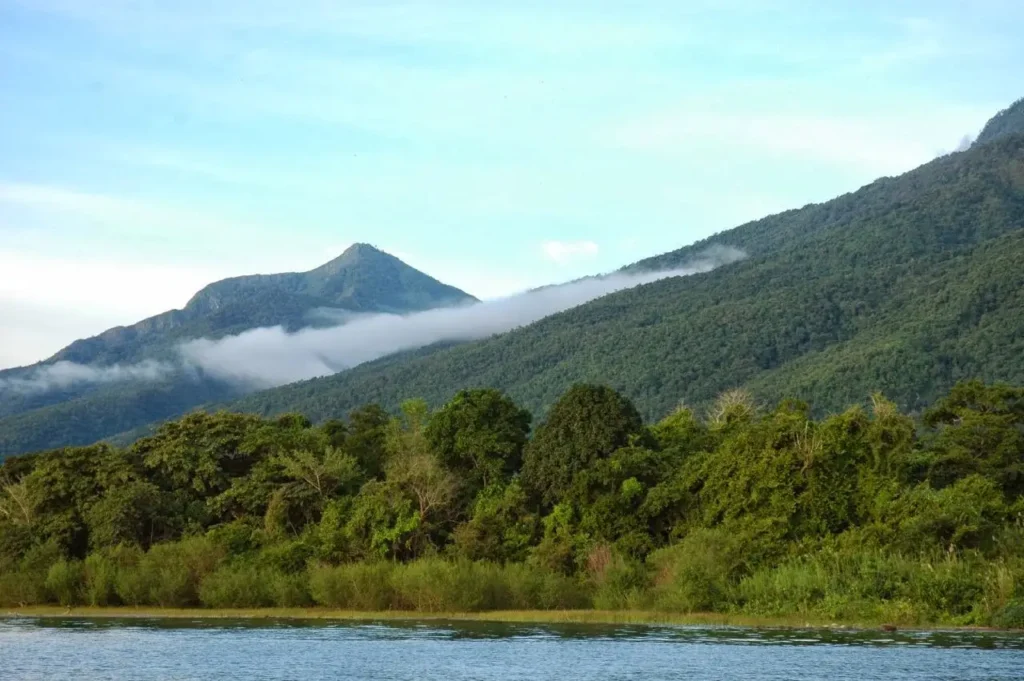
The 8,292 square kilometre Ngorongoro Conservation Area is home to a variety of natural features, including lakes, craters, wetlands, and many others. The Gol Mountains, Mount Lolmalasin and Losirua, Lake Ndutu, Lake Maseke, Olkarien Gorge, Mandusi swamp, Gorigor swamp, Ngoitokitok springs, central plains, Lerai forest, Rumbe hills, Munge stream, Ngorongoro crater, and Olmoti crater are among the physical features of the Ngorongoro conservation area. Grasslands inside the crater dominate the middle plains of the Ngorongoro conservation area. These plains are home to a variety of wildlife species and make a good location for Tanzanian game viewing safaris.
The Ngorongoro conservation area is one of Tanzania’s top places for wildlife tours since it provides excellent habitat for a large number of the country’s animal species. primarily the Ngorongoro Conservation Area More than 25,000 large mammals call Ngorongoro Crater home. Grass plains predominate there, west of the Gol Mountains, northeast of the crater, and around Lake Ndutu, which lies near the Serengeti National Park’s border. The Ngorongoro Crater is home to a variety of predators, including lions, cheetahs, leopards, black-backed and golden-backed jackals, waterbucks, Bohor reedbucks, elands, warthogs, hartebeests, and wildebeests, serval cats, elephants, black rhinos, zebras, and many more.
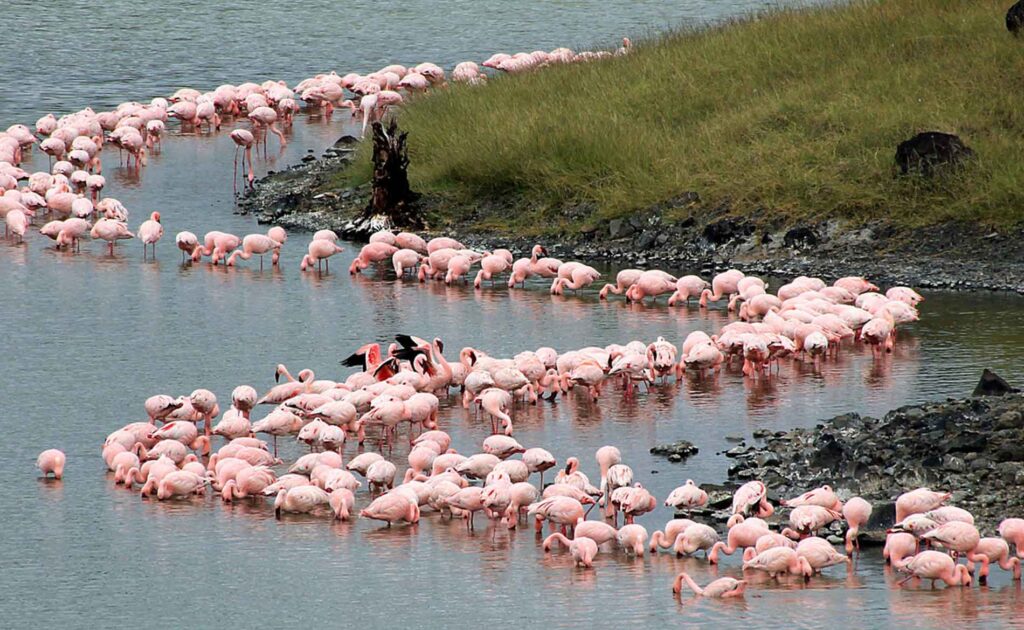
With over 550 bird species, including both resident and migratory species, the Ngorongoro Conservation Area is a great place to go bird watching in Tanzania. It is home to thousands of lesser flamingos, which inhabit Lake Magadi, a salt lake on the crater floor, as well as hornbills, turacos, goshawks, harriers, ostriches, kori bustards, crowned cranes, secretary birds, African spoonbills, capped wheatear, eastern double-collared sunbirds, Egyptian vultures, fan-tailed widow birds, Hartlaub’s turaco, red and yellow barbets, scarlet-chested sunbirds, scarlet-chested sunbirds, white-eyed salty flycatchers, and many more species of birds. The majority of the birds in the Ngorongoro Conservation Area live near Lake Ndutu, the Empakaai Crater Lake, and several savannah grasslands.
Safari activities to do in the Ngorongoro conservation area
Game viewing
Game viewing in Ngorongoro Conservation Area is done in a 4×4 wheel vehicle and begins after descending through the lush forest to the crater bottom. The Ngorongoro Conservation Area is a highly rewarding site for Tanzania game viewing safaris, with fantastic sightings of wildlife activity. Game viewing is available in three different sessions: morning, full day, and night. The morning game drive provides the best views of game activity, including large cats such as lions and leopards hunting for prey, while the night game drive uses spot lights to reveal predators such as lions, leopards, and wild dogs.
Look for sightings of lions, spotted hyenas, cheetahs, leopards, black-backed jackals, golden-backed jackals, waterbucks, Bohor reedbucks, elands, warthogs, hartebeests, wildebeests, serval cats, elephants, and black rhinos from the windows of your car while on a game drive.
Bird watching
A Tanzanian birding trip would not be complete without seeing the Ngorongoro Conservation Area, which is home to over 550 different kinds of birds, both resident and migratory, that live in the marshes, lakes like Lake Magadi, grassland plains, and woodland areas. On a birding safari in the Ngorongoro conservation area, a variety of bird species are spotted, including hornbills, turacos, goshawks, harriers, ostriches, Kori bustards, crowned cranes, secretary birds, African spoonbills, capped wheatears, eastern double-collared sunbirds, Egyptian vultures, fan-tailed widow birds, Hartlaub’s turacos, red and yellow barbets, scarlet-chested sunbirds, white-eyed salty flycatchers, and many more. Seeing lesser flamingos and other water birds on Lake Magadi, a salt lake on the crater floor, is the highlight of bird viewing in the Ngorongoro Conservation Area.
Walking safaris
Walking safaris in Tanzania’s Ngorongoro Conservation Area are an amazing way to explore the area’s many tourist attractions while accompanied by a safari guide. The area is a very rewarding and daring travel destination. The Ngorongoro conservation area offers a variety of walking safari experiences, including strolls along Lake Eyasi, hikes to the Empakaai crater, crater rim treks, and ascents of the Olmoti volcano’s sides. Crater rim walks, which last between one and four hours, begin early in the morning from Lemala Gate on the eastern side of the crater and provide beautiful views of the crater floor as well as a variety of birds in the dense forest cover. The hiking experience to reach the Empakaai crater takes a full day and includes walking around the crater’s forests, climbing the Olmoti volcano’s flanks from the highlands camp, and taking a half-day walk along Lake Eyasi’s shores, passing through mountain forests, grasslands, and outcrops on the way to the volcano’s summit.
Archaeological tours
The Olduvai Gorge and the Laetoli Footprint, which contain remnants of the human race’s forefathers, are only two of the numerous archaeological sites found inside the Ngorongoro Conservation Area that are visited by archaeological excursions. Known as the “cradle of humanity,” Olduvai Gorge is home to the earliest known remains of Homo sapiens. There is a museum there that features two rooms: one honouring Oldupai and the other honouring Laetoli, where a variety of artefacts found by Dr. Leakey and his spouse are on exhibit. Archaeological tours in the Ngorongoro conservation area provide an opportunity to see fossils that paleoanthropologists Louis Leakey and his wife Mary Leaky found in the Olduvai Gorge in the 1950s.
Camping safaris
The Ngorongoro conservation area is a fantastic location for a Tanzanian camping safari. Numerous approved camping sites, including special and public campsites, are used for these excursions, and some of them are perched on the edge of the Empakaai crater. Public campsites in the Ngorongoro Conservation Area are primarily used by hikers and have fewer amenities like showers and toilets, whereas special campsites feature amenities like food outlets that are necessary for campers. Reservations for camping safaris in the Ngorongoro Conservation Area are made at the Authority headquarters.
Cultural tours
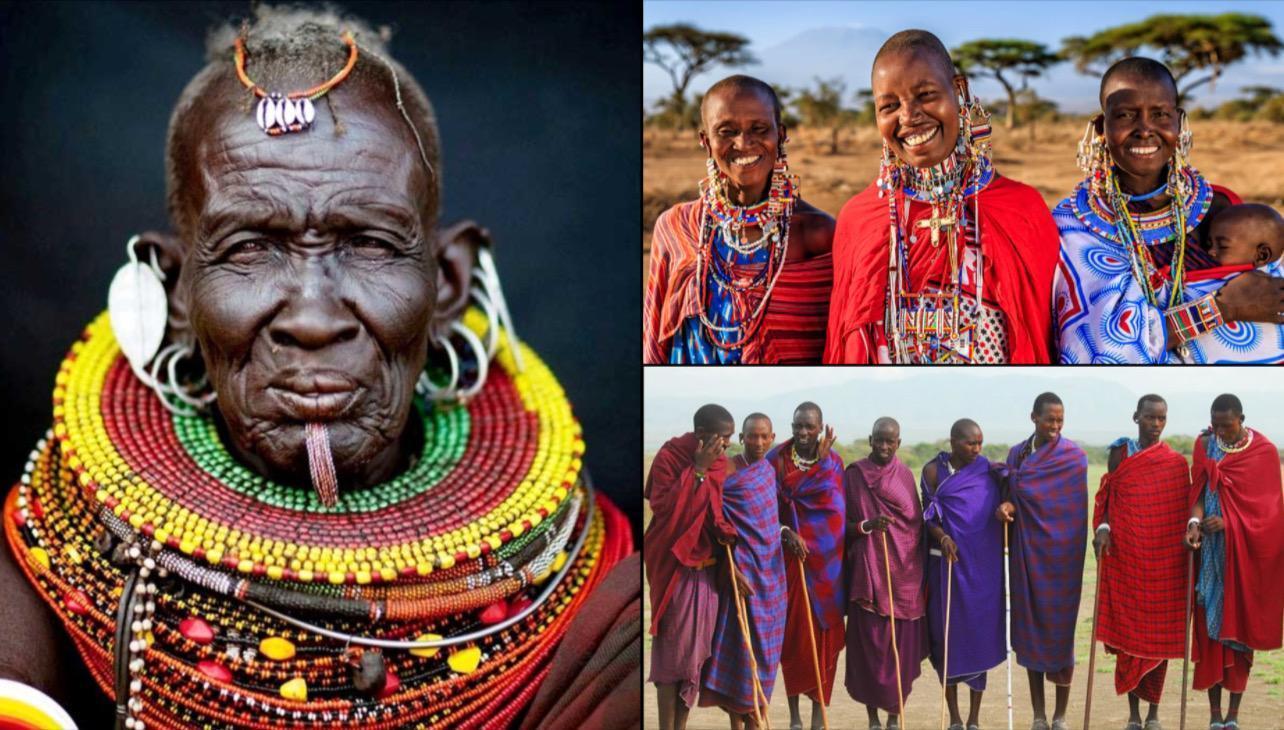
Cultural excursions in the Ngorongoro conservation area introduce guests to the interesting Maasai people. Because of their distinctive culture—which has been obscured by technology and modernity—the Maasai people are among the greatest tribes to visit when on a cultural tour in Tanzania. Tourists visiting the Masai settlements in Tanzania will gain insight into the customs, beliefs, and cultural practices of the Maasai people, who share boundaries with the Ngorongoro conservation area. Other customs observed by the Maasai community include visiting the cultural Bomas, sampling regional cuisine, raising cattle, and wearing in shukas and donning exquisite handcrafted jewellery, such as enormous, multicoloured necklaces.
Where to stay in the Ngorongoro conservation area
There are several different lodges and camps in the Ngorongoro Conservation Area that provide accommodations in three different statuses: luxury, midrange, and budget. Neptune Ngorongoro Luxury Lodge, Ang’ata Ngorongoro Camp, Neptune Ngorongoro Tented Camp, Ngorongoro Crater Lodge, Lion’s Paw Cam, Ngorongoro Forest Tented Lodge, Hhando Coffee Lodge, Ngorongoro Wildlife Lodge, Ngorongoro Rhino Lodge, Ngorongoro Oldeani Mountain Lodge, and many more lodging options can be found in the Ngorongoro Conservation Area.
How to get to Ngorongoro Conservation Area
The Ngorongoro Conservation Area is accessible by plane and car. It is located approximately 173 kilometres away from Arusha, one of Tanzania’s most popular tourist destinations. Driving from Arusha city to Loduare Gate, which is close to Karatu town, may be done via road. There are several routes that visitors can take from other locations along the northern safari circuit, like Lake Manyara National Park and the Serengeti National Park, to reach the Ngorongoro Conservation Area.
By air: direct flights and domestic chartered flights are available to the Ngorongoro Conservation Area; these flights also fly to Kilimanjaro International Airport, which is 46 km away and serves as the entrance to Arusha town. For a domestic flight to either the Lake Ndutu or Ngorongoro airstrips, you depart from Kilimanjaro International Airport and travel to Arusha town. Safari Air Link, Coastal Aviation, Air Tanzania, Precision Air, Regional Air, Zan Air, and Zan Air all provide domestic chartered flights to the Ngorongoro conservation region.