Masai Mara National Reserve Location
Masai Mara National Reserve Location; Located in southwestern Kenya, Maasai Mara National Reserve is one of the most famous wildlife conservation areas in the world, offering unparalleled opportunities to witness the Big Five and the Great Migration.
The reserve forms a vital part of the larger Mara–Serengeti Ecosystem, a vast landscape spanning the border between Kenya and Tanzania, creating a seamless wilderness. Maasai Mara National Reserve takes its name from the Maasai people, the ancestral custodians of the land, the Mara River, which carves through the plains. With an area of 1,510 square kilometers, the Masai Mara connects to other famous conservation areas like Serengeti National Park in Tanzania, forming a massive corridor for wildlife.
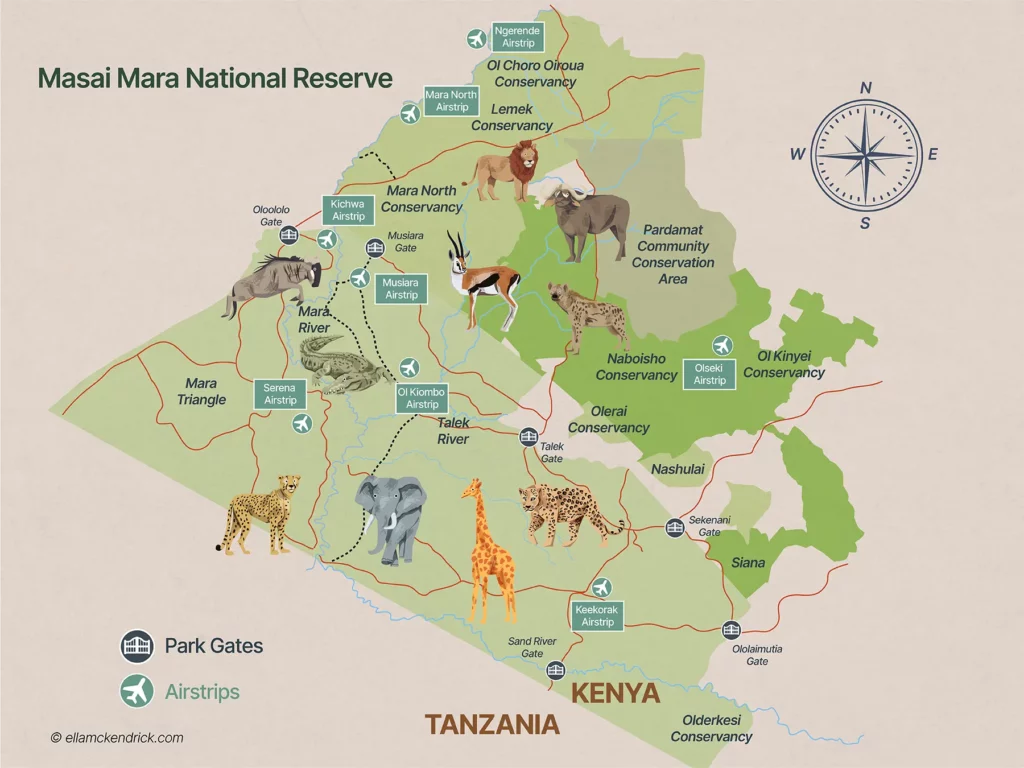
Below is a map of Masai Mara National Reserve displaying both the main Masai Mara National Reserve as well as a map of the private conservancies surrounding the reserve. The core reserve itself is divided into an eastern side (Narok County) and a western side (Trans Mara County), also known as Mara Conservancy.
Other conservancies surrounding Masai Mara are Mara North, Siana, Lemek, Koiyak, Naboisho, Olare Orok and Ol Kinyei.
Key Geographical Landmarks in Maasai Mara National Reserve
- The Mara River: This is the lifeblood of Masai Mara National Reserve, flowing through the savannah plains, providing water to the ecosystem year-round.
- The Oloololo Escarpment: The dramatic ridge forms the western boundary, offering some of the most spectacular views in Africa.
- The Sand River: A seasonal river marking the border between Kenya and Tanzania.
- The Talek River: Separates the Musiara and Sekenani Sectors
- Rhino Ridge: A high point providing panoramic views, located near the center of the reserve
- Paradise Plain: This is a popular game-rich area near the Mara River.
Regions of Masai Mara National Reserve
Masai Mara National Reserve is divided into sectors and as you plan to visit this iconic Kenya safari destination, it is important to know them.
- Sekenani Region
The Sekanani Region of Masai Mara National Park is one of the busiest regions of Masai Mara National Reserve accessed using the Sekenani Gate. The region slopes down into the eastern part of the reserve and comprises some hilly areas. The Leleshwa Forest is found here, supporting many wildlife species but is mostly known for its excellent birding opportunities.
The Sekenani Region hosts many accommodation options. The high number of visitors and ongoing local development have made this region of the reserve busy. For this reason, it is seen as one of the most visited parts of Masai Mara.
- Musiara Region
The Musiara Region of Masai Mara is known as one of the best places for wildlife viewing in Masai Mara National Reserve. This area lies between the Talek River and the Mara River, in the southeast region of the reserve.
Its location near the Mara River males it very important during the Great Migration, especially during the Mara River Crossing season. Lark herds of animals move from Serengeti National Park into Masai Mara National Reserve between July and October. During this season, the Musiara Region of Masai Mara becomes very active with wildlife. Visitors can see predators like lions, cheetahs and African wild dogs hunting in the open plains.
- The Plains Region
This is renowned for its excellent cheetah sightings.
- Mara Triangle
The Mara Triangle is one of the most famous and most important areas of Masai Mara National Reserve; it is where the Great Migration herds enter and depart Masai Mara National Reserve from Tanzania’s Serengeti National Park, making it a perfect location to witness this incredible wildlife spectacle.
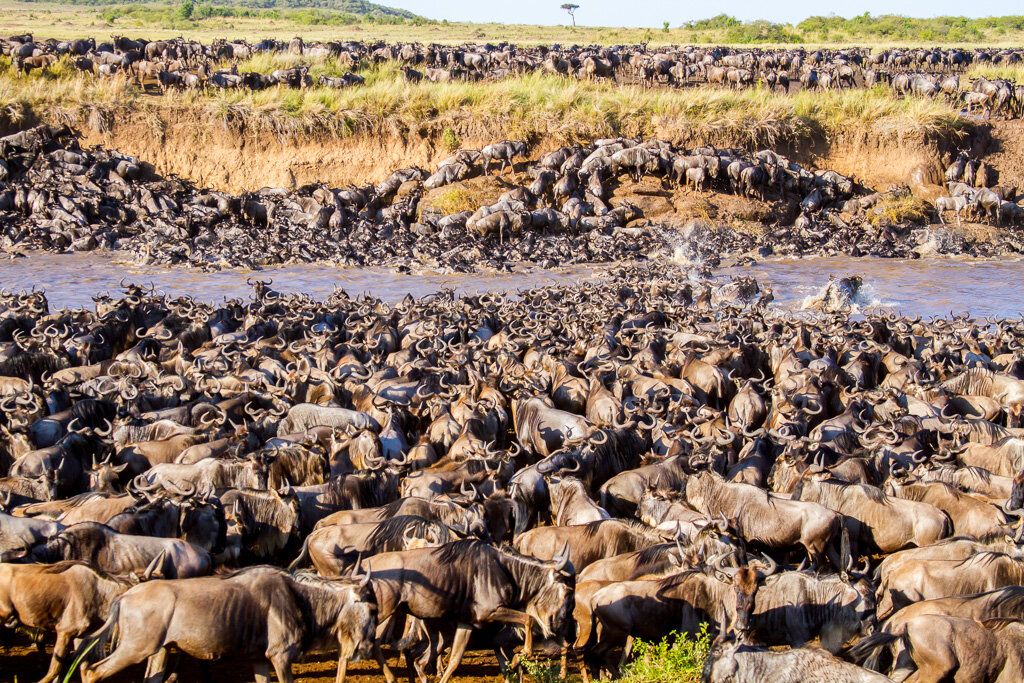
The Mara River crossings are among the migration’s most dramatic events, so staying in the Mara Triangle on safari will offer you front-row seats to the migration show.
The Mara Triangle has a hot air balloon launch point, and this aerial experience is not to be missed. Flying high over the Mara Plains as the sun sets turns the scenery golden and allows you to view wildlife from the air, an unforgettable experience.
The Mara Triangle covers about 510 square kilometers, making it the largest part of the reserve. The reserve is managed by the Mara Conservancy through cooperation between conservation experts and the Maasai community, thus helping to improve wildlife protection and tourism in the Mara Triangle.
Information and Facts about Masai Mara National Reserve
Masai Mara National Reserve is located in the Great Rift Valley in Kenya, known as a top destination, because of the annual wildebeest’s migration that passes here, while they famously cross the Mara River.
From August to mid-October is the best time to visit Masai Mara, when the migration reaches Kenya and river crossings are taking. In the Masai Mara Plains you have a good chance to see the Big Five – lions, leopard, buffalo, rhino and elephants as well as cheetahs, hyenas, hippos, crocodiles and many more animals.
Most Common animals in Masai Mara National Reserve
Masai Mara National Reserve is home to more than 95 animal species and over 400 species of birds. The common animals are as follows
- Big five – Elephant, lion, leopard, rhino and buffalo
- Migration animals – Wildebeest, zebra, gazelle, antelope and impala
- Cheetah
- Serval
- Hyena
- Bat-eared foxes,
- Black-backed and side-striped jackals
- Hippo
- Crocodile
- Baboons
- Warthog
- Topi
- Eland
- Thomson’s and Grant’s gazelle
- Impala
- Water- and Reed buck
- Oribi
Facts About Masai Mara National Reserve
Just like any other destination in the world, every year is different and there are no guarantees about the way the Great Migration moves; there is a certain pattern that has been witnessed for several years.
- Great Migration is present in Maasai Mara and Serengeti
- In July, the herds are still on the Serengeti side
- From August to mid-September, the herds are on both sides, half of them in Serengeti and the other half in Masai Mara
- From mid-September to mid-October, the herds are more on Masai Mara side (this is the best time to go to Masai Mara to witness the Great Migration)
- Serengeti National Park is less crowded if you want to see the river crossing, most people consider this to be a prime area.