What Is A Typical Kenya Safari Experience Like?
What Is A Typical Kenya Safari Experience Like? This guide explains what a Kenya safari day actually looks like, from the early morning knock on your tent door to the sounds outside your window after dinner.
It covers the game drives, the food, the accommodation, the wildlife encounters, the guides, the cultural experiences, and the things that first-time visitors are genuinely surprised by.
Understanding the shape of a safari day before you arrive helps you be more present when you get there, because you spend less energy figuring out what is happening and more time actually absorbing it.
The Structure of a Kenya Safari Day
Animals are most active in the cool hours of the early morning and the late afternoon. The midday heat, particularly in the drier parks, drives most wildlife to shade and stillness.
Your daily schedule revolves around these biological windows, which means waking earlier than you would ever choose at home and discovering, after the first two mornings, that the early start is the part of the day you look forward to the most.
The Morning Game Drive:
The morning drive typically lasts two to four hours, departing as the sky lightens and often pausing for a bush breakfast before returning to camp. The vehicle is a Toyota Land Cruiser with a pop-up roof hatch that allows standing for photography and unobstructed 360-degree views.
Your guide drives and also narrates constantly: the track of a hyena that crossed the road an hour before your vehicle, the behaviour of a herd of wildebeest that suggests a predator is nearby somewhere in the grass, the call of a lilac-breasted roller that sounds like laughter.
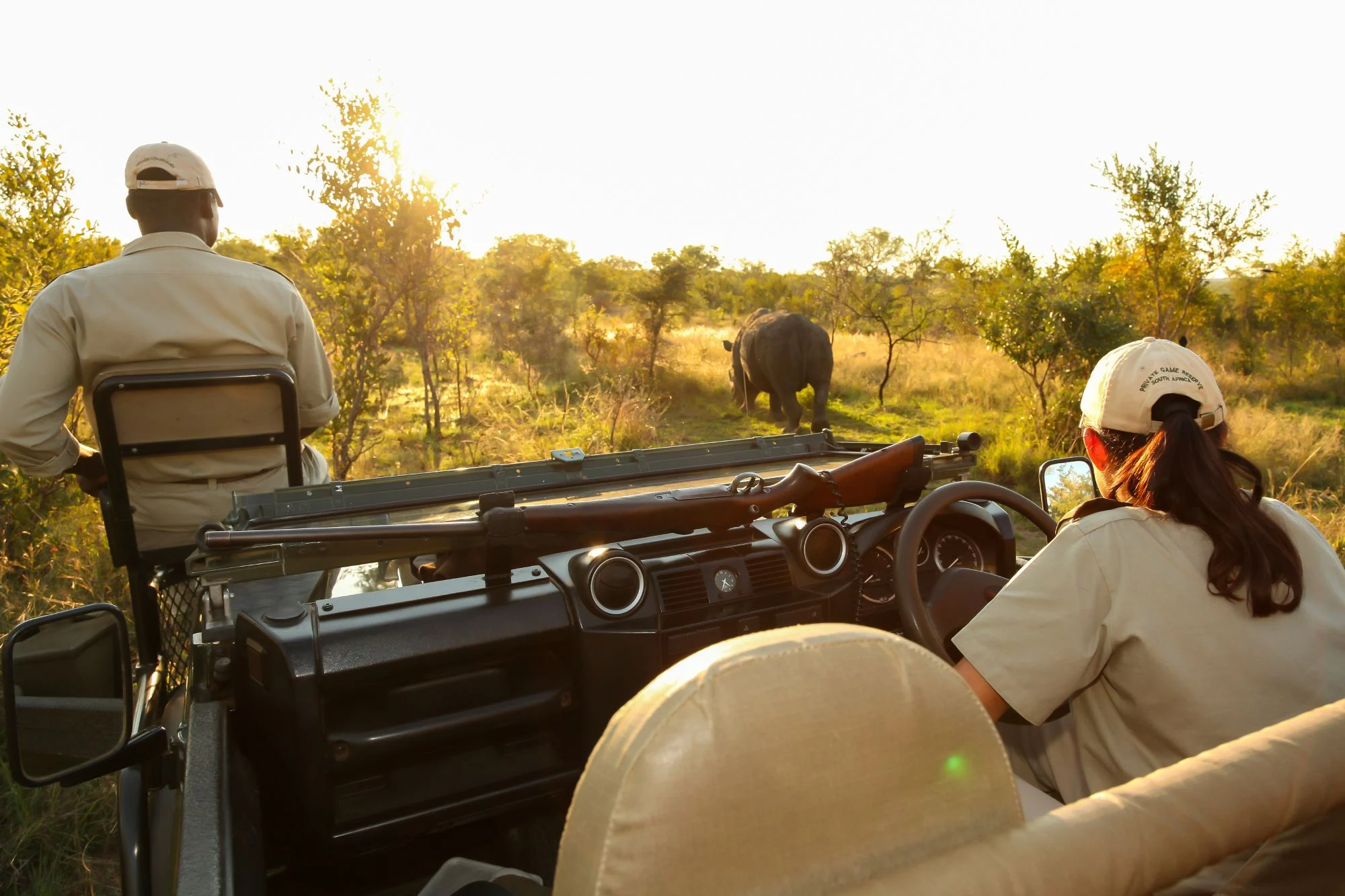
Predators are most active in the first two hours of the morning drive. Lions are finishing nocturnal hunts or walking back to shade with full bellies. Cheetahs are scanning from termite mounds and low kopjes before the sun gets high enough to compromise the hunt.
Leopards are moving from their overnight hunting grounds back to a favourite tree before the day begins. If you are going to see something extraordinary in Kenya, the first ninety minutes of the morning drive is when it most often happens.
Radio communication between guides in the same area means that significant sightings are shared in real time. When another vehicle encounters a lion kill or a cheetah hunt, your guide hears about it and makes a decision about whether to go, how fast, and whether to intercept the action before it concludes. This informal coordination is one of the structures that makes game viewing in Kenya consistently productive in ways that self-drive travel cannot replicate.
Bush Breakfast:
Bush breakfasts, where the guide drives to a scenic position and the camp team has set up a full breakfast spread in the open air, are one of Kenya’s great safari rituals. The first time you eat fresh fruit, eggs, and toast in the middle of a national park while hippos bark at the river fifty meters away and the light turns the grass gold above the morning mist, you understand something about why people find this kind of travel so difficult to replicate in other forms.
Some lodges do this most mornings as a standard offering. Others arrange it on request. Either way, it is worth asking for specifically, because the combination of good food and an extraordinary outdoor setting in the early morning does something to the brain that converts even a straightforward breakfast into a memory.
The Midday Hours:
Between approximately ten in the morning and four in the afternoon, most guests return to camp. The midday heat drives the animals to shade. Game viewing is significantly less productive. This window belongs to the lodge and to the guest.
A good lodge uses this time well. Lunch is usually long and relaxed, often served in the open-air dining area or beside the pool if one exists. The afternoon is reading time, photography sorting time, swimming time, napping time.
Some lodges offer midday guided bush walks for guests who want to stay active. Others run naturalist talks, cultural demonstrations, or conservation briefings in the early afternoon shade. The pace drops to something close to nothing, and most first-time safari visitors are surprised to find that this quality of enforced midday rest, unavailable in their ordinary lives, becomes one of the things they most remember about the trip.
The Afternoon Drive:
The afternoon drive departs at three or four, depending on the park and season, and runs until the light drops below the horizon. The quality of the light at this time, long and warm and directional from the west, gives the landscape and the animals a photographic beauty that the midday glare cannot produce. Dust from elephant herds catches the low sun and turns golden. Giraffes backlit against a setting sky become silhouettes against colours that shift from amber to coral to deep red in the space of forty minutes.
Predators become active again as the temperature drops. In the Maasai Mara, cheetahs on termite mounds scanning for Thomson’s gazelle are a late-afternoon constant. If a hunt is going to happen in front of your vehicle, this is the window when the probability is highest.
The actual sprint, if you witness one, lasts between ten and twenty seconds and reaches a hundred kilometres per hour at peak. It is over before you have finished raising your camera. And it is one of the most electric experiences the natural world produces.
The Sundowner:
The sundowner, a drink at sunset from a scenic position chosen by your guide, ends every afternoon drive in Kenya. On a kopje in the Maasai Mara, from a vehicle parked at the edge of the Mara River, or from a hillside above the Amboseli pan with Kilimanjaro darkening above the western horizon, the ritual of a cold drink while the light does its final performance is one of those daily moments that sounds modest when described and turns out to be the part of each day you look forward to from the moment the morning drive ends.
Evenings at the Lodge: Dinner, Starlight, and the African Night
Dinner at most Kenyan safari lodges is a proper meal, often served in a boma, the traditional circular outdoor dining space around an open fire where guests and guides gather while the African night makes itself heard around them.
The food at good lodges is genuinely excellent: a combination of international dishes and local Kenyan food including ugali, sukuma wiki, nyama choma, and fresh seasonal produce. The quality of cooking in remote bush lodges consistently surprises guests who expected utility and got something close to restaurant standard.
After dinner, a guide escorts you back to your tent with a torch. The camp is unfenced at most tented properties, which means wildlife moves through at will.
Hippos are common visitors to riverside camps. Hyenas investigate smells near the dining area after the kitchen closes. Elephants have been known to push through camp boundaries en route to water.
The sounds outside your tent canvas, which you hear entirely because you are lying in the dark with nothing between you and the bush, are not ambience. They are the actual night. And after the first night, they become the thing you fall asleep listening for.
What to See
Realistic expectations matter for a first Kenya safari, and the realistic expectation is that a well-planned Kenya safari delivers extraordinary wildlife with considerable consistency. These are not zoo animals performing on schedule. But Kenya’s major parks, particularly the Maasai Mara, have such exceptional wildlife density that the word guaranteed comes genuinely close to applicable for several species.
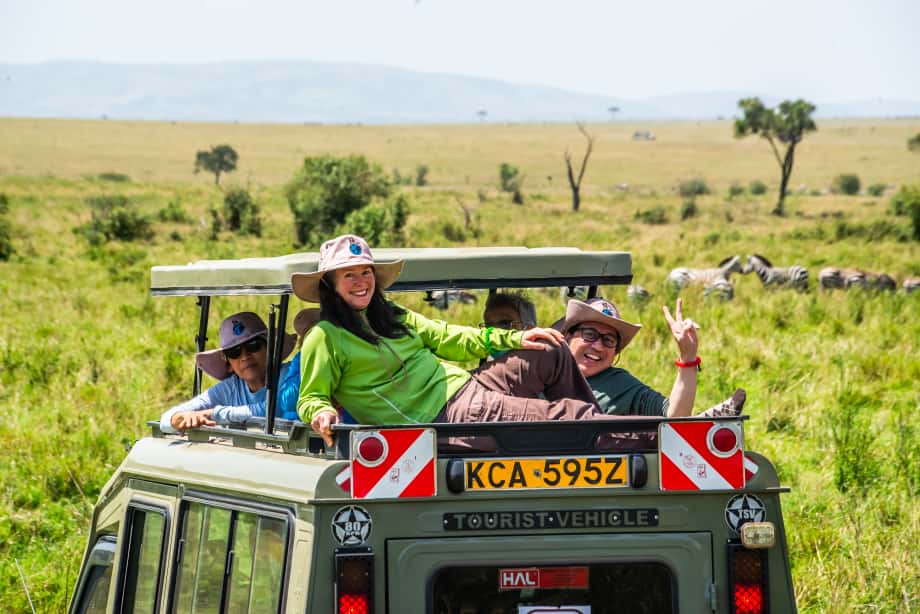
Maasai Mara National Reserve
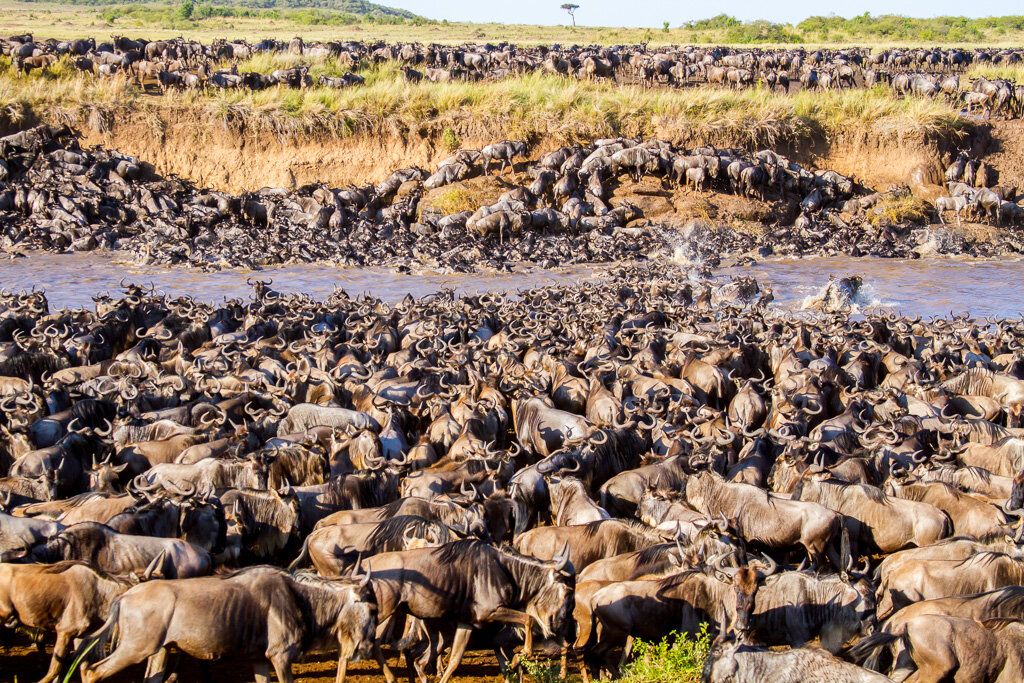
In the Maasai Mara, lions are spotted on the overwhelming majority of game drives. Cheetah sightings are common enough that a week in the Mara without seeing a cheetah would be unusual. Elephants, giraffes, zebras, wildebeest, hippos, and crocodiles are daily sightings. Leopard requires patience and luck, but a three to four night stay often produces one. Between July and October, the Great Wildebeest Migration brings the experience to its peak, with river crossings possible most days during August and September.
Amboseli National Park
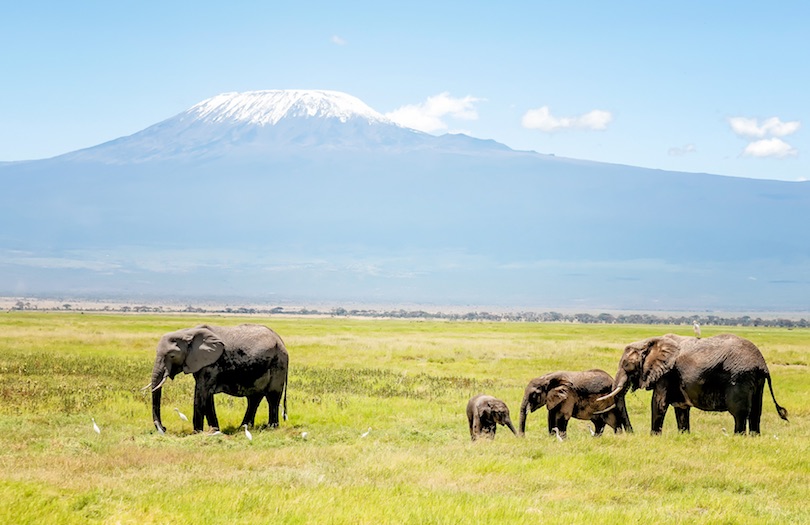
Amboseli is the finest elephant-watching park in Kenya and arguably in Africa. The herds here are enormous, some containing fifty or more individuals, and the openness of the terrain means encounters at close range with multiple generations of a family group are the standard rather than the exception.
The backdrop of Kilimanjaro on a clear morning is the most photographed wildlife landscape in Kenya and it is even better in person than in the images. Kilimanjaro is also frequently used as a geographic orientation point by guides who know which herd goes which direction at what time of day based on the mountain’s position.
Samburu National Reserve
Samburu in northern Kenya is where you see the species that exist nowhere else in the country. The Samburu Special Five, which include the reticulated giraffe with its large, clearly defined patches, the Grevy’s zebra with its narrow stripes and large round ears, the Beisa oryx with its long straight horns, the Somali ostrich with its blue neck, and the gerenuk with its long neck and habit of standing on its hind legs to browse, are animals that veteran safari travelers travel specifically to add to their list and that first-time visitors are delighted by precisely because they were not expecting them. A two to three night stay in Samburu typically produces all five, plus excellent lion, leopard, and elephant viewing along the Ewaso Ng’iro River.
| Kenya Park | What You Will Likely See | Signature Experience | Best Season |
| Maasai Mara | Lions, cheetah, elephant, hippo, giraffe, leopard | Migration river crossings | July to October for migration, year-round for Big Cats |
| Amboseli | Elephant herds, lion, buffalo, giraffe | Elephants with Kilimanjaro | Year-round, best January and February |
| Samburu | Samburu Special Five, elephant, lion | Reticulated giraffe, Grevy’s zebra | July to October |
| Lake Nakuru | Black and white rhino, flamingo, leopard | Pink shoreline flamingos | Year-round |
| Lake Naivasha | Hippo from boat, giraffe, buffalo, birds | Hippo boat cruise | Year-round |
| Laikipia Plateau | Wild dog, Grevy’s zebra, elephant, rhino | Walking safaris and horse riding | Year-round |