First-Time Safari Guide: Everything You Need to Know Before You Go
First-Time Safari Guide; Going on safari for the first time is life-changing, and nothing quite prepares you for the moment you see your first lion in golden morning light. But before that moment arrives, there’s real planning involved: where to go, what to pack, which season suits your priorities, and a surprising number of small, practical details that shape whether your trip feels smooth or stressful.
This guide works through everything a first-timer needs to know, drawn from the practical advice repeat safari-goers and travel designers consistently share, the lessons learned the first time round rather than generic bucket-list inspiration.
Choosing Your Destination and Season
The dry season, generally June through October across most of East and Southern Africa, is widely considered the best overall time for a first safari, since animals concentrate around scarce remaining water sources, delivering considerably more predictable, concentrated sightings. That said, excellent safaris happen year-round across Africa’s many destinations, provided you factor in weather conditions and seasonal events specific to wherever you’re headed.
Rather than choosing the most exotic-sounding destination, prioritise the one delivering reliable wildlife sightings, solid infrastructure, and manageable logistics, Kenya, Tanzania, South Africa, and Botswana all consistently stand out for smooth first-timer introductions to African safari travel.
How Long to Go For
Seven to ten nights is the sweet spot for a first safari, enough time for a minimum three nights in one reserve, since that’s roughly how long it takes for a single place to properly reveal itself, plus a few nights in a second location and possibly a city or beach extension. Shorter trips are entirely possible and still rewarding, but the extra time in a slightly longer itinerary reduces the rushed feeling many first-time trips otherwise carry.
What to Pack
Pack light and pack soft, most camps offer same-day laundry, meaning you need far less clothing than instinct suggests, especially on multi-destination trips where minimising luggage matters. Bring plenty of layers for chilly early-morning game drives, alongside a hat, sunglasses, sunscreen, and insect repellent, and choose sturdy, closed shoes and a proper waterproof jacket given how much terrain and weather variation a single day on safari can involve.
Camp Comfort: Better Than Most Expect
Safari camps, even mid-range ones, are considerably more comfortable than most first-timers anticipate: hot showers, proper beds, excellent food, and cold drinks at sunset are all standard rather than exceptional. Evenings in camp carry their own particular magic, dinner under the stars, campfire storytelling with your guide, and the sounds of the African night, and resisting the urge to retreat to your tent immediately after dinner is worth it, since these evening moments often become some of the most memorable parts of the entire trip.
Genuine Safari Etiquette Worth Knowing
Keep your voice low at sightings, sound travels remarkably far across open bush, and resist the urge to direct your guide, “get closer” isn’t your call to make, your guide knows the safe, appropriate distances and follows them for genuine reasons. Never feed animals, not even the cute vervet monkey eyeing your sandwich, and skip flash photography entirely, since it disturbs nocturnal wildlife and annoys fellow guests at the same sighting.
Don’t Fixate on the Big Five Checklist
Every first-timer arrives mentally focused on lion, leopard, elephant, rhino, and buffalo, and you’ll likely see most of them. But the moments that stay with people are often smaller and less predictable: a dung beetle rolling a perfect sphere twice its own size, hundreds of flamingos lifting off a soda lake in unison. Staying open to these smaller moments, rather than measuring the entire trip purely against a checklist, produces a richer experience. A good guide reads the bush and delivers sightings no predetermined list could anticipate.
Engage Directly With Your Guide
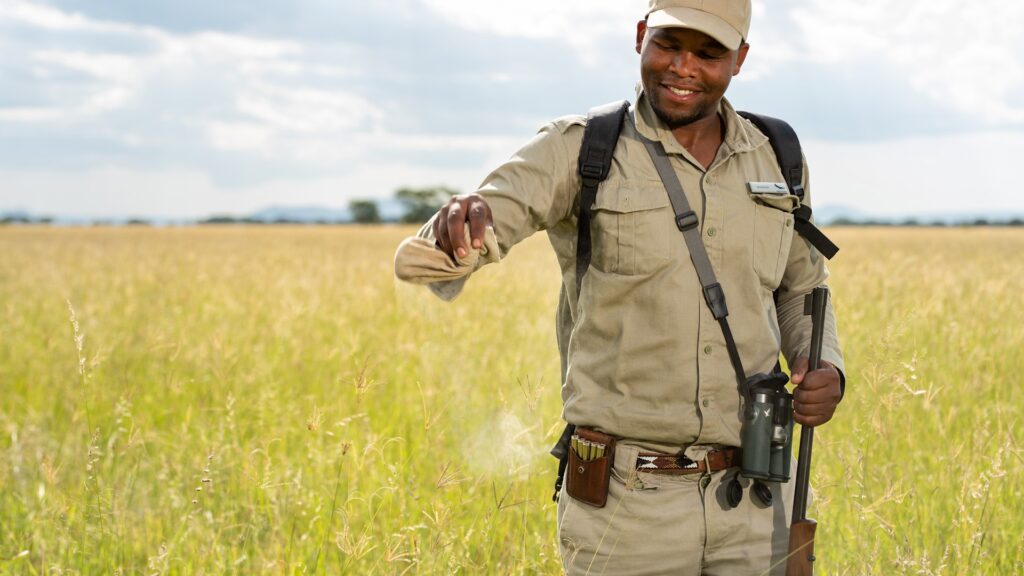
The difference between a good safari and a great one comes down almost entirely to your guide. Skilled guides read animal behaviour, anticipate action before it happens, and position the vehicle thoughtfully for both light and viewing angle. Don’t be shy about asking questions, “why did that impala just snort?” or “what’s the hierarchy in this lion pride?”, good guides love explaining what they’re seeing, and every question unlocks a further layer of understanding you’d otherwise miss entirely.
Your Body Adjusts Quickly
Safari is one of the few holidays where your body naturally shifts to falling asleep around 9pm and waking at 5am feeling great, rather than exhausted. This adjustment typically happens within two to three days, and by the time it does, the early wake-up calls that felt daunting on day one start to feel entirely natural, timed perfectly to catch the bush at its most active.
Health and Documentation Essentials
Confirm malaria prophylaxis requirements with a travel clinic at least six weeks before departure, since much of East Africa requires anti-malarials while parts of Southern Africa remain malaria-free or low-risk. A yellow fever certificate is mandatory for certain routes and destinations, and verifying all travel documentation and health requirements well in advance avoids genuine stress in the final weeks before departure.
Understanding What’s Typically Included in Your Package
Most safari packages include all meals and most drinks, twice-daily game activities, expert guides and trackers, and park and conservation fees, along with laundry at most camps. Usually excluded: international flights, visas, travel insurance, premium alcohol, optional activities like balloon safaris, private vehicle upgrades, and gratuities for staff and guides, all worth budgeting separately from your headline package price.
A 12-Step Planning Checklist
| Step | What to Decide |
| 1-2 | Define your safari goals and choose a destination. |
| 3-4 | Select the best time to go and choose a safari type |
| 5-6 | Decide trip duration and group size/travel companions |
| 7-8 | Evaluate safety, health requirements, and bucket-list priorities |
| 9-10 | Set a realistic budget and consult a travel specialist |
| 11-12 | Confirm your booking, then pack appropriately |
Working With a Specialist
Enlisting an experienced travel designer or safari specialist simplifies first-time planning considerably, since they know the insider details, which specific camps suit your priorities, how to sequence an itinerary efficiently, and how to avoid the common mistakes that turn DIY planning into unnecessary stress. This support lets you focus entirely on anticipating the trip itself rather than getting lost in logistics.
Frequently Asked Questions
How many nights should a first safari trip include?
Seven to ten nights is generally considered the sweet spot, allowing a minimum three nights in one reserve plus time in a second location or a city/beach extension.
Should I focus purely on seeing the Big Five?
It’s worth staying open beyond the checklist. Some of the most memorable safari moments are smaller, unpredictable sightings a guide finds rather than anything a predetermined list could anticipate.
Are safari camps comfortable for first-timers?
Yes, often more than expected. Even mid-range camps typically offer hot showers, proper beds, excellent food, and evening comforts like drinks at sunset and campfire storytelling.
What health preparations do I need before a first safari?
Confirm malaria prophylaxis and yellow fever requirements with a travel clinic at least six weeks before departure, since requirements vary meaningfully between East and Southern Africa.
Is it normal to feel physically tired for the first few days?
Somewhat, but your body typically adjusts within two to three days to the early wake-up and early bedtime rhythm safari naturally establishes, after which most travellers report feeling energised.