Solo Female Travel Safety on an East Africa Safari
Solo female travel is no longer a niche trend; over 80 percent of solo travelers worldwide are now women, and East Africa has responded by becoming one of the most proactive regions for female-centric safety and hospitality. One prominent Uganda-based operator reported a 40 percent rise in solo female bookings in a single year, particularly for gorilla trekking and Serengeti itineraries. The reality of a modern safari is one of highly structured safety, guided transport, and staffed camps, considerably more organized than the fear-based narratives circulating online might suggest.
This guide covers what makes East Africa safe for solo women, the practical precautions worth taking, and honest detail on the parts of a trip, not the safari itself, that actually require the most care.
The Safari Itself Is the Easy Part
Once you’re inside a reserve or conservancy, the structured environment of guided game drives, staffed camps, and escorted movement after dark makes safari destinations among the safest places a woman can travel alone anywhere in East Africa. Guides are professional and vetted, camps operate to consistent hospitality standards, and roughly 30 to 40 percent of guests on many group departures are already solo women, meaning you’re never the exception.
The parts of a trip that actually require more care are the transit points around the safari itself: navigating an unfamiliar city like Nairobi or Kampala on arrival, choosing between a group-join or private vehicle, and managing the practical realities of an unfenced camp at night, all of which are addressable with straightforward planning rather than reasons to avoid the trip entirely.
One Myth Worth Dispelling Immediately
Solo doesn’t mean alone. On a group-joining safari, you share a vehicle with other travellers, meals at camp are communal, and the campfire after dinner is where everyone gathers to talk through the day’s sightings together. Solo travellers frequently report making closer connections than couples do, precisely because travelling alone tends to make you more open to the people around you. If a camp seats you separately, assuming you want privacy, simply telling the host during afternoon tea that you’d rather join the communal table resolves this.
Choosing the Right Destination and Region
Not every safari hub offers the same level of organization, and for a solo woman, the sense of safety often ties directly to how developed the tourism infrastructure is. Kenya’s Masai Mara, Tanzania’s Serengeti-Ngorongoro circuit, Rwanda’s gorilla trekking region, and Uganda’s established safari corridors all maintain strong hospitality standards, guided structures, and vetted accommodation networks, making them consistently recommended as strong first-time solo destinations.
Practical Precautions That Matter
Choosing reputable, established operators with genuine experience hosting solo travellers, pre-booking all transfers rather than arranging transport spontaneously on arrival, and avoiding night travel between cities all meaningfully reduce risk. Established East African safari companies with years of experience typically offer more reliable safety measures than newer, less proven operations, making operator reputation worth researching before booking.
Within cities specifically, avoid walking or travelling alone after dark, use registered taxis or hotel-arranged transport for evening activities, and if you must go out at night, stay in well-lit, populated areas, ideally with other travellers. Ride-hailing apps like SafeBoda in Kampala or Yego in Kigali let you track your route and share it in real time, a useful layer of security for city transit specifically.
Dress and Cultural Awareness as a Form of Security
Respecting local customs functions as an effective, low-key form of protection. In rural Uganda, Rwanda, or Tanzania, dressing modestly, with shoulders and knees covered, signals respect and reduces unwanted attention, and a large scarf serves multiple practical purposes: a headcover, a shoulder wrap, or a privacy layer depending on the situation. This isn’t about restricting your own choices; it’s a practical adaptation that experienced solo travellers consistently recommend.
Modern Safety Technology Worth Using
Dedicated travel safety apps have changed the landscape for solo women in the region, providing real-time GPS location sharing with your operator, one-tap access to local emergency responders, and coordination with medical or security teams across East Africa. Given how many remote camps and cross-border routes suffer from weak mobile connectivity, an app with offline capability matters considerably more here than it would for solo travel in a well-connected Western city.
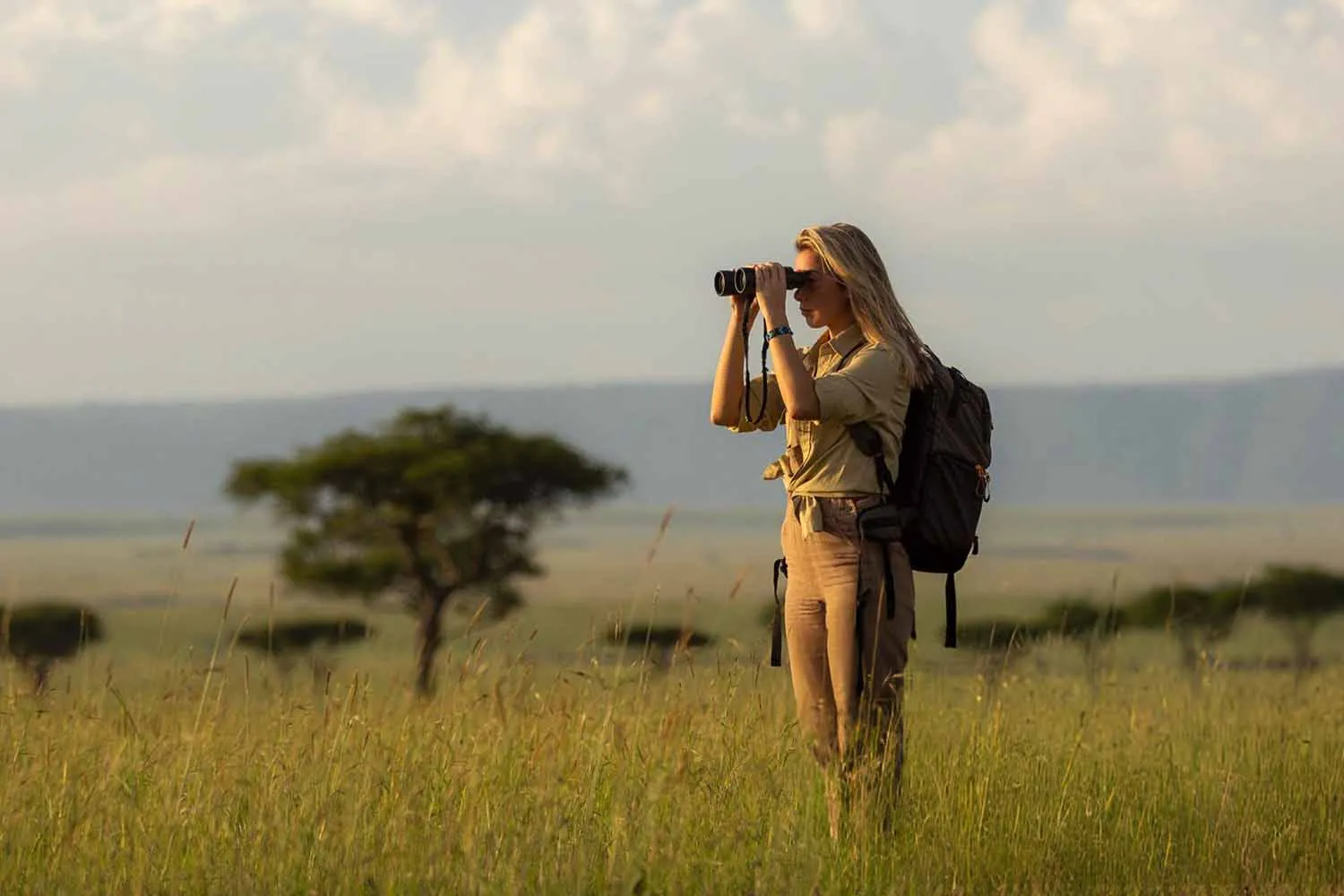
Separately, an increasing number of remote camps now offer Starlink satellite connectivity, meaning you’re rarely off the grid even deep in gorilla-trekking forest, letting you check in with family via video call when needed for genuine peace of mind.
Understanding the Genuine Cost Reality
Solo safaris cost more than couple or group safaris; there’s no way around this. Single supplements inflate accommodation rates since most lodge pricing assumes double occupancy, and a private vehicle costs the same whether one person or four are travelling in it. Budgeting realistically for this upfront, rather than being caught off guard by the solo premium partway through planning, helps avoid a frustrating late-stage cost surprise.
Health and Practical Preparation
Carrying necessary medications, insect repellent, and sunscreen; drinking only bottled or purified water; and avoiding risky street food all matter as much for solo women as any other traveller, though managing these independently without a travel companion to share the mental load requires a bit more upfront organisation. Comprehensive travel insurance covering medical evacuation is worth treating as non-negotiable given how remote many safari camps sit from advanced medical care.
An Honest Comparison
Most solo women who’ve completed an East Africa safari report feeling considerably safer than they anticipated, often safer than in many major global cities they’ve visited independently. Africa isn’t inherently more dangerous than other regions, but it does present distinct challenges, weaker connectivity in remote areas, and cities that can shift quickly between safe and higher-risk zones, meaning informed planning matters more than blanket anxiety about the destination as a whole.
Frequently Asked Questions
Is it safe for a solo woman to go on an East Africa safari?
Yes. The safari itself, guided game drives, staffed camps, and escorted movement are highly structured and among the safer travel experiences available. The parts requiring more care are city transit and after-dark movement outside the safari environment.
Will I be lonely travelling solo on safari?
Rarely. Group-joining safaris place you with other travellers; meals are communal, and many solo travellers report making closer connections than couples do, since travelling alone tends to make you more open to fellow guests.
What safety technology should solo female travelers use in East Africa?
A dedicated travel safety app offering real-time GPS sharing, one-tap emergency access, and offline capability is worthwhile given weak connectivity in many remote camps and cross-border routes.
Do solo female travellers pay more for a safari?
Yes. Single supplements apply since most accommodation pricing assumes double occupancy, and private vehicle costs don’t reduce simply because one person is travelling, meaning solo safaris cost more per person than couple or group trips.
Which East African destinations are considered best for first-time solo female travelers?
Kenya’s Masai Mara, Tanzania’s Serengeti-Ngorongoro circuit, Rwanda’s gorilla trekking region, and Uganda’s established safari corridors are consistently recommended given their strong tourism infrastructure and guided safari structures.