Top 5 Tips for Booking Your African Safari
Top 5 Tips for Booking Your African Safari; Booking a safari is not like booking a resort holiday, and treating it that way is the single biggest reason first-time travelers end up disappointed with a trip that looked perfect on paper. A safari involves moving parts that most people have never had to coordinate before: permit systems with hard deadlines, camps that sell out a year ahead, seasonal wildlife patterns that shift by the month, and internal flights that only run a few days a week.
None of this is complicated once you know it, but it does mean the order in which you make decisions matters. Get the sequence right, and the whole trip comes together smoothly. Get it wrong, and you can end up locked into dates, camps, or routes that do not actually serve what you wanted from the trip in the first place. These five tips cover the decisions that carry the most weight.
Should You Handle the Booking Yourself?
It is possible to book flights, lodges, and transfers independently, and some experienced travellers do it well. But safari logistics reward local knowledge in a way that most travel does not.
Availability at the best small camps is rarely visible on public booking sites, weather and wildlife patterns shift year to year in ways that only someone tracking them closely would know, and the difference between a good camp and a great one in the same price bracket is often something you would only learn by having actually stayed there.
That is not an argument against doing your own research, which this guide is built to help with, but it is worth being honest with yourself early about how much of the coordination you want to manage personally versus hand to someone who does this for a living.
Tip 1: Set Your Budget Before You Set Your Wish List
The natural instinct is to research destinations first and work out cost later, but this almost always leads to a frustrating cycle of falling in love with an itinerary and then having to strip it back. Safari pricing is quoted per person, per night, sharing a room, which catches people off guard if they are used to per-room hotel rates.
As a working guide for 2026, budget camping and shared group safaris run from roughly $150 to $300 per person per night, mid-range lodges with a private vehicle sit between $300 and $600, luxury tented camps move into the $600 to $1,500 range, and fully exclusive-use properties start above $1,500. None of these figures include international flights or, where relevant, permit fees such as Rwanda’s $1,500 gorilla trekking permit, which is fixed by the government and not negotiable.

The most useful thing you can do at the start of the process is decide on a total number, flights included, and share it with whoever is helping you plan, whether that is yourself researching independently or a tour operator. A clear budget lets a good planner build the strongest possible itinerary within it, rather than presenting options priced well above what you were ever going to spend.
Tip 2: Book According to How In-Demand Your Dates Are
How far ahead you need to book depends entirely on what you are booking, and this is where a lot of trips go wrong through simple timing. For the Masai Mara or Serengeti during the July to October migration season, or for a Botswana trip during the June to October flood season, aim to book twelve to eighteen months out.
Camps with fewer than fifteen rooms in these regions routinely sell out that far ahead for the exact dates most people want. Gorilla trekking permits in Rwanda and Uganda should be secured at least a year in advance for the same reason: daily trekking numbers are strictly capped by the government to protect the gorilla families, and there is no way to expedite a permit once availability runs out.
If your travel dates are flexible, you have considerably more room to move. Shoulder-season trips, generally November or March to May, can often be booked within three to six months and come with meaningfully better rates and smaller crowds.
Booking early also tends to unlock early-bird discounts of ten to twenty percent at many properties, while genuine last-minute deals do exist but are concentrated in low season and require you to be flexible about both dates and camp choice.
Tip 3: Choose Your Season Around Your Priority Experience
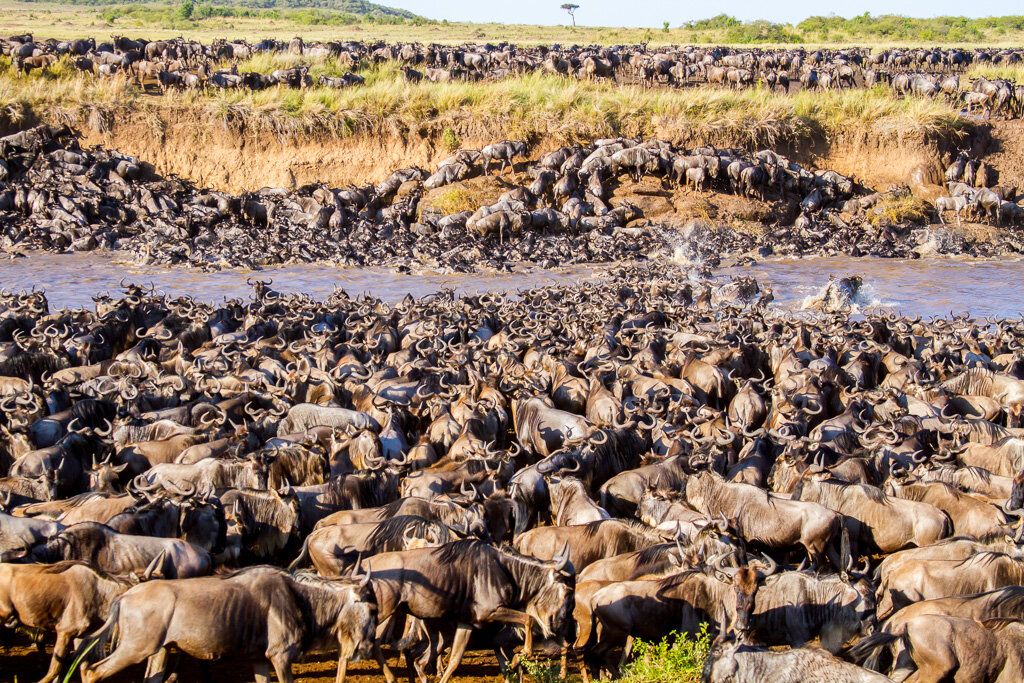
Every safari region has a best time to visit, but the ideal month changes depending on what you actually want to see, and this is worth deciding before you lock in a season. If witnessing a Mara River crossing is the reason you are going, you need July through October and should build the rest of the trip around that window.
If you would rather see newborn wildebeest and the density of predators that follows them, late January through February in the southern Serengeti is the better call. Dry season, roughly May to October across most of the continent, delivers thinner bush and easier sightings everywhere, plus it is a requirement for walking safaris in places like Zambia’s South Luangwa, where thick wet-season vegetation makes safe walking impossible.
Green season, the wetter months from November to April in most regions, is frequently underrated. Landscapes are dramatically greener, migratory birds arrive, and many species give birth, which draws predators into concentrated, dramatic action.
Rates drop and crowds thin out considerably. The trade-off is a higher chance of rain interrupting a game drive and, in some regions, tougher road conditions. Neither season is objectively better; they simply serve different priorities, so match yours before you fix your dates.
Tip 4: Vet Your Operator the Way You Would Vet a Surgeon
The gap between a safari planned by someone who genuinely knows the region and one assembled from generic online listings is larger than most first-time travellers expect, because so much of what makes a trip work happens behind the scenes: knowing which camp on a shared concession has the better guide roster this season, which lodge is undergoing renovations during your travel window, or which route avoids a six-hour transfer day that a map alone would not reveal.
When evaluating who to book with, look for personal, first-hand travel experience in the specific countries you are considering, not just a catalogue of properties. Ask whether the advice is independent or whether the person is effectively selling you whichever lodge pays them the largest commission.
Confirm they carry the appropriate financial protection and supplier insurance, since safari deposits are often non-refundable and you want assurance that money is protected if a supplier fails. And check whether the service extends to the full trip, flights, transfers, and activities included, rather than just accommodation, since a beautifully chosen lodge means little if you are stranded between airstrip transfers.
Tip 5: Build Buffer Into the Itinerary
The most common mistake in DIY-planned safaris is packing in too much. Every additional park sounds appealing on a spreadsheet, but each change of camp usually means an early wake-up, a bumpy transfer, and half a day lost to travel rather than wildlife.
A trip that tries to cover four or five parks in ten days often ends up feeling like a series of arrivals and departures rather than a safari. Two to three properties over ten to fourteen days is a far more comfortable pace for most travellers, and it also gives you room to extend a stay if the wildlife viewing at one camp turns out to be exceptional.
It is also worth building a buffer day into your return journey, particularly if your trip includes light-aircraft transfers between bush airstrips, which are more weather-dependent than commercial flights and can run late. Scheduling your international departure with at least one full day of slack after your last safari activity removes a genuine source of stress that catches out travellers who cut connections too tightly.
What This Looks Like in Practice
| Priority | Book By | What Matters Most |
| Migration river crossing | 12-18 months ahead | July-Oct dates, small conservancy camps |
| Gorilla trekking | 12+ months ahead | Permit availability, not lodge availability |
| Best value / shoulder season | 3-6 months ahead | Flexibility on exact dates and camps |
| Walking safari | 6-12 months ahead | Confirm dry-season dates with the operator |
| Family trip | 6-9 months ahead | Malaria-free reserves, child-friendly camps |
A Few More Planning Notes Worth Knowing
Travel insurance with medical evacuation coverage is not optional for a safari, even a comfortable one, because the remote airstrips and light-aircraft transfers that make these trips special also mean the nearest serious hospital can be genuinely far away.
Vaccination and malaria prophylaxis requirements vary by country and even by region within a country, so confirm current guidance with a travel clinic rather than relying on general advice, since recommendations do shift. Finally, pack light. Many bush-plane transfers between camps enforce strict luggage weight limits, often around 15 kilograms in a soft-sided bag, and arriving with a hard-shell suitcase can genuinely mean it gets left behind.
Documents and Deposits: What to Confirm Before You Pay
Before you commit a deposit, confirm exactly what it covers and what happens if plans change. Most reputable operators require thirty to fifty percent upfront to hold camp space, with the balance due sixty to ninety days before travel, and cancellation terms tend to tighten the closer you get to departure.
Read the fine print on gorilla permits specifically, since these are generally non-refundable and non-transferable once purchased, regardless of the reason for cancellation.
Passport validity is another detail worth checking early rather than the week before departure: most African countries require at least six months of validity beyond your travel dates and at least two to three blank visa pages, and several, including Kenya and Tanzania, now process visas through online e-visa systems that are worth applying for well ahead of time rather than assuming visa-on-arrival will be straightforward.
It also helps to ask your operator directly what is included versus what you will pay for on the ground. Park fees, most meals, laundry and game drives are typically bundled into the nightly rate at most camps, but premium activities such as hot air balloon safaris, gorilla permits, spa treatments and some drinks are usually charged separately. Getting this itemised in writing before you travel avoids the surprise of a large bill at checkout.
Frequently Asked Questions
Do I need a travel agent to book a safari?
No, but most first-time travellers find real value in one, particularly for multi-country or multi-park trips. The logistics of permits, internal flights and seasonal camp closures are easier to navigate with someone who tracks them daily.
How much should I budget per person?
For a comfortable mid-range trip including flights, plan on roughly $500 to $800 per person per day as a starting point, adjusting up for luxury camps or down for budget camping options.
What is the biggest booking mistake people make?
Trying to fit too many parks into too few days. It looks efficient on paper but eats into actual game-viewing time with transfers and early departures.
Is it cheaper to book last minute?
Occasionally, but only in low season and only if you can be flexible on camp choice and exact dates. For peak-season migration or gorilla trekking travel, last-minute availability is rare rather than discounted.