Where to Go in East Africa to See Elephants
Elephants are animals every safari traveler expects to see in East Africa, and for the most part that expectation holds. What varies enormously from one park to the next is the quality of the encounter. A single bull grazing at a distance among Serengeti woodland is technically an elephant sighting.
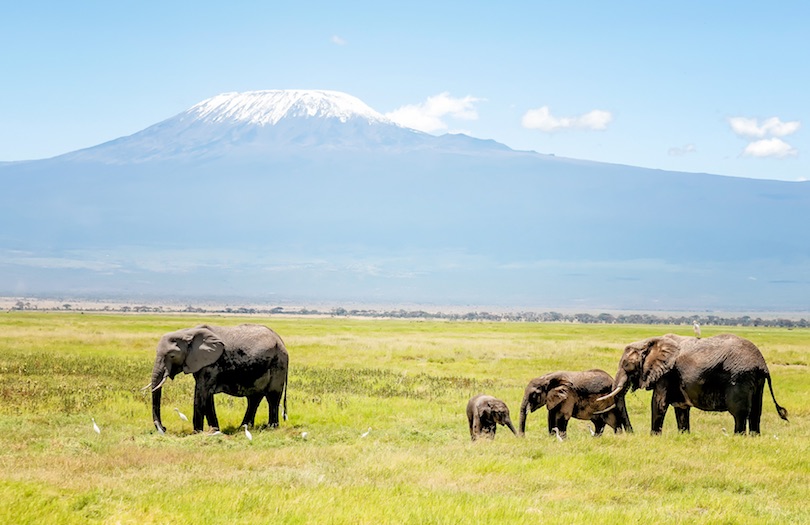
So is watching a two-hundred-strong family cross Amboseli’s swamps with Kilimanjaro rising behind them or drifting past a herd bathing in the Nile from a boat at Murchison Falls. Both count as “seeing elephants.” Only one of them tends to be the story clients tell us about years later.
We get asked constantly which park is best for elephants, and the answer is that there is no single best park. There are several excellent ones, each distinctive for a different reason, and matching the right park to your travel dates and priorities matters more than most people realize before they start planning.
Some parks earn their reputation through sheer numbers, some through genetics and tusk size, some through scenery, and some through how close and how calm the elephants allow you to get. This guide walks through the parks across Kenya, Tanzania, and Uganda where our clients consistently have the strongest elephant encounters, what sets each one apart, and when to visit for the best chance of a sighting worth remembering.
What Makes a Great Elephant Destination
Before comparing individual parks, it helps to understand what actually separates an outstanding elephant destination from an average one, because the difference has less to do with whether elephants are present and more to do with four specific factors.
Water concentration in the dry season
As surface water disappears elsewhere, elephants funnel toward rivers, swamps, and channels that hold water year-round. This is why the same park can feel completely different in March versus August: in the wet season elephants disperse across a wide area and sightings are more scattered, while in the dry season they concentrate predictably in a handful of locations, often in very large numbers. This one factor explains most of the seasonal advice in this guide.
Herd structure and family size
A healthy, long-protected elephant population organizes itself into large, multi-generational family groups, sometimes joining into bond groups of a hundred or more individuals at watering points. Populations that have suffered heavy poaching pressure tend to show smaller, warier groups that keep more distance from vehicles. Parks with decades of consistent protection and research presence generally produce calmer, larger, more photogenic herds.
Tusker genetics
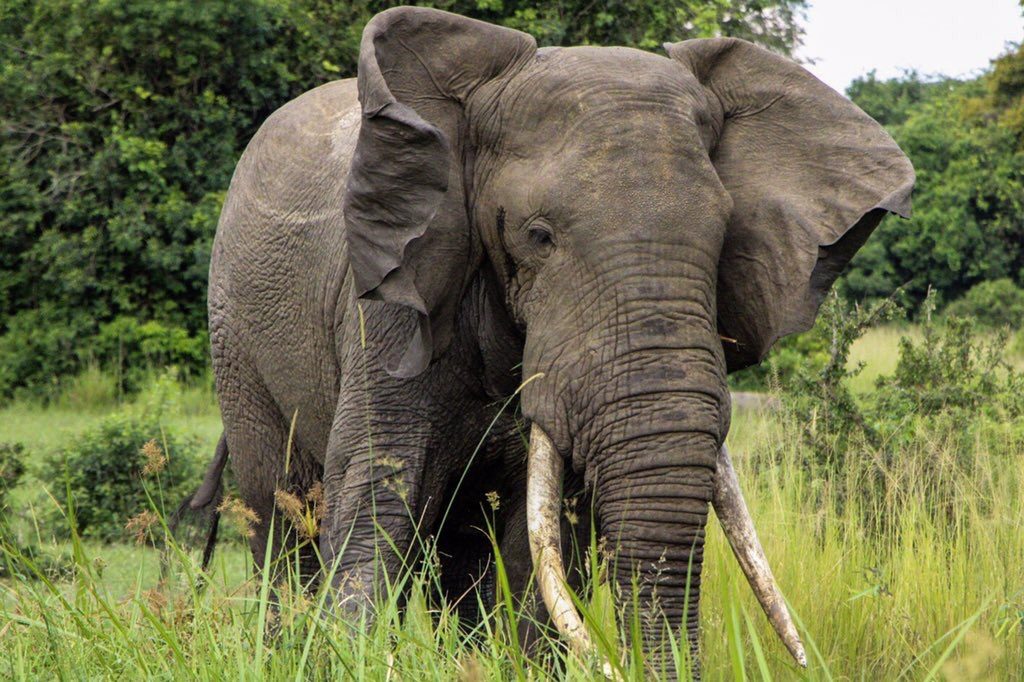
A small number of populations, most famously in Amboseli national park, still carry the genes for exceptionally long tusks because of unusually consistent protection stretching back over half a century. These super tuskers, bulls whose ivory nearly touches the ground, are rare enough worldwide that seeing one is a genuine highlight rather than a guarantee, but the odds of encountering one at all are far better in a small number of specific parks.
Scenery and setting
An elephant is memorable wildlife anywhere, but an elephant framed against Kilimanjaro’s snow-streaked summit, moving along the Nile, or silhouetted against a baobab is a different kind of photograph and a different kind of memory. Backdrop is not a minor detail on an elephant-focused trip; it is often the reason one park gets chosen over another with a similar elephant population.
Top Elephant Destinations at a Glance
The table below is a starting point rather than a ranking. Each park suits a different kind of trip, and the notes that follow explain why.
| Park | Country | Standout Feature | Best Season | Best For |
| Amboseli National Park | Kenya | Free-ranging super-tuskers with Kilimanjaro as a backdrop | Jun-Oct, Jan-Feb | Photographers, first-timers |
| Tsavo East & West | Kenya | Vast wilderness, red dust-bathed elephants, low vehicle density | Jun-Oct | Space and scale, second-time visitors |
| Samburu National Reserve | Kenya | Desert-adapted elephants, home to Save the Elephants research | Jun-Oct (Dec-Mar for calves) | Conservation-focused, repeat visitors |
| Tarangire National Park | Tanzania | Tanzania’s largest elephant population, herds of 200-500+ | Jun-Oct, peak Jul-Sep | Biggest numbers, families |
| Serengeti National Park | Tanzania | Elephants alongside classic migration scenery | Jun-Oct near rivers | Combining with the migration circuit |
| Queen Elizabeth NP | Uganda | Herds crossing the Kazinga Channel, boat-based viewing | Jun-Sep, Dec-Feb | Uganda circuits, a different perspective |
| Murchison Falls NP | Uganda | Uganda’s largest elephant population, Nile-side herds | Dec-Feb, Jun-Sep | Combining with chimp trekking |
The Parks, Explained
Amboseli National Park, Kenya
Amboseli is usually the first park we mention when someone asks about elephants, and the reasons hold up under scrutiny. The park is home to more than 1,600 free-ranging elephants, studied continuously by the Amboseli Elephant Research Project for over fifty years, making this one of the best-documented elephant populations anywhere.
That long, stable protection history is exactly why Amboseli still produces super tuskers, bulls with tusks so long they nearly brush the ground. Craig, one of the most photographed tuskers in Africa, died of natural causes in January 2026 at an estimated 54 years old, but he is believed to have fathered dozens of calves that still range across the park today, which says something about how deep this gene pool runs.
What makes the viewing itself distinctive is habituation. Amboseli’s elephants have grown up around vehicles and rarely react to a safari car the way more skittish populations do elsewhere, which lets guides position close enough for genuinely intimate photography without stressing the animals. Add Kilimanjaro as a backdrop, visible on clear mornings rising directly behind the swamps, and you get the most photographed elephant scene in Africa.
The honest objection worth raising is crowding. Amboseli is small and close enough to Nairobi that it draws heavy traffic, particularly from July through August, when it is not unusual to see as many safari vehicles as elephants around a good sighting. It stays less congested than the Masai Mara national reserve, but it is not a wilderness experience.
Our usual advice is to start game drives at first light, before day-tripper vehicles arrive, or to base in one of the private conservancies bordering the park, such as Kimana or Selenkay, which hold the same elephant population with a fraction of the traffic.
Best time to visit: June through October and January through February, both dry periods with clear mountain views and elephants concentrated around the park’s five swamps. Amboseli suits first-time visitors, photographers chasing the tusker-and-Kilimanjaro shot, and anyone building a short southern Kenya circuit from Nairobi.
Tsavo East and Tsavo West, Kenya
Tsavo solves the problem Amboseli creates. Combined, Tsavo East and Tsavo West cover more than 20,000 square kilometers, making this one of the largest protected wilderness areas in the world, and its elephants move through genuinely wild country rather than a handful of well-known swamps.
The distinguishing feature, beyond scale, is color: Tsavo’s elephants dust-bathe in the park’s red volcanic soil, which coats their skin and gives them their famous rust-red appearance. The habit isn’t cosmetic; it works as sunscreen, insect repellent, and a way to cool down in a landscape that runs hot for most of the year.
Tsavo East concentrates elephants around the Galana River, Mudanda Rock, and Aruba Dam, all reliable dry-season gathering points. Tsavo West centers more on Mzima Springs and the Tsavo River. Neither delivers the density of Tarangire or the near-guaranteed tuskers of Amboseli, but what it offers instead is space and quiet: far fewer vehicles per sighting, and a sense of scale smaller parks cannot match.
Best time to visit: June through October, when the dry season pulls elephants toward the rivers and dams and away from the thick bush that makes viewing harder earlier in the year. Tsavo suits travelers who have already done a more famous park and want depth over ticking boxes, or anyone pairing it with Amboseli for a southern Kenya circuit that trades a little predictability for a lot more room to breathe.
Samburu National Reserve, Kenya
Samburu sits north of the equator in genuinely different country: dry, red-earthed, and studded with doum palms along the Ewaso Nyiro River, which is the reason anything survives here at all. Elephants gather at the river in numbers that rival the more famous southern parks, but the reserve’s real distinction is its research pedigree.
Samburu is home to Save the Elephants, the organization founded by Dr. Iain Douglas-Hamilton that has tracked elephant migration, family structure, and poaching pressure here for decades. Many of the elephants you’ll see have been studied and named individually, and a good guide can often point out specific matriarchs and their family histories.
Samburu also delivers the Samburu Special Five, species found here and rarely elsewhere on a standard Kenya circuit: Grevy’s zebra, reticulated giraffe, Somali ostrich, gerenuk, and Beisa oryx, which rounds out the game viewing well beyond elephants alone.
Best time to visit: June through October is the primary dry season and the most reliable window for large herds at the river. December through March is quieter and known locally for young calves playing in the shallows, with noticeably fewer vehicles than peak season. Samburu suits conservation-minded travelers, repeat visitors to Kenya who have already done the Mara and Amboseli, and anyone combining it with the private conservancies of Laikipia further south.
Tarangire National Park, Tanzania
If sheer numbers are what you’re after, Tarangire is the answer. It holds Tanzania’s largest elephant population, more than 3,000 individuals, and during the dry season they converge on the Tarangire River in family groups of two hundred to three hundred at a time, occasionally combining into gatherings of five hundred or more along the riverbanks.
On a strong July or August game drive, it is genuinely possible to see close to a thousand elephants without leaving a single stretch of river frontage. Very few places in Africa offer that kind of density.
The mechanism is straightforward: from June through October, water sources outside the park dry up almost entirely, and elephants have little choice but to funnel toward the Tarangire River, one of the only permanent water sources for miles. Ancient baobabs scattered across golden grassland add a backdrop that photographs beautifully alongside the herds.
Best time to visit: June through October, with peak concentration typically falling in July through September. Outside the dry season, elephants disperse across a much wider area and sightings become less predictable, though still possible. Tarangire suits travelers who want volume and drama over rarity, families on a northern Tanzania circuit looking for a short, reliable drive from Arusha, and anyone who wants elephant photographs with genuine scale to them.
Serengeti National Park, Tanzania
The Serengeti is not primarily an elephant park; it earns its reputation from the wildebeest migration and its predators. It deserves a place on this list because elephants here are excellent supporting wildlife on a trip built around something else, and the northern sector in particular holds real numbers.
The area near the Mara River carries the greatest elephant concentration in the park, helped along by its remoteness, since far fewer visitors make it out there compared with the well-traveled central circuit. Seronera Valley, more central and easier to reach, offers reliable year-round sightings alongside its resident lion prides, and elephants also gather along the Grumeti River further west during the dry season.
Best time to visit: June through October for the most concentrated river-based sightings, though elephants are present in smaller, scattered numbers throughout the year. The Serengeti suits travelers building their itinerary around the migration or the classic northern Tanzania circuit who want strong elephant viewing as part of a broader trip, rather than travelers whose primary goal is elephants alone. For a dedicated elephant-focused stop, Tarangire, a few hours away, will outperform it.
Queen Elizabeth National Park, Uganda
Queen Elizabeth’s elephant population has grown to more than 4,000, and the park offers something none of the Kenyan or Tanzanian options do: a boat-based perspective. The Kazinga Channel, connecting Lake Edward and Lake George, draws elephants down to drink and bathe along its banks, and the boat cruise along the channel is widely regarded as one of the best wildlife activities anywhere in East Africa.
Watching a herd cross the water at eye level, rather than from a vehicle, is a genuinely different experience, and it suits travelers who find long hours on bumpy tracks tiring.
On land, elephants are frequently seen in the southern Ishasha sector, also known for its tree-climbing lions, giving the park a rare combination of headline sightings in one place. Early morning and late afternoon drives around the channel produce the most reliable elephant activity.
Best time to visit: the two dry windows, June through September and December through February, offer the easiest game viewing and the most predictable gatherings at the water. Queen Elizabeth suits travelers building a Uganda itinerary around both primates and classic savanna game, since it sits within a reasonable drive of Bwindi’s gorilla trekking and offers a genuinely different viewing angle from the vehicle-only drives common elsewhere.
Murchison Falls National Park, Uganda
Murchison Falls holds Uganda’s largest elephant population, with recent aerial surveys counting more than 900 individuals and numbers on a steady upward trend after decades of recovery from conflict and poaching pressure.
The park’s centerpiece is dramatic even without wildlife: the Victoria Nile forces itself through a gorge roughly seven meters wide before dropping more than 40 meters, and the boat safari from Paraa toward the base of the falls is the best way to see elephants here, gathered along the banks to drink and bathe alongside hippo pods and basking crocodiles. The north bank of the Nile tends to host the largest herds.
Best time to visit: December through February and June through September, the two dry windows when animals concentrate along the river and roads stay passable. Murchison suits travelers combining chimpanzee trekking in the nearby Budongo or Kaniyo Pabidi forests with classic river-based game viewing, and works well as an introduction to Uganda safari for anyone who hasn’t been before.
Planning an East Africa Elephant Safari
When to Go, Region by Region
Dry season is the throughline across every park in this guide, though the exact months shift slightly by country. In Kenya and Tanzania, the long dry season runs roughly June through October, and this is when elephants concentrate most predictably around rivers and swamps in Amboseli, Tsavo, Samburu, and Tarangire.
A second, shorter dry window opens in January and February, quieter and often better value, though herds are typically more dispersed than at the peak of the June-October season. Uganda runs on a slightly different rhythm, with two distinct dry periods, December through February and June through September, both of which work well for Queen Elizabeth and Murchison Falls.
Combining Elephant Parks Into a Broader Itinerary
Very few of our clients build a trip around elephants alone, and none of these parks require that. In Kenya, Amboseli and Tsavo pair naturally into a southern circuit reachable by a short drive or flight, while Samburu combines well with the private conservancies of Laikipia or a Masai Mara extension further south.
In Tanzania, Tarangire is a near-mandatory stop on the northern circuit and typically opens or closes a longer loop through the Serengeti and Ngorongoro Crater. In Uganda, Queen Elizabeth and Murchison Falls both sit within striking distance of gorilla trekking in Bwindi Impenetrable Forest, so a single trip can combine primates, classic savanna game, and river-based elephant viewing without excessive driving between them.
Ethical Viewing, Briefly
Good guides keep a respectful distance as a matter of course, staying well back from a herd until its mood is clear, and giving considerably more space to a lone bull in musth, which can make him unpredictable. Vehicles should never box a herd in or cut across its direction of travel, and elephants should always be given the right of way.
None of this limits the quality of viewing. Elephants that are not stressed by vehicles behave more naturally and stay in view longer, which is part of why habituated populations like Amboseli’s produce such good sightings in the first place.
Frequently Asked Questions
Where can I see the most elephants at once in East Africa?
Tarangire National Park in Tanzania, during the dry season from July through September, when herds gather along the Tarangire River. Sightings of several hundred elephants in one area are common, and on a strong day the total across a game drive can approach a thousand.
What’s the best park for photographing elephants?
Amboseli, largely because of habituated elephants that allow close approach, exceptional tusker genetics, and the Kilimanjaro backdrop on clear mornings. Tarangire and Queen Elizabeth National Park are strong alternatives if you want baobabs or a water-level boat perspective instead.
Are elephants dangerous on safari?
Elephants are generally calm around vehicles in well-managed parks, and serious incidents involving safari guests are rare. The main exception is a bull in musth, a temporary hormonal state that makes him more unpredictable, and experienced guides give these individuals a wide berth. Staying inside the vehicle and following your guide’s instructions is what keeps sightings safe.
When is the best time of year to see large elephant herds?
Broadly, June through October across Kenya and Tanzania, when the dry season concentrates elephants around rivers and swamps. Uganda has a second reliable window from December through February. Outside these periods elephants are still present but more spread out, which makes sightings less predictable rather than impossible.
Is Amboseli worth visiting even though it can get crowded?
Yes. Crowding is real, particularly in July and August around the main swamps, but it doesn’t erase what makes Amboseli distinctive: the tusker genetics, the habituated elephants, and the Kilimanjaro views. Booking early morning drives, staying several nights rather than one, or basing in a bordering private conservancy solves most of the crowding issue while keeping access to the same elephant population.
Can elephant-focused parks be combined with gorilla trekking in Uganda?
Yes, easily. Queen Elizabeth National Park and Murchison Falls national park both sit within a reasonable drive of Bwindi Impenetrable Forest, and a well-built Uganda itinerary typically combines gorilla or chimp trekking with a few days in one or both parks for classic savanna and river-based game viewing.
Why do some parks have bigger tusks or bigger elephants than others?
It comes down to genetics and protection history rather than diet or environment. Amboseli’s elephants have been protected with unusual consistency for more than fifty years, which has allowed the genes for very large tusks to persist in the population instead of being selectively removed by poaching, as happened in many other areas over the twentieth century.