Northern Serengeti vs Southern Serengeti: Which Should You Visit and When?
Northern Serengeti vs Southern Serengeti; The Serengeti is often discussed as a single destination, but it’s more useful to think of it as several distinct sub-regions, each offering a different wildlife experience depending on the time of year.
The northern and southern sectors specifically deliver almost different experiences: the south holds the migration’s intense calving season drama for a few months, then reverts to a quieter, less-visited area for the rest of the year, while the north sees relatively little migration activity most of the year until the herds arrive for the famous river crossings.
This guide breaks down exactly what distinguishes the northern and southern Serengeti, when each is genuinely worth prioritizing, and how to decide which sector, or combination, best fits your specific travel dates and priorities.
Why the Serengeti’s Regions Behave So Differently
The Serengeti’s ecosystem is defined by rainfall patterns that drive the migration’s annual circuit, and this means different sectors are ‘in season’ at genuinely different times, rather than the whole park offering consistently excellent wildlife viewing year-round.
The southern plains around Ndutu receive short rains that produce the fresh grass driving the January-March calving season, while the northern sector near the Mara River becomes the migration’s focus only once the herds arrive from around July, chasing grazing as the northern rains begin.
This means choosing between north and south isn’t really a matter of one being objectively better; it’s a matter of matching your specific travel dates to whichever sector holds the migration, or in the case of the central Seronera area, offering strong year-round resident wildlife regardless of migration timing.
What Distinguishes the Northern and Southern Serengeti
The southern Serengeti, encompassing the short-grass plains around Ndutu (technically spanning both Serengeti National Park and the adjacent Ngorongoro Conservation Area), is defined by its role as the migration’s calving ground.
From roughly January through March, the concentrated grass here, freshly grown from short rains, draws the migration’s full numbers, producing around 400,000 calves within a few weeks and the most intense sustained predator activity anywhere in the ecosystem.
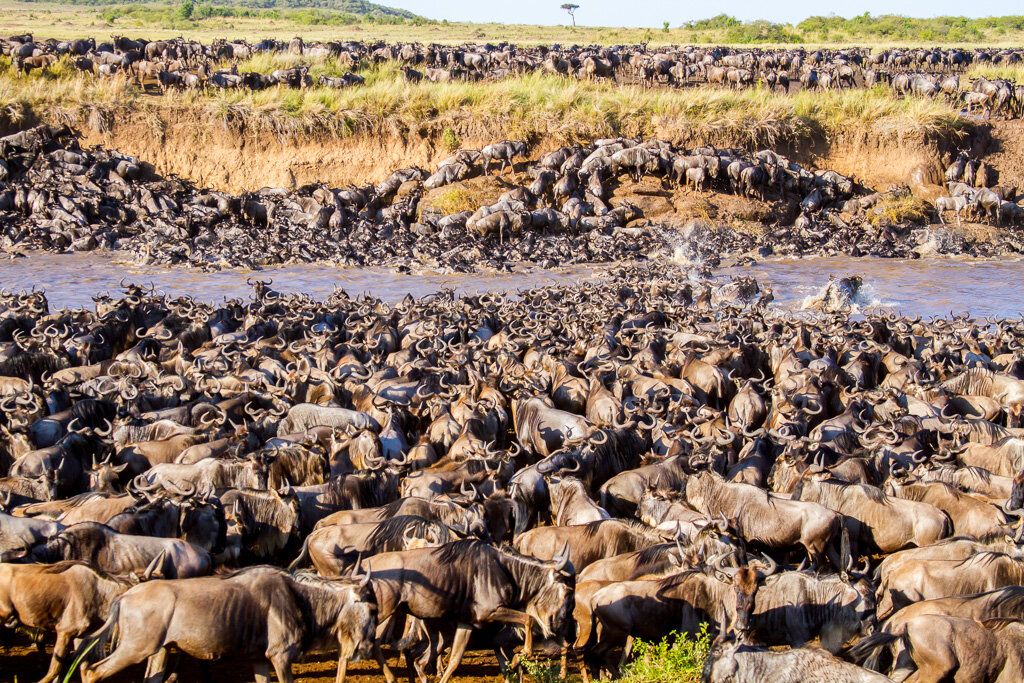
The northern Serengeti, centred around the Mara River and the Kogatende area, sees comparatively quiet wildlife activity for much of the year, functioning as a resident-wildlife area without the migration’s numbers. From roughly July through October, this changes dramatically as the migration arrives from the south and west, crossing the Mara River, sometimes multiple times as herds move back and forth, in the spectacle that has become the most photographed single event in African wildlife tourism.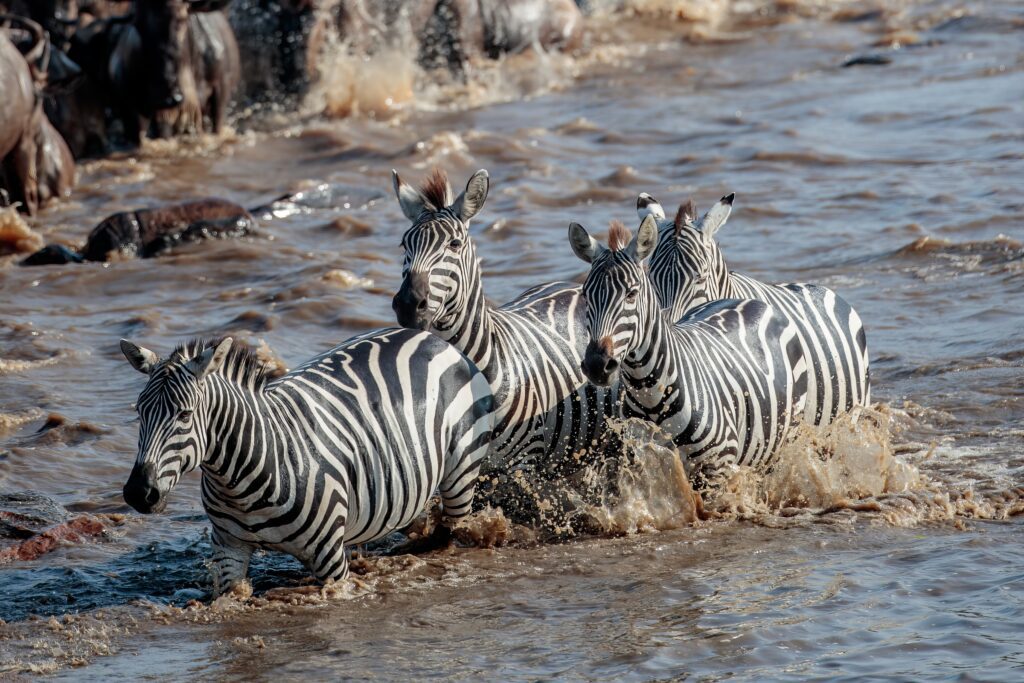
The central Serengeti, particularly the Seronera area, occupies a different category entirely: it holds strong resident predator populations, notably a good concentration of leopard in its riverine forest, year-round, making it a sensible base for travellers visiting outside either of the migration’s peak windows, or as a complement to a sector-specific stay timed around the herds.
Northern vs Southern Serengeti at a Glance
Here is a direct comparison of the two sectors across the factors that matter most.
| Factor | Southern Serengeti | Northern Serengeti |
| Peak season | January – March (calving) | July – October (river crossings) |
| Signature event | Intense predator-prey activity around calving herds | Mara River crossings |
| Off-peak character | Quiet; migration has moved on | Quiet for most of the year; resident wildlife only |
| Crowd levels during peak | High, but generally less than the northern crossings | Very high during peak crossing weeks |
| Access | Often combined with Ngorongoro given proximity | More remote; often requires a specific flight or longer drive |
Understanding Each Sector’s Specific Areas
Within the broader north-south distinction, a few specific areas are worth understanding individually.
Ndutu and the Southern Short-Grass Plains
The definitive calving season location, technically spanning the border between Serengeti National Park and the Ngorongoro Conservation Area, and often booked as a combined visit with Ngorongoro Crater given the proximity.
Kogatende and the Northern Mara River Area
The Tanzanian side of the famous crossing points, seeing the same spectacle as Kenya’s Masai Mara from July through October, often with somewhat lower visitor density than the more famous Kenyan crossing points, though still genuinely busy during peak weeks.
Seronera and the Central Serengeti
A strong year-round destination regardless of migration timing, known specifically for reliable leopard sightings in riverine forest habitat and consistently good general game viewing.
The Western Corridor
A transitional area between south and north, seeing its own crossing opportunities at the Grumeti River roughly May through July as herds move northwest, generally quieter than either the calving season or the main Mara crossings.
Matching Your Travel Dates to the Right Sector
This is genuinely the most important planning decision for a Serengeti-focused trip, since visiting the wrong sector for your specific dates means missing the migration entirely.
| Month | Best Sector to Prioritise | Why |
| January – March | Southern Serengeti (Ndutu) | Calving season; the migration is here |
| April – June | Central/Western Serengeti | Herds transitioning north; Seronera offers strong resident wildlife |
| July – October | Northern Serengeti (Kogatende) | River crossing season; the migration is here |
| November – December | Southern Serengeti (returning) | Herds moving back toward the calving grounds |
How Sector Choice Affects Cost
Northern Serengeti access during peak crossing season typically costs more than a southern or central stay, given the premium positioning of camps in this remote area during the highest-demand months.
Southern Serengeti during calving season — Premium pricing, but often combined efficiently with Ngorongoro
Camps here command high rates during January-March given concentrated demand, though the proximity to Ngorongoro can make for an efficient combined circuit.
Northern Serengeti during crossing season — Highest pricing of the year in this specific sector
The most remote and most in-demand sector during its peak window, often requiring a specific flight into the area given the distance from other entry points.
Central Serengeti (Seronera) year-round — More moderate, consistent pricing
A good value option for travellers visiting outside either peak migration window, offering strong wildlife viewing without the peak-season premium.
Accommodation by Sector
Camp choice should follow your chosen sector and season closely, since properties in the wrong location for your dates won’t deliver the migration experience you’re hoping for.
| Sector | Recommended Property Type | Example Properties |
| Southern Serengeti (Ndutu) | Seasonal mobile camps, permanent lodges near Ndutu | Ndutu Safari Lodge, seasonal mobile camps |
| Northern Serengeti (Kogatende) | Camps positioned specifically for river access | Singita Mara River Camp, Nomad Lamai |
| Central Serengeti (Seronera) | Well-established permanent lodges | Serengeti Serena, Kati Kati Tented Camp |
| Western Corridor | Fewer options; more remote positioning | Singita Grumeti, Kirawira Serena |
What to Do in Each Sector
Activities differ somewhat between the sectors given their different wildlife focus and terrain.
Calving Season Predator Tracking (South)
During January through March, guides specifically track predator movement relative to the calving herds, since this period produces the most sustained predator activity of the year.
River Crossing Vigils (North)
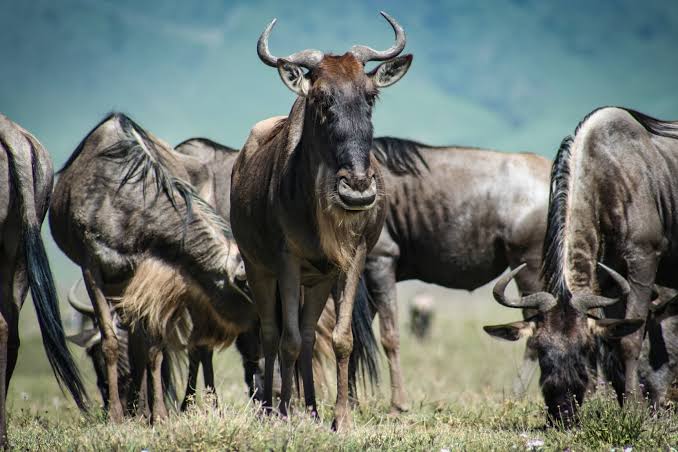
Positioning at an active crossing point and waiting for herd build-up, sometimes for hours, is the standard approach for witnessing a crossing during the July-October window.
Leopard Tracking (Central)
Seronera’s riverine forest habitat rewards patient, guide-led leopard searching, a strong year-round activity regardless of migration timing.
Hot Air Balloon Safaris
Available across multiple sectors, giving a spectacular aerial perspective particularly striking during either peak migration window.
| Activity | Best Sector | Best Season |
| Calving season predator tracking | Southern Serengeti | January – March |
| River crossing vigils | Northern Serengeti | July – October |
| Leopard tracking | Central Serengeti (Seronera) | Year-round |
| Hot air balloon | Multiple sectors | Most dramatic during migration season |
Planning Your Serengeti Sector Strategy
If your travel dates are fixed, choose your sector based on the month-by-month guidance above rather than defaulting to whichever sector is more commonly featured in general marketing material, since visiting the north in February or the south in September means missing the migration in both cases.
For travellers with flexible dates specifically wanting the migration spectacle, choosing your travel dates around the sector and season, rather than the reverse, gives the most reliable path to witnessing either the calving season or a river crossing.
A genuinely underused strategy for travellers with a week or more in the Serengeti is to combine two sectors within a single trip, spending the first few days in whichever sector holds the migration for your travel dates, then relocating to the central Seronera area for the remainder of the stay.
This gives access to the specific seasonal spectacle you came for, while the Seronera portion delivers reliable predator sightings, particularly leopard, that don’t depend on migration timing at all. It also spreads accommodation cost across a lower-demand sector for part of the stay, since central Serengeti camps are generally more moderately priced than the specific sector experiencing peak migration demand at that moment.
It’s worth being cautious about one common misconception: that visiting during the ‘wrong’ month for a given sector means a poor safari overall. Even outside its peak migration window, both the northern and southern Serengeti hold substantial resident wildlife, lion prides, elephant, giraffe, and a wide range of general game, that make for a genuinely rewarding visit on their own terms.
The migration adds an exceptional layer of spectacle during its peak windows, but its absence doesn’t mean an empty landscape, and travellers whose dates simply don’t align with either peak period shouldn’t feel they need to avoid the Serengeti entirely as a result.
Finally, when comparing quotes or itineraries from different operators, pay attention to exactly which camp or lodge is being proposed relative to your travel dates, since a property’s name alone doesn’t guarantee it sits in the sector that’s actually active for your specific month.
A beautifully positioned camp in the north is of little use during calving season if the migration itself is two hundred kilometres south at the time, so cross-checking the property’s location against the season-by-season guidance above is worth the extra few minutes before confirming any booking.
Sector Recommendations by Priority
Here is a direct guide to which sector best matches specific travel priorities and dates.
| Priority | Recommended Sector | Best Months |
| Calving season predator drama | Southern Serengeti (Ndutu) | January – March |
| Mara River crossings | Northern Serengeti (Kogatende) | July – October |
| Reliable year-round wildlife, any month | Central Serengeti (Seronera) | Year-round |
| Quieter crossing viewing | Western Corridor (Grumeti) | May – July |
Frequently Asked Questions
Should I visit the northern or southern Serengeti?
This depends entirely on when you’re travelling. The south holds the migration during calving season (January-March); the north holds it during crossing season (July-October). Choose based on your specific travel dates rather than a general preference.
Can I see the migration if I visit the Serengeti outside these two windows?
The herds are somewhere in the ecosystem year-round, but outside the calving and crossing windows they’re typically in transit through the central or western areas, offering a less concentrated spectacle than the peak periods in either the north or south.
Is the central Serengeti worth visiting if I miss both migration windows?
Yes, Seronera specifically offers strong year-round resident wildlife, including reliable leopard sightings, making it a worthwhile destination regardless of migration timing.
Which sector is more crowded during peak season?
Both the southern calving grounds and the northern crossing points see high visitor density during their respective peak windows, though the northern crossings, being the more famous single spectacle, often see the highest concentration of vehicles at active crossing points.